Integration of Multi-Sensor Data to Distinguish Swallowing Patterns in Healthy Individuals Versus Those with Post-Stroke Dysphagia
-
By
-
Lian Wang
-
Nannan Cui
-
Xiaozhen Li
-
Jia Qiao
-
Zhenhai Wei
-
Zulin Dou
-
Yanxia Liu
-
Xiaomei Wei
-
June 27, 2026
Clinical Scorecard: Integration of Multi-Sensor Data to Distinguish Swallowing Patterns in Healthy Individuals Versus Those with Post-Stroke Dysphagia
At a Glance
| Category | Detail |
|---|
| Condition | Post-Stroke Dysphagia |
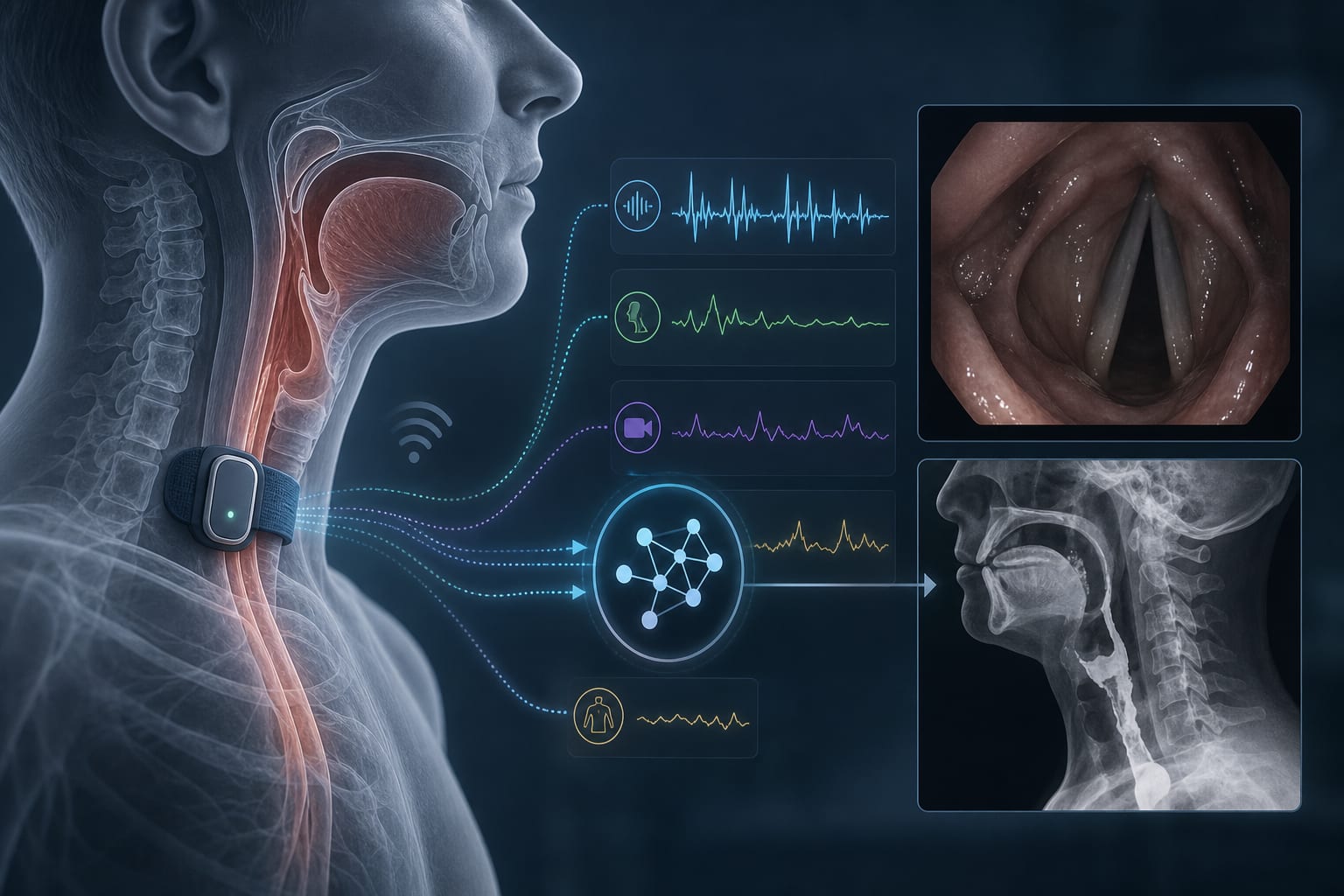
| Key Mechanisms | Multi-sensor fusion including nasal airflow, acceleration, and sound signals for swallowing assessment. |
| Target Population | Adults with post-stroke dysphagia and healthy adults. |
| Care Setting | Rehabilitation Department |
Key Highlights
- Prevalence of post-stroke dysphagia ranges from 8.1% to 80%.
- Complications include dehydration, malnutrition, and aspiration pneumonia.
- Multi-sensor systems may improve dysphagia detection compared to single sensors.
- Study focused on a balanced sample of 108 healthy adults and 108 stroke patients.
- Ethical approval obtained for the study.
Guideline-Based Recommendations
Diagnosis
- Use of VFSS as the gold standard for dysphagia assessment.
Management
- Early identification of dysphagia to facilitate timely interventions.
Monitoring & Follow-up
- Dynamic monitoring of swallowing function using non-invasive methods.
Risks
- Invasive methods like FEES may not be suitable for all patients.
Patient & Prescribing Data
Patients with post-stroke dysphagia and healthy adults.
Non-invasive multi-sensor systems may provide better assessment of swallowing.
Clinical Best Practices
- Employ multi-sensor systems for more accurate dysphagia detection.
- Consider patient tolerance when selecting assessment methods.
Related Resources & Content