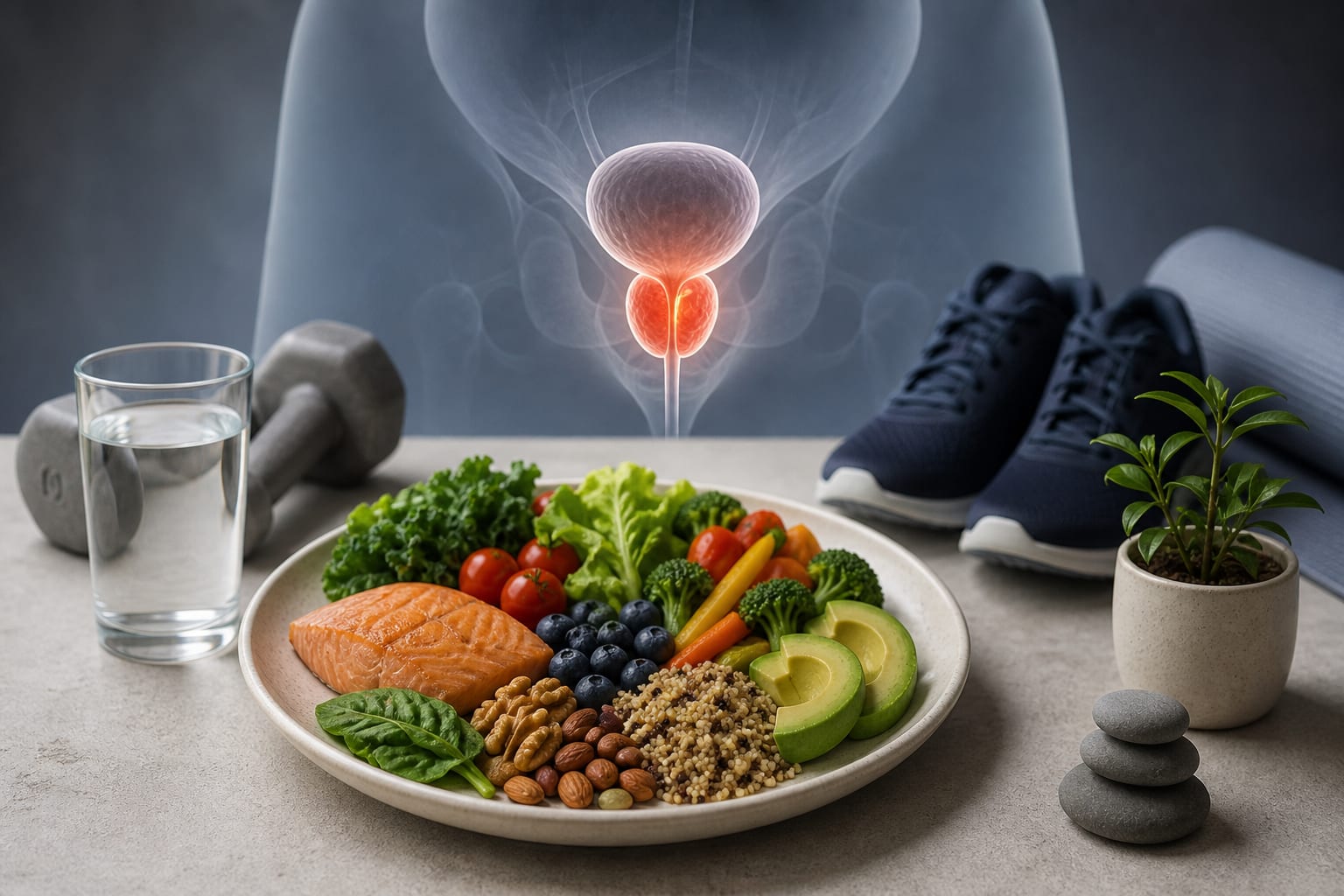
Nutrition and Lifestyle Post-Prostate Cancer: Ongoing Insights from Research to Recommendations
-
By
-
David-Dan Nguyen
-
Hari S. Iyer
-
Christopher J. D. Wallis
-
September 2, 2026
Clinical Scorecard: Nutrition and Lifestyle Post-Prostate Cancer: Ongoing Insights from Research to Recommendations
At a Glance
| Category | Detail |
|---|
| Condition | Prostate Cancer Survivorship |
| Key Mechanisms | Dietary fat intake influences all-cause mortality, particularly through cardiovascular disease and other cancers. |
| Target Population | Men with nonmetastatic prostate cancer |
| Care Setting | Oncology and survivorship care |
Key Highlights
- Greater saturated fat consumption post-diagnosis linked to increased all-cause mortality.
- Plant-based and monounsaturated fat substitutions associated with reduced all-cause mortality.
- No association found between dietary fat intake and prostate cancer-specific mortality.
- Evidence for dietary interventions improving prostate cancer outcomes remains sparse.
- Long-term dietary habits and health behaviors impact survivorship.
Guideline-Based Recommendations
Diagnosis
- Evaluate dietary habits and health behaviors in prostate cancer survivors.
Management
- Prioritize health promotion and management of late effects in survivorship care.
Monitoring & Follow-up
- Assess cardiovascular risk and other chronic conditions in survivors.
Risks
- Consider competing risks from cardiovascular disease and other causes of death.
Patient & Prescribing Data
Men diagnosed with nonmetastatic prostate cancer.
Dietary modifications may influence overall health and longevity.
Clinical Best Practices
- Provide actionable dietary and lifestyle recommendations to patients.
- Link patients to resources for nutrition, exercise, and behavioral support.
- Utilize repeated dietary assessments for better understanding of long-term habits.
Related Resources & Content