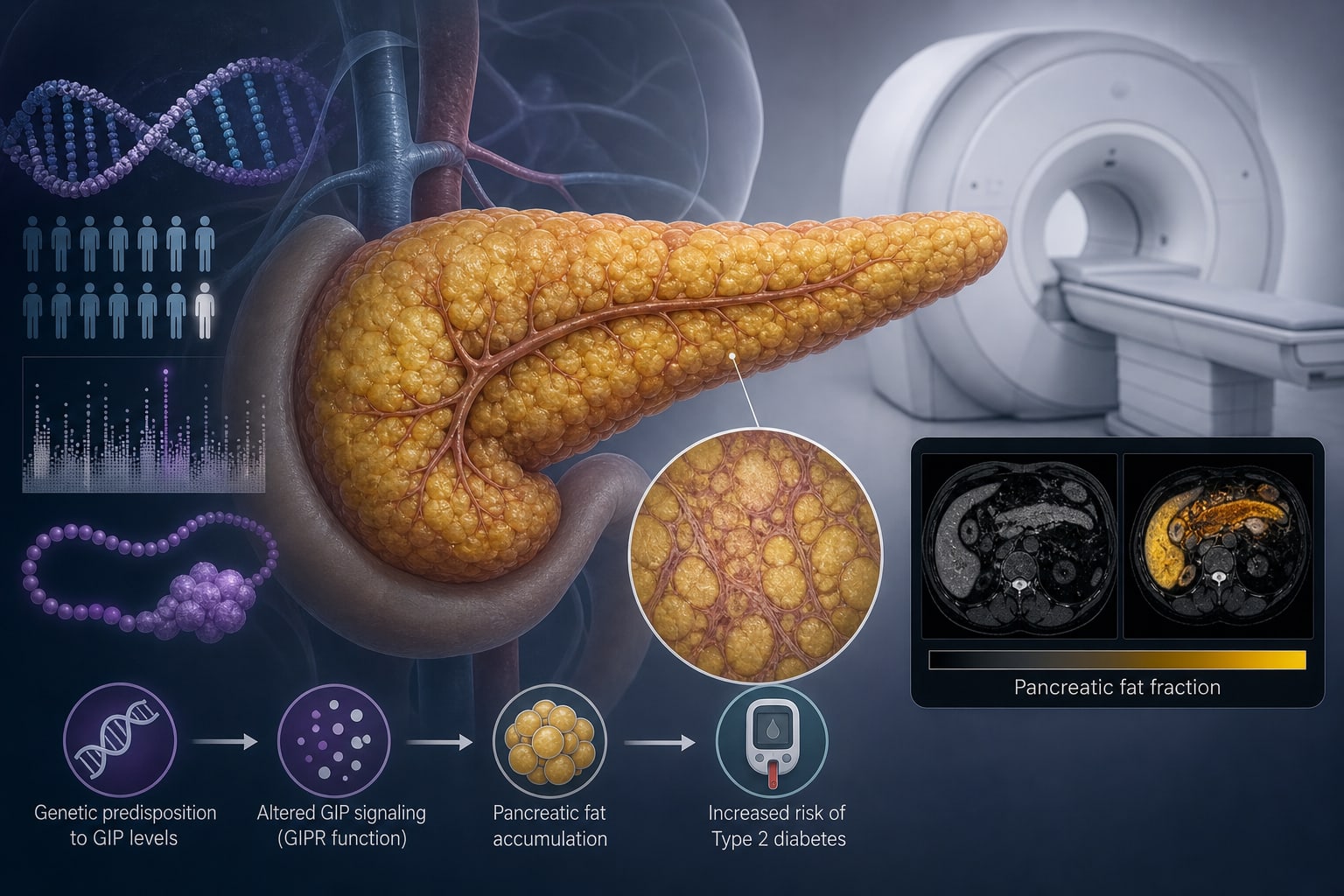
Interaction between fatty pancreas disease and genetically predicted glucose-dependent insulinotropic polypeptide on incident type 2 diabetes: evidence from the UK Biobank - Scorecard - MDSpire
Advertisement
Interaction between fatty pancreas disease and genetically predicted glucose-dependent insulinotropic polypeptide on incident type 2 diabetes: evidence from the UK Biobank
Clinical Scorecard: The Relationship Between Fatty Pancreas Disease and Genetically Predicted Levels of Glucose-Dependent Insulinotropic Polypeptide in the Development of Type 2 Diabetes: Insights from the UK Biobank
At a Glance
Category
Detail
Condition
Key Mechanisms
Target Population
Individuals of White ethnicity aged 40-69 years without diabetes
Care Setting
Key Highlights
{'highlight': 'Higher genetically predicted postprandial GIP levels increase T2D risk associated with FPD (HR 2.64, 95% CI 1.86–3.76)'}
{'highlight': 'FPD associated with increased T2D risk in individuals without E354Q (HR 2.44, 95% CI 1.78–3.34)'}
Guideline-Based Recommendations
Diagnosis
Management
Consider fatty pancreas as a therapeutic target for T2D prevention and treatment, including lifestyle modifications and pharmacotherapy.
Monitoring & Follow-up
Risks
Patient & Prescribing Data
Weight loss and reversal of fatty pancreas may lead to T2D remission through improved insulin sensitivity and beta-cell function.
Clinical Best Practices
Utilize MRI for assessing fatty pancreas in at-risk populations.
Incorporate genetic risk factors in T2D risk assessment.
Regularly monitor genetically predicted GIP levels in relation to pancreatic fat accumulation.