A comprehensive study based on large-sample multi-omics integration and machine learning to decode mitochondria-associated genes: from digestive tract tumours to gastric cancer - Scorecard - MDSpire
Advertisement
A comprehensive study based on large-sample multi-omics integration and machine learning to decode mitochondria-associated genes: from digestive tract tumours to gastric cancer
Clinical Scorecard: An In-Depth Investigation Utilizing Large-Scale Multi-Omics and Machine Learning to Unravel Mitochondrial Genes Linked to Digestive Tract Cancers, Focusing on Gastric Cancer
At a Glance
Category
Detail
Condition
Gastric Cancer
Key Mechanisms
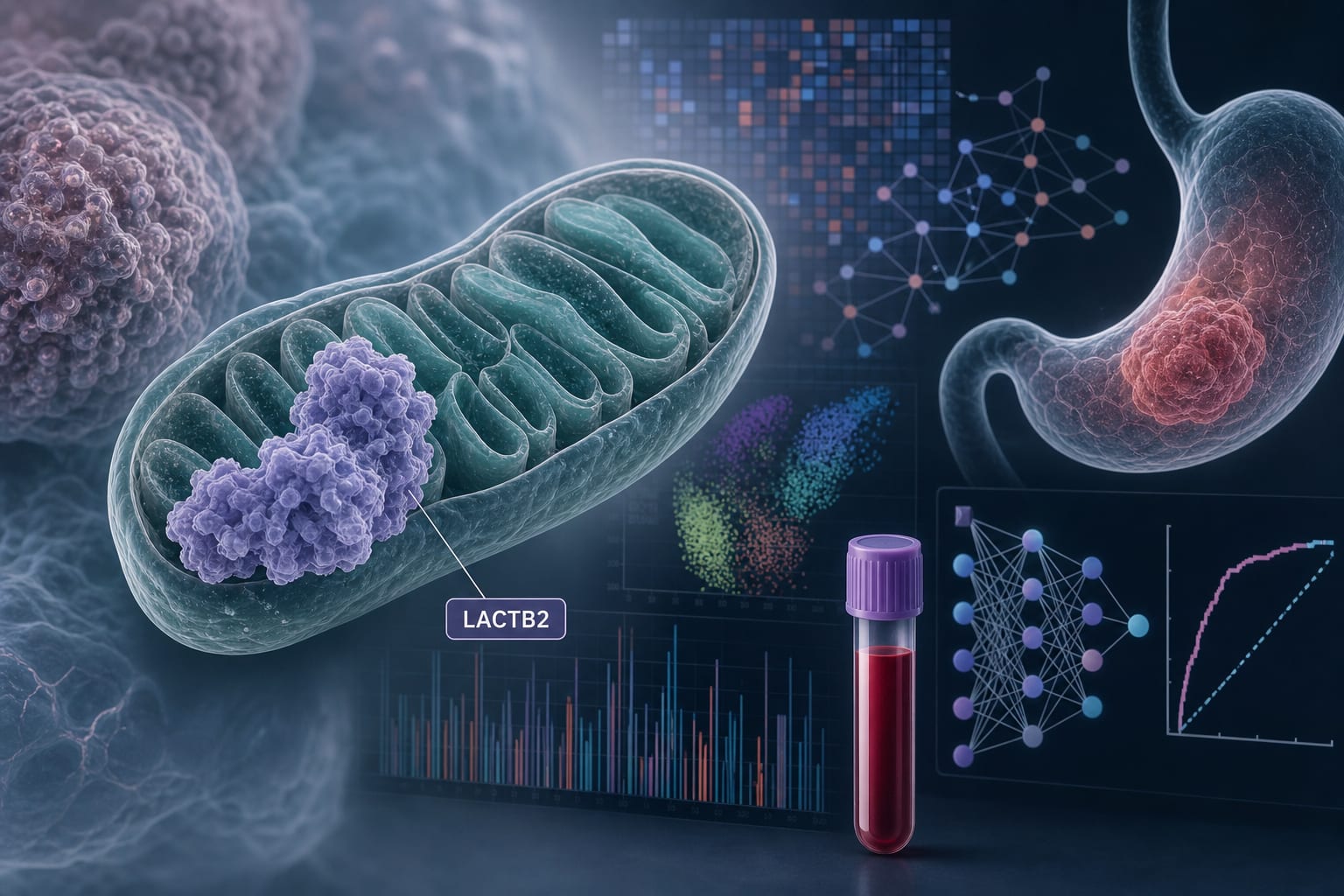
LACTB2 overexpression mediates immune suppression and activates pro-cancer pathways.
Target Population
Patients with gastric cancer and digestive tract tumors.
Care Setting
Clinical research and diagnostic development.
Key Highlights
LACTB2 overexpression is linked to clinical metastasis in gastric cancer.
A novel early blood-based diagnostic model for gastric cancer was developed.
LACTB2 may drive malignant transformation through pro-cancer metabolic signaling networks.
Dysregulated LACTB2 expression affects prognosis in gastric cancer patients.
Afatinib and Ulixertinib may target LACTB2 in gastric cancer treatment.
Guideline-Based Recommendations
Diagnosis
Utilize the developed blood-based diagnostic model for early detection of gastric cancer.
Management
Consider targeting LACTB2 with Afatinib and Ulixertinib in treatment plans.
Monitoring & Follow-up
Monitor LACTB2 expression levels as a potential prognostic indicator.
Risks
LACTB2 overexpression is associated with poor prognosis and clinical metastasis.
Patient & Prescribing Data
Patients diagnosed with gastric cancer.
Combination therapies including immunotherapy and targeted therapy may be beneficial.
Clinical Best Practices
Incorporate multi-omics data for comprehensive patient assessment.
Utilize machine learning models for prognostic evaluations.