Shuci method of electroacupuncture improves self-perception and quality of life in patients with knee osteoarthritis: a multicenter randomized controlled trial - Scorecard - MDSpire
Conexiant’s news site is now MDSpire News. Learn more
Advertisement
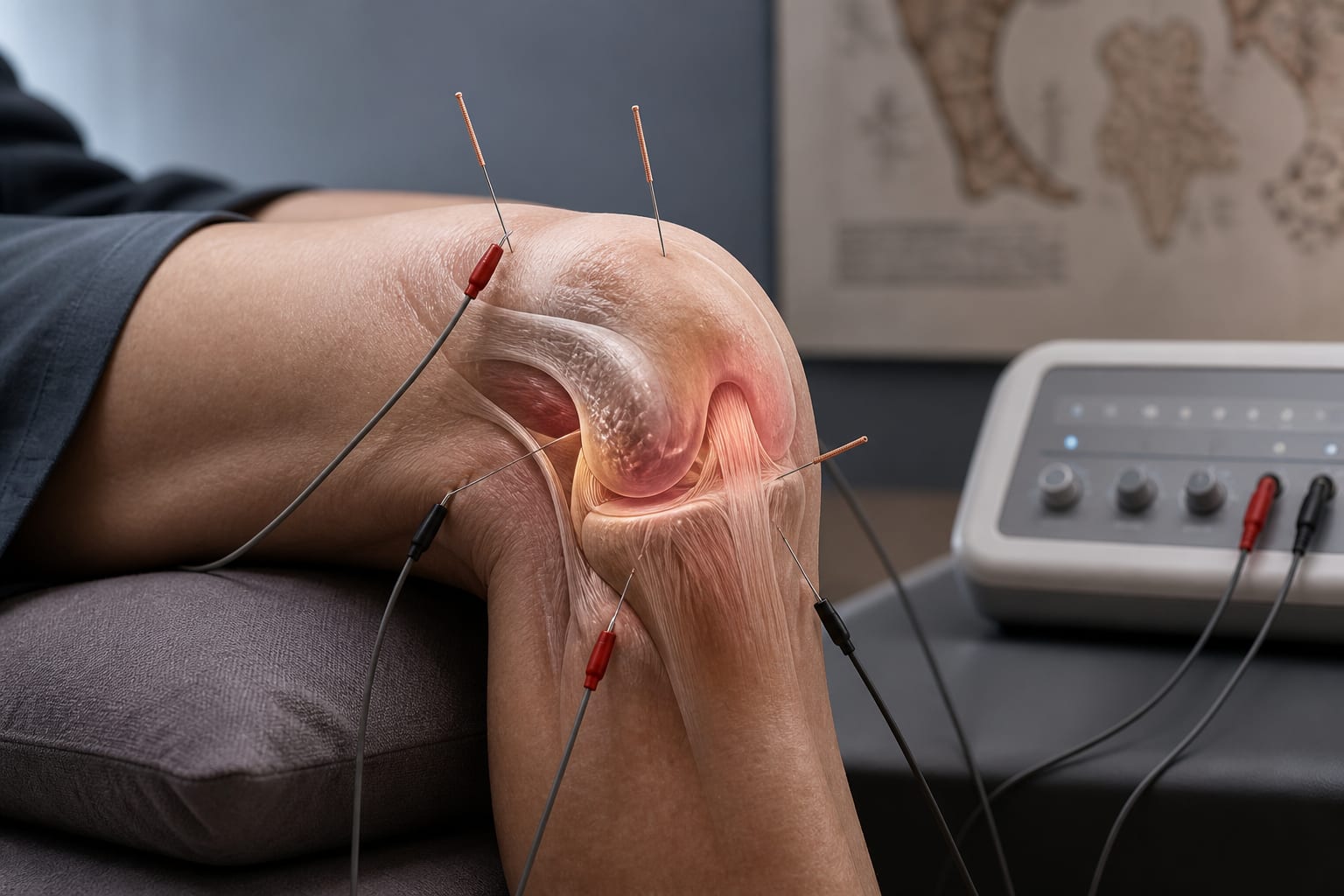
Electroacupuncture Using the Shuci Technique Enhances Self-Assessment and Life Quality in Individuals with Knee Osteoarthritis: Results from a Multicenter Randomized Controlled Trial
Clinical Scorecard: Electroacupuncture Using the Shuci Technique Enhances Self-Assessment and Life Quality in Individuals with Knee Osteoarthritis: Results from a Multicenter Randomized Controlled Trial
At a Glance
Category
Detail
Condition
Knee Osteoarthritis (KOA)
Key Mechanisms
Degenerative injury and disability of the knee joint, involving mechanical load, inflammation, metabolism, and aging.
Target Population
Patients with Knee Osteoarthritis
Care Setting
Multicenter clinical trial across hospitals
Key Highlights
76.4% response rate for electroacupuncture vs. 27.3% for sham treatment.
Significant improvement in pain and quality of life measures post-treatment.
Electroacupuncture demonstrated greater effectiveness compared to sham electroacupuncture.
Guideline-Based Recommendations
Diagnosis
Diagnosis established through assessment of symptoms, signs, laboratory findings, and medical histories.
Management
Electroacupuncture as a treatment option for KOA.
Monitoring & Follow-up
Assessments conducted at baseline and following treatment completion.
Risks
Potential adverse effects associated with pharmacotherapy and surgery.
Patient & Prescribing Data
110 patients with Knee Osteoarthritis enrolled in the trial.
Electroacupuncture administered three times weekly over two weeks showed significant efficacy.
Clinical Best Practices
Utilize electroacupuncture as a complementary treatment for KOA.
Conduct thorough assessments before and after treatment to evaluate efficacy.