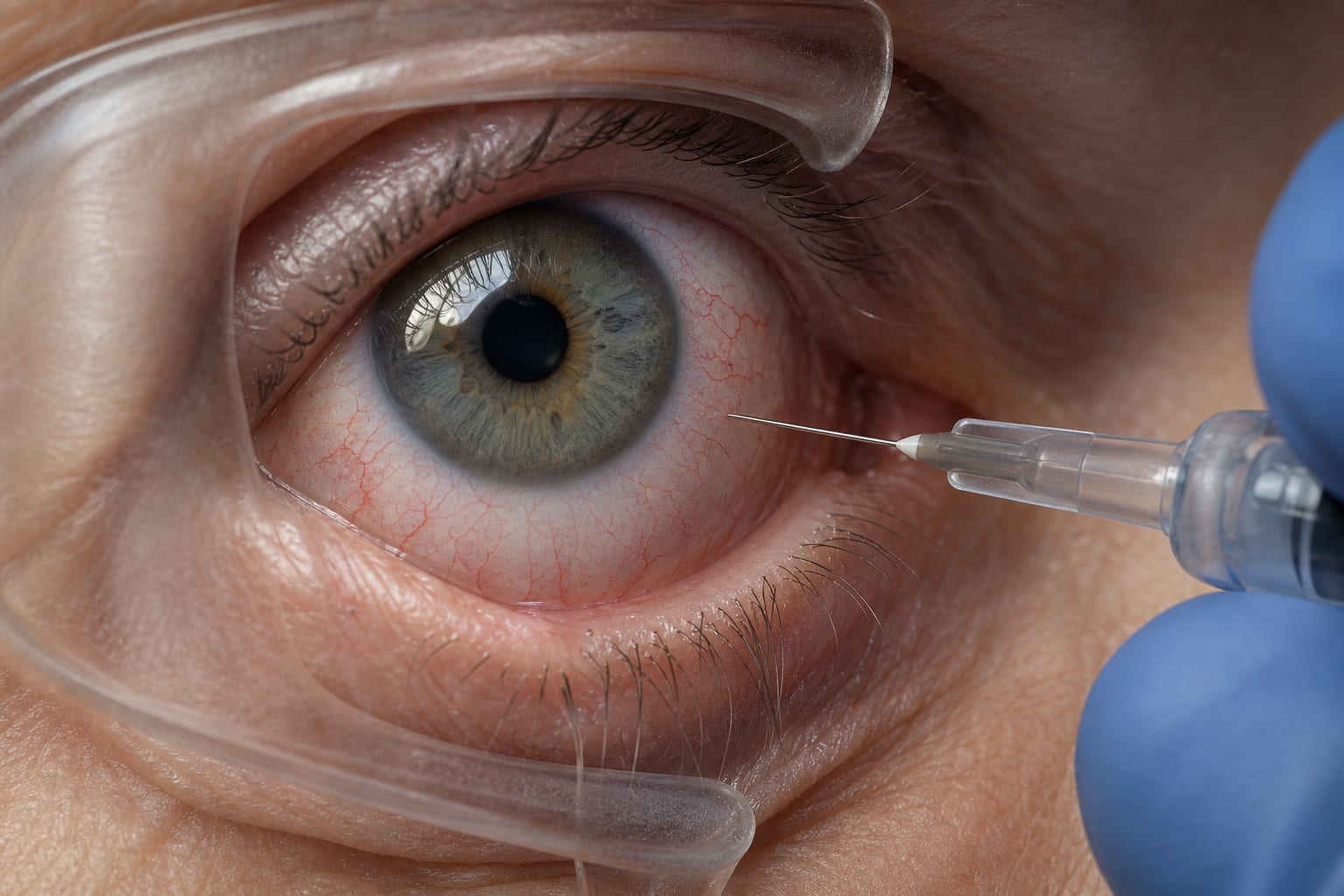
Two-Year Evaluation of Ocular Surface Effects Following Intravitreal Injections
Clinical Scorecard: Two-Year Evaluation of Ocular Surface Effects Following Intravitreal Injections
At a Glance
| Category | Detail |
|---|
| Condition | Neovascular Age-Related Macular Degeneration (nAMD) |
| Key Mechanisms | Impact of intravitreal anti-VEGF injections and PVP-I antiseptic on ocular surface parameters. |
| Target Population | Patients with neovascular age-related macular degeneration receiving intravitreal injections. |
| Care Setting | Ophthalmology department in a clinical hospital setting. |
Key Highlights
- Significant increase in bulbar redness in untreated fellow eyes over two years.
- Median tear meniscus height increased significantly in untreated eyes.
- Both treated and untreated eyes showed significant meibomian gland loss after two years.
- No significant difference in mean tear meniscus height between treated and fellow eyes at follow-up.
- Potential beneficial alteration of ocular surface microbiome by PVP-I.
Guideline-Based Recommendations
Diagnosis
- Diagnosis of nAMD based on clinical evaluation and imaging.
Management
- Intravitreal injections of anti-VEGF agents such as bevacizumab, aflibercept, and ranibizumab.
Monitoring & Follow-up
- Regular assessment of ocular surface parameters and visual acuity.
Risks
- Potential cytotoxic effects of PVP-I on the ocular surface.
Patient & Prescribing Data
Patients aged 55-96 years with nAMD.
Mean of 15.5 intravitreal injections received over two years.
Clinical Best Practices
- Use of topical povidone-iodine as a standard pre-injection antiseptic.
- Regular monitoring of ocular surface parameters during treatment.
Related Resources & Content