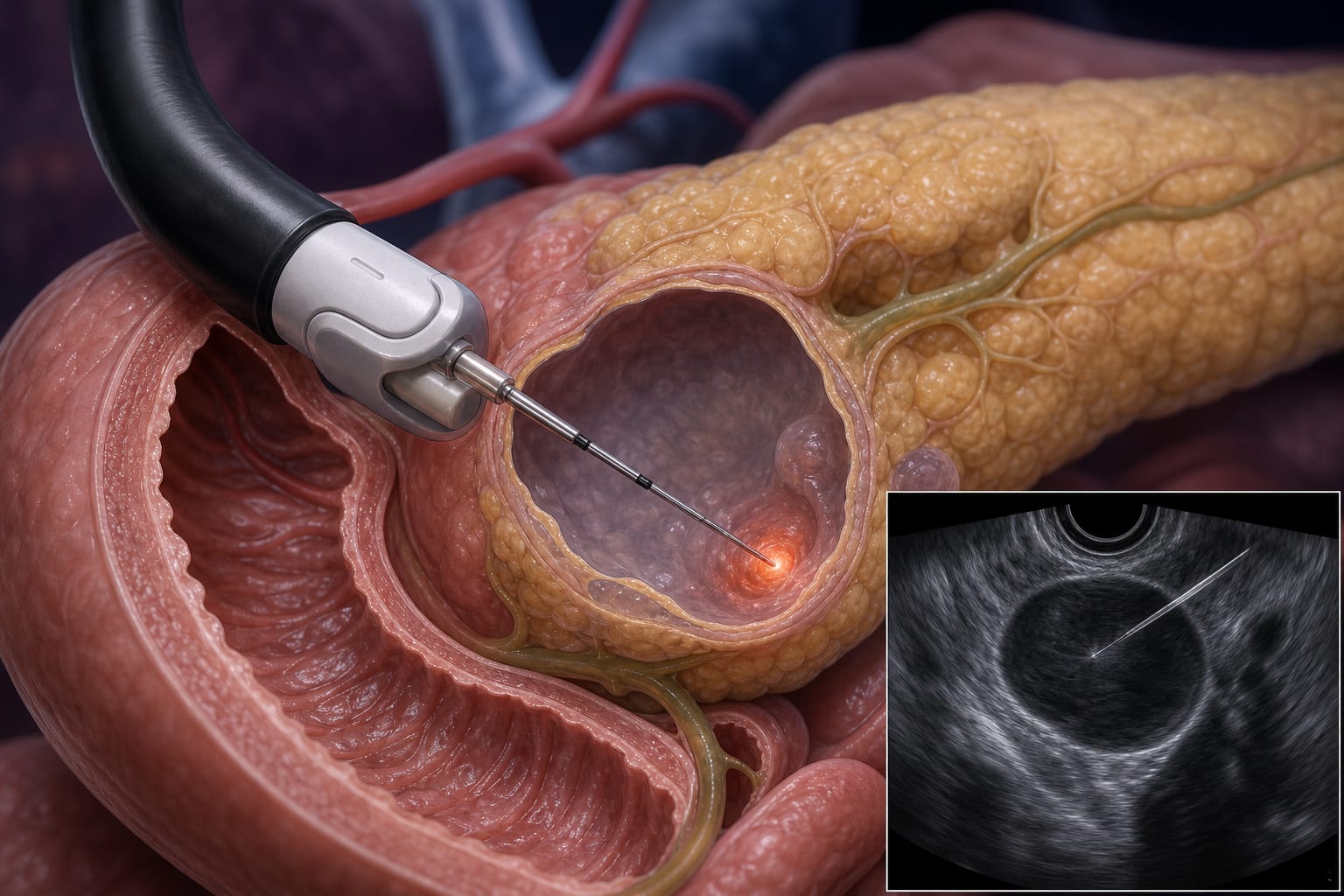
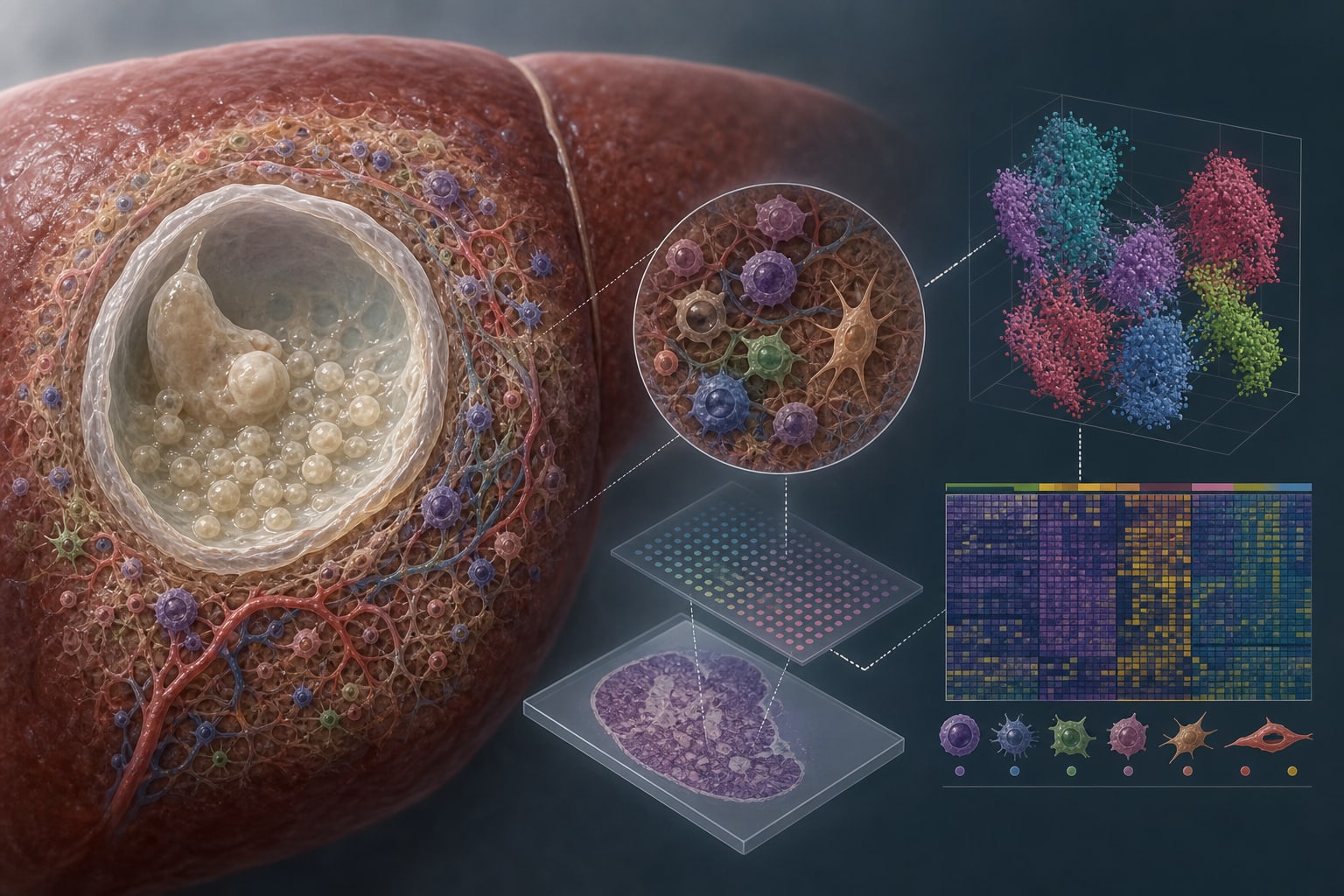
Endoscopic ultrasound-guided radiofrequency ablation for pancreatic cystic neoplasms: a comprehensive review
-
By
-
Xinzhu Sun
-
Nan Ge
-
June 15, 2026
-
Clinical Scorecard: A Thorough Review of Endoscopic Ultrasound-Assisted Radiofrequency Ablation for Pancreatic Cystic Neoplasms
At a Glance
| Category | Detail |
|---|
| Condition | Pancreatic Cystic Neoplasms (PCLs) |
| Key Mechanisms | Endoscopic ultrasound-guided radiofrequency ablation (EUS-RFA) utilizes thermal coagulation to induce necrosis in target tissues. |
| Target Population | Patients with pancreatic cystic neoplasms, particularly those with high-risk features or unfit for surgery. |
| Care Setting | Endoscopic and interventional gastroenterology. |
Key Highlights
- EUS-RFA is a minimally invasive treatment option for PCLs with malignant potential.
- The technique combines precise targeting with thermal ablation.
- EUS-RFA has shown high efficacy and safety in clinical applications.
- Current management of PCLs faces challenges including surgical overtreatment and long-term surveillance burdens.
- The specificity of imaging for predicting malignancy in PCLs is not 100%.
Guideline-Based Recommendations
Diagnosis
- Risk stratification based on imaging features and pathological diagnosis is essential.
Management
- Surgical resection for lesions with worrisome features or high-risk stigmata.
- Long-term surveillance for PCLs with low malignant potential.
Monitoring & Follow-up
- Regular imaging surveillance for patients with low-risk PCLs.
Risks
- Severe complications from surgical interventions range from 10 to 25%.
Patient & Prescribing Data
Elderly patients or those unfit for major surgery with PCLs at risk of progression.
EUS-RFA is characterized by minimal invasiveness and the ability to perform repeat sessions.
Clinical Best Practices
- Utilize EUS-RFA for carefully selected PCLs to minimize surgical risks.
- Ensure accurate imaging and risk assessment before deciding on management strategies.
Related Resources & Content