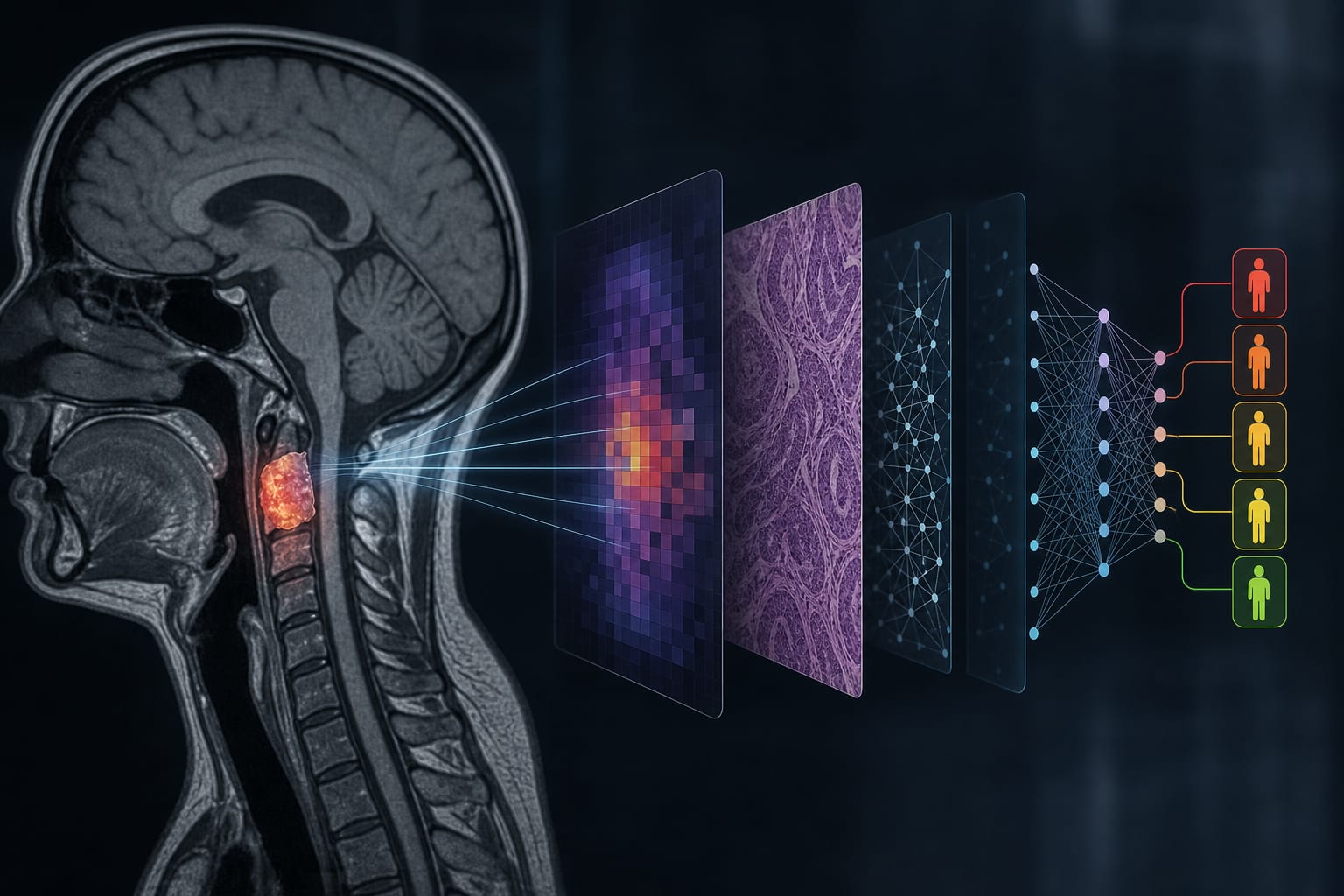
Emerging applications of artificial intelligence for risk stratification in head and neck cancer: a scoping review
-
By
-
Valeria Concha Fernández
-
Mariana González Garcés
-
Jerónimo Cárdenas Montoya
-
Mario Andrés Torres Torres
-
Erwin Hernando Hernández Rincón
-
May 28, 2026
Clinical Scorecard: Novel Uses of Artificial Intelligence in Risk Assessment for Head and Neck Cancer: A Scoping Review
At a Glance
| Category | Detail |
|---|
| Condition | Head and Neck Cancer |
| Key Mechanisms | Artificial Intelligence for risk stratification, including machine learning and deep learning models. |
| Target Population | Patients with head and neck cancer. |
| Care Setting | Clinical oncology settings. |
Key Highlights
- AI techniques applied primarily to diagnostic tasks and prognostic risk stratification.
- Commonly used data modalities include CT, MRI, digital histopathology.
- Moderate to high predictive performance reported, but with methodological heterogeneity.
Guideline-Based Recommendations
Diagnosis
- Utilize AI for enhanced diagnostic accuracy in head and neck cancer.
Management
- Incorporate AI-driven risk stratification to optimize therapeutic decision-making.
Monitoring & Follow-up
- Assess the clinical impact of AI models through prospective multicenter validation.
Risks
- Address challenges related to algorithmic bias and model interpretability.
Patient & Prescribing Data
Individuals diagnosed with head and neck cancer.
AI can support personalized treatment strategies based on risk stratification.
Clinical Best Practices
- Implement multimodal strategies integrating clinical, radiological, and histopathological data.
- Focus on methodological standardization in AI applications.
Related Resources & Content