Necrotizing enterocolitis: risk factors and predictive modeling in a cohort of preterm infants. A case-control study
By
T. Pérez-Oliver
A. Pinilla-Gonzalez
M. Gormaz
J. Kuligowski
E. Serna
L. Torrejón-Rodríguez
I. Lara-Cantón
A. Cayuela-Hernández
M. Vento
A. Parra-Llorca
M. Cernada
July 16, 2026
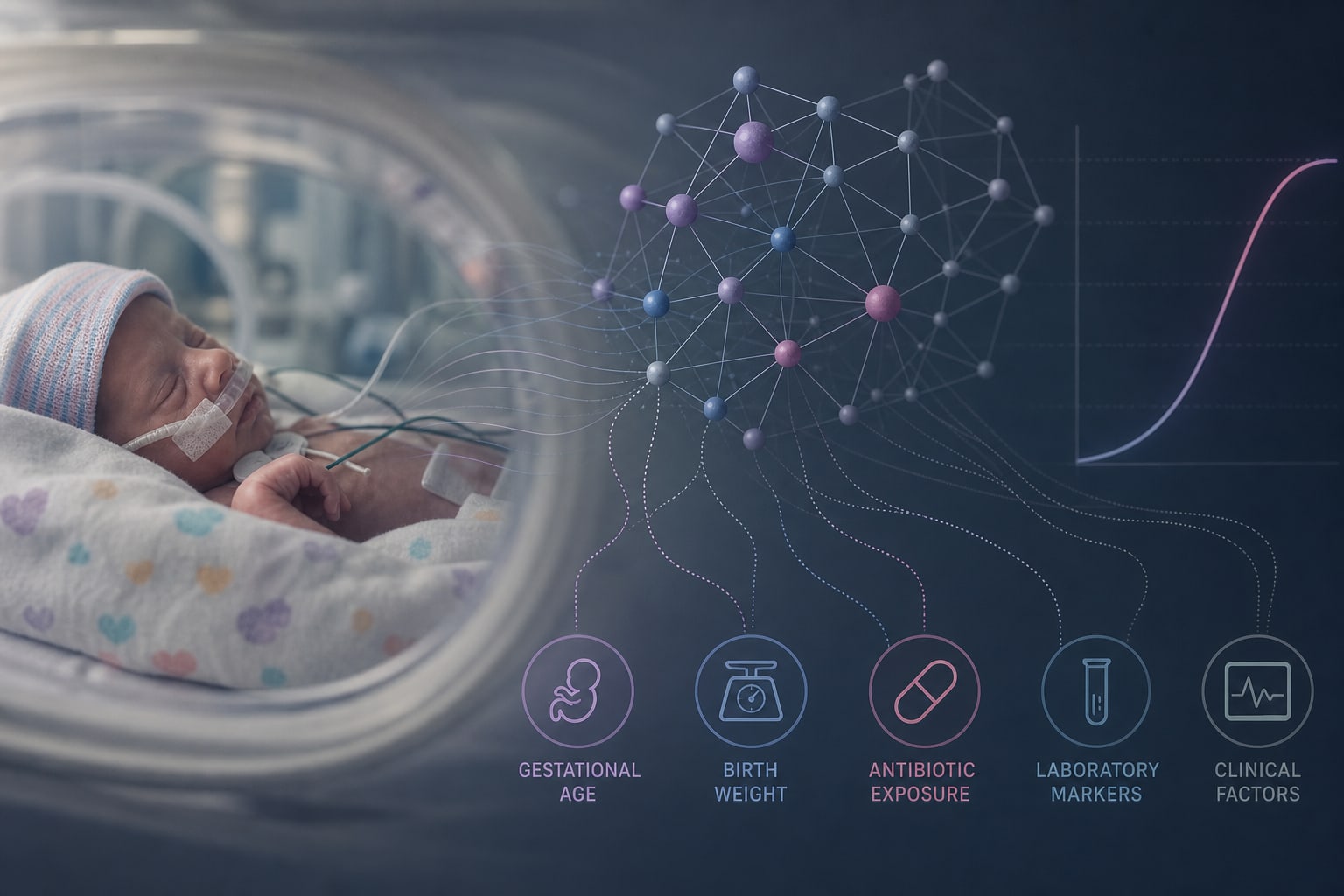
Clinical Scorecard: Risk Factors and Predictive Modeling for Necrotizing Enterocolitis in Very Preterm Infants: A Retrospective Case-Control Analysis
At a Glance
Category Detail
Condition Necrotizing Enterocolitis (NEC) Key Mechanisms Inflammatory condition leading to intestinal ischaemia and necrosis. Target Population Very preterm infants (<32 weeks’ gestation and <1,500 g birth weight) Care Setting Level III Neonatal Intensive Care Unit (NICU)
Key Highlights
13% of very preterm infants developed NEC in the study. Independent risk factors identified include early intravenous antibiotic administration and placental abruption. The predictive model demonstrated moderate discriminatory ability (AUC = 0.73). Associated factors include lower gestational age, prolonged rupture of membranes, and maternal/neonatal antibiotic exposure. Further multicentre studies are required to validate the predictive tool. Guideline-Based Recommendations
Diagnosis
NEC diagnosed as stage IIA or higher according to modified Bell's criteria within the first 65 days of life. Management
Monitor for risk factors such as early intravenous antibiotic administration and placental abruption. Monitoring & Follow-up
Close clinical surveillance using readily available clinical variables. Risks
Increased risk of NEC associated with lower gestational age, birth weight, and prolonged rupture of membranes. Patient & Prescribing Data
Infants <32 weeks’ gestation and <1,500 g birth weight admitted to NICU.
Early intravenous antibiotic administration is a significant risk factor for NEC.
Clinical Best Practices
Implement early risk stratification for NEC in very preterm infants. Utilize the proposed nomogram for clinical decision-making. Related Resources & Content