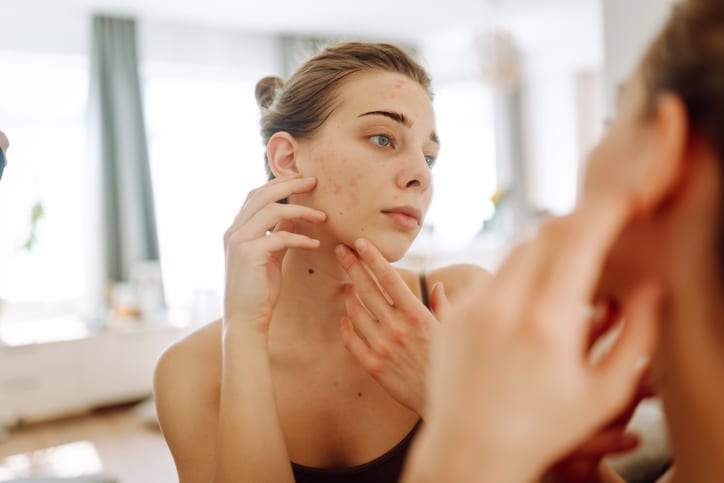
Topical Postbiotics Show Promise for Acne, Eczema
Postbiotics linked to improvements in acne and eczema, with limited data in rosacea
-
By
-
Meg Barbor
-
March 26, 2026
-
Clinical Scorecard: Topical Postbiotics Show Promise for Acne, Eczema
At a Glance
| Category | Detail |
|---|
| Condition | Acne and Atopic Dermatitis (Eczema) |
| Key Mechanisms | Influence skin microbiome, reduce inflammation, improve skin barrier function |
| Target Population | Patients with acne and atopic dermatitis |
| Care Setting | Dermatology |
Key Highlights
- Postbiotics are nonliving microbial components and metabolites.
- Associated with improvements in acne and atopic dermatitis severity.
- Linked to reductions in inflammatory lesions and skin barrier function enhancement.
- May serve as an alternative to traditional treatments like topical antibiotics.
- Evidence for rosacea is limited, highlighting a gap for future research.
Guideline-Based Recommendations
Diagnosis
- Consider skin microbiome assessment in patients with acne and eczema.
Management
- Utilize postbiotic-based treatments as adjuncts or alternatives to traditional therapies.
Monitoring & Follow-up
- Monitor for improvements in disease severity and skin barrier function.
Risks
- Limited evidence for use in rosacea; further studies needed.
Patient & Prescribing Data
Individuals with acne and atopic dermatitis, particularly those with irritation or resistance concerns.
Postbiotics may reduce lesion counts by 50% to 70% with favorable tolerability.
Clinical Best Practices
- Incorporate postbiotics into treatment plans for acne and eczema.
- Educate patients on the benefits and safety of postbiotic therapies.
- Encourage further research into postbiotics for rosacea.
References