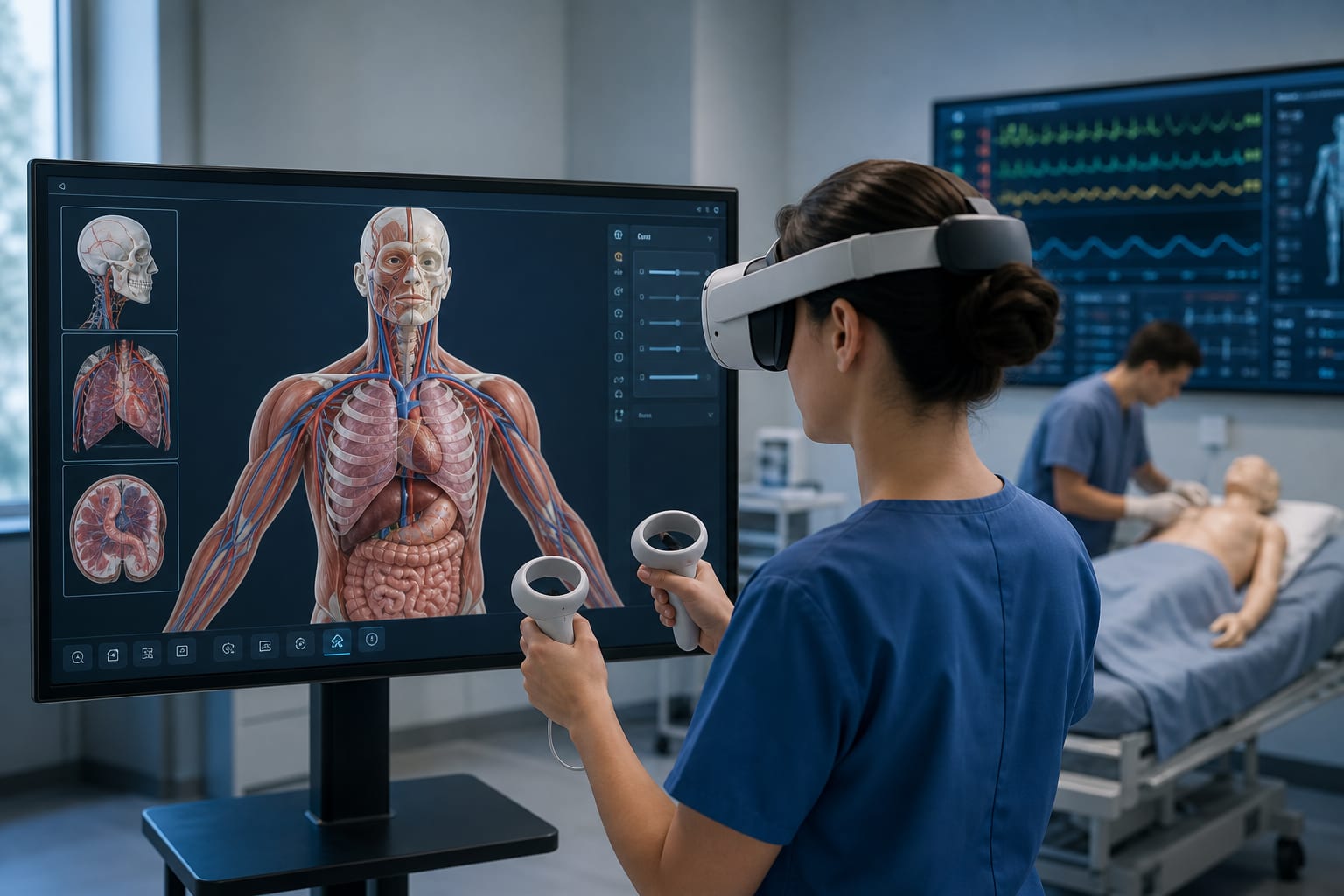
Advancements in the Use of Virtual Simulation for Medical Training
-
By
-
Xiwang Jiang
-
Haichao Ge
-
Qianyong Wang
-
July 17, 2026
Clinical Scorecard: Advancements in the Use of Virtual Simulation for Medical Training
At a Glance
| Category | Detail |
|---|
| Condition | Medical Education |
| Key Mechanisms | Utilization of virtual simulation to enhance learning outcomes and clinical competence. |
| Target Population | Medical students and healthcare professionals in training. |
| Care Setting | Medical education environments. |
Key Highlights
- Virtual simulation provides a high-fidelity, repeatable, and low-risk learning environment.
- Addresses limitations of traditional medical education, such as resource scarcity and restricted clinical exposure.
- Evidence supports educational benefits, though studies often lack long-term evaluation.
- Integration of artificial intelligence is suggested for personalized adaptive learning.
- Future research should focus on multicenter longitudinal studies and platform standardization.
Guideline-Based Recommendations
Diagnosis
Management
Monitoring & Follow-up
Risks
Patient & Prescribing Data
Not applicable; focuses on medical education rather than direct patient care.
Virtual simulation enhances learning but requires further evaluation for long-term clinical transfer.
Clinical Best Practices
- Incorporate virtual simulation in anatomy and clinical skills training.
- Prioritize the integration of nontechnical skills training alongside technical skills.
- Encourage feedback from users to improve virtual simulation experiences.
Related Resources & Content