Clinical Scorecard: The Role of One-Carbon Metabolism in Cancer Immunity: Implications for T-Cell Function, Epigenetic Modifications, and Potential Therapeutic Strategies
At a Glance
Category
Detail
Condition
One-Carbon Metabolism in Cancer Immunity
Key Mechanisms
Regulates nutrient competition, methyl-donor availability, and T-cell functional state.
Target Population
Cancer patients with altered immune responses.
Care Setting
Oncology and immunotherapy.
Key Highlights
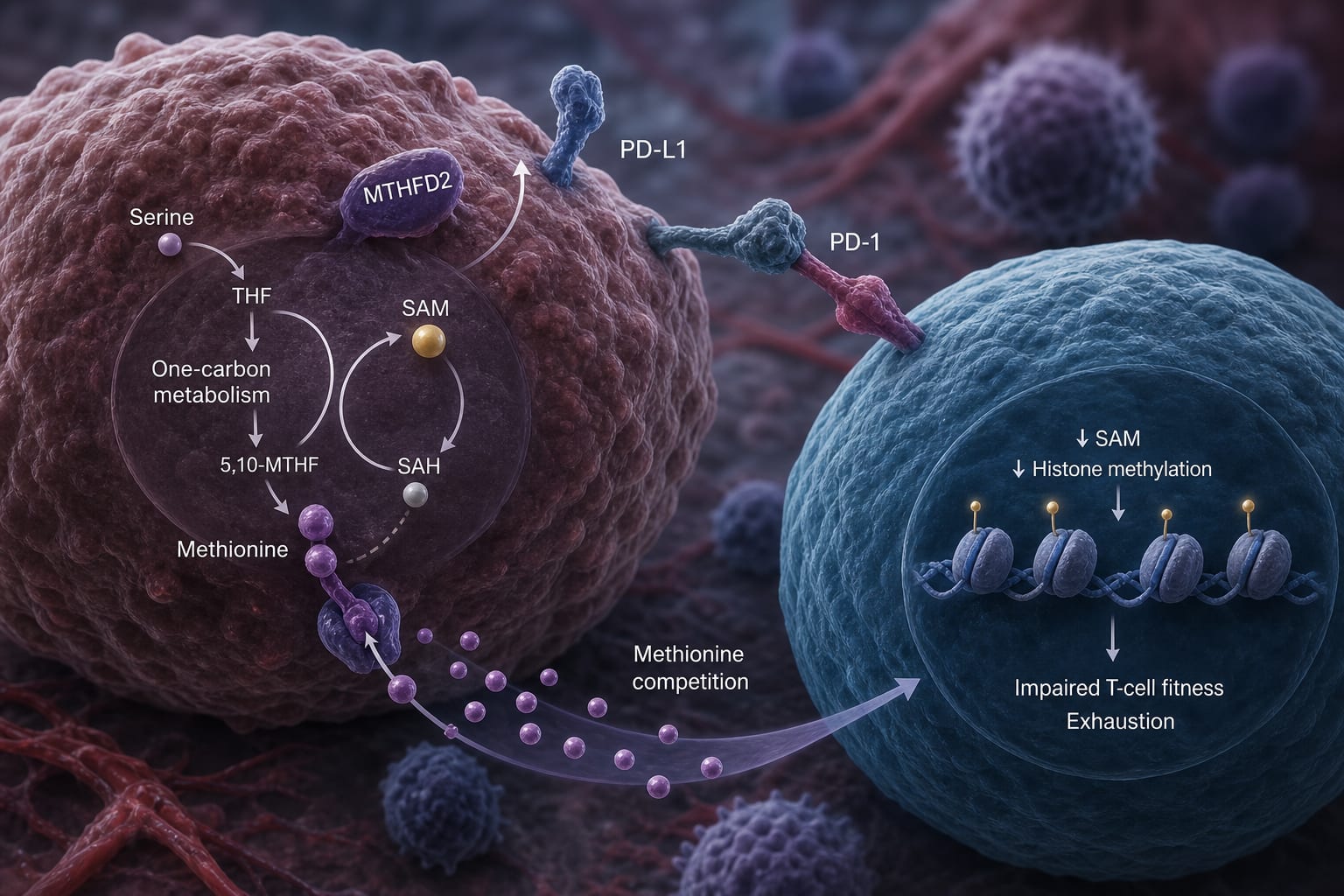
One-carbon metabolism shapes antitumor immunity by regulating nutrient competition and T-cell functional state.
Tumor-intrinsic one-carbon pathways promote immune escape through checkpoint regulation.
Therapeutic modulation of one-carbon metabolism may improve immunotherapy efficacy.
Guideline-Based Recommendations
Diagnosis
Assess metabolic status of tumor and immune cells.
Management
Consider methionine restriction and formate supplementation.
Monitoring & Follow-up
Evaluate T-cell function and metabolic profiles in response to therapies.
Risks
Careful attention to cell-type specificity and metabolic context is required.
Patient & Prescribing Data
Patients undergoing cancer immunotherapy.
Targeting one-carbon metabolism may enhance responses to immune checkpoint blockade.
Clinical Best Practices
Integrate metabolic assessments into treatment planning.
Monitor for changes in T-cell activation and function during therapy.