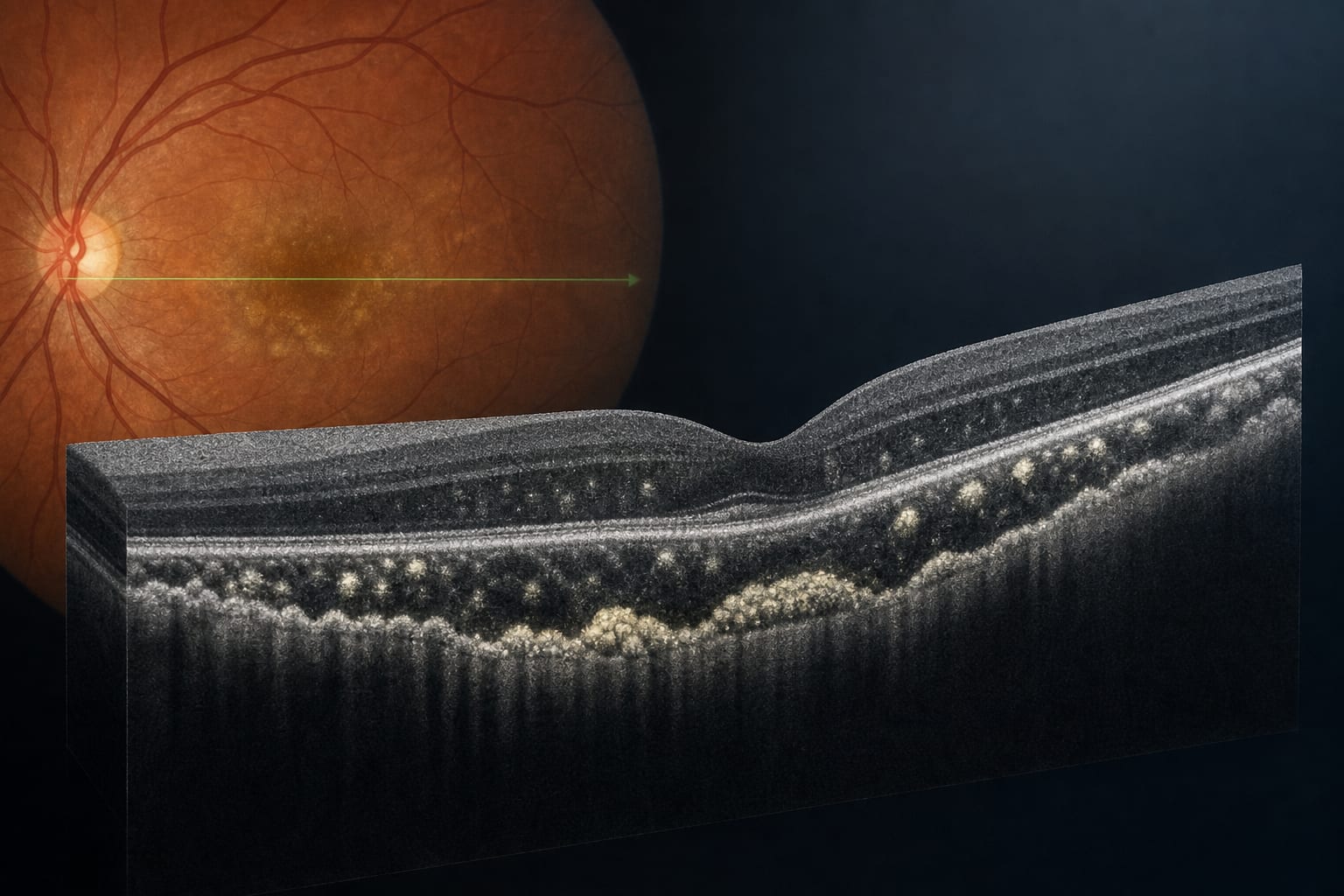
Clinical Scorecard: Characterization of Optical Coherence Tomography Findings and Visual Outcomes in Vitreoretinal Lymphoma: A Comprehensive Phenotyping Analysis
At a Glance
Category
Detail
Condition
Key Mechanisms
Involves OCT features such as sub-RPE deposits, EZ disruption, and EZ-RPE attenuation, which correlate with visual outcomes.
Target Population
Care Setting
Key Highlights
Sub-RPE deposits are the most prevalent OCT finding in VRL (92.1%).
EZ disruption and EZ-RPE attenuation are associated with worse visual prognosis.
IVT-MTX treatment shows differential OCT response patterns across lesion compartments.
OCT is crucial for monitoring treatment response in VRL.
Guideline-Based Recommendations
Diagnosis
Management
Intravitreal methotrexate (IVT-MTX) is the most widely employed local therapy for VRL.
Monitor for potential side effects of IVT-MTX, including retinal toxicity.
Monitoring & Follow-up
Risks
Patient & Prescribing Data
Mean of 7.7 ± 0.8 IVT-MTX injections in the longitudinal subgroup (range: X to Y).
Clinical Best Practices
Utilize OCT for noninvasive evaluation and monitoring of VRL.
Consider age-related barriers such as comorbidities and frailty in diagnostic procedures for older patients.