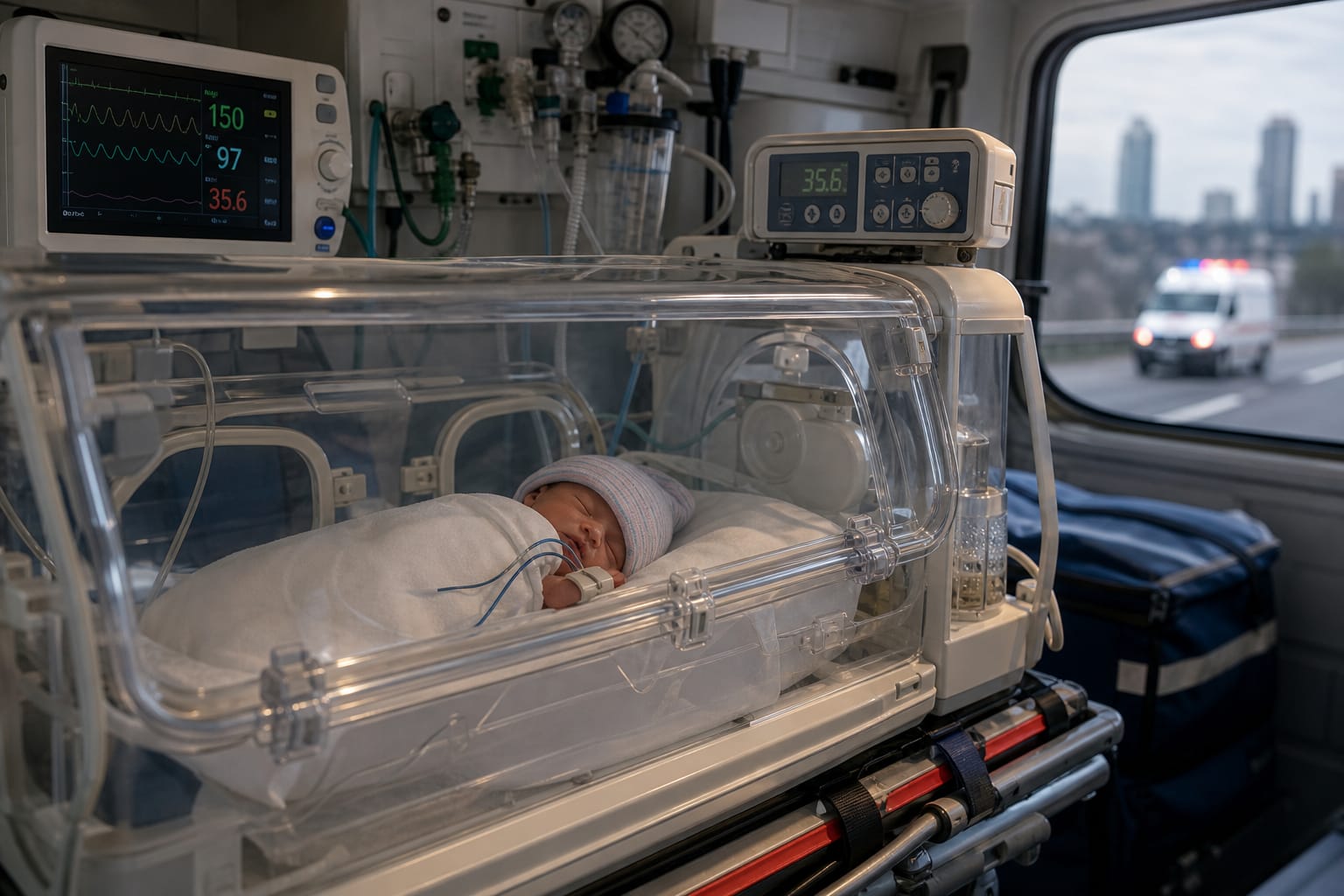
Early postnatal hypothermia in critically transported newborns at a Chinese tertiary care neonatal centre: a retrospective study
By
Wangtao Sheng
Yanqing Shen
Xiang Chen
Xiafang Chen
Sha Sha
Haiyan Li
Jun Bu
Fei Bei
July 7, 2026
Clinical Scorecard: Incidence of Early Postnatal Hypothermia in Critically Ill Newborns During Transport: A Retrospective Analysis from a Chinese Tertiary Neonatal Center
At a Glance
Category Detail
Condition Early Postnatal Hypothermia (EPH) Key Mechanisms Hypothermia classified as mild (36.0°C–36.4°C), moderate (32.0°C–35.9°C), or severe (<32.0°C); associated with increased morbidity and mortality. Target Population Critically ill newborns requiring inter-hospital transport. Care Setting Tertiary care neonatal center
Key Highlights
82.1% of critically ill newborns experienced EPH during transport. 93.2% incidence of EPH in very preterm infants. General hospital births significantly increased the risk of hypothermia severity. No significant differences in mortality and early complications among EPH groups. Women's hospitals showed better adherence to thermoregulation protocols. Guideline-Based Recommendations
Diagnosis
Classify hypothermia severity based on the lowest body temperature within the first 2 hours postnatal. Management
Implement standardized, targeted temperature management protocols across delivery settings. Monitoring & Follow-up
Monitor body temperature closely in critically ill transported neonates. Risks
Increased mortality risk associated with each 1°C decrease in body temperature among very low birth weight infants. Patient & Prescribing Data
Critically ill neonates transported from delivery hospitals to a tertiary care center.
Thermal management practices vary significantly between general and women's hospitals.
Clinical Best Practices
Adhere to neonatal thermoregulation protocols during transport. Prioritize monitoring of body temperature in high-risk populations. Related Resources & Content