Spectral EEG-guided adaptive neuromodulation for social anxiety disorder, performance-only subtype: a case report - Scorecard - MDSpire

Spectral EEG-guided adaptive neuromodulation for social anxiety disorder, performance-only subtype: a case report

  • By

  • Mark Odron

  • Yatharth Mahajan

  • Vipul Reddy

  • Krrishika Saxena

  • Charles Vigilia

  • Brianna Dela Cruz

  • Jayleen Lu

  • Nisha Thunga

  • Kenneth Blum

  • David Baron

  • Keerthy Sunder

  • June 4, 2026

  • 0 min

Share

Clinical Scorecard: Personalized Repetitive Transcranial Magnetic Stimulation Guided by Spectral EEG for Performance-Only Social Anxiety Disorder: A Case Study

At a Glance

CategoryDetail
ConditionSocial Anxiety Disorder (SAD), performance-only subtype
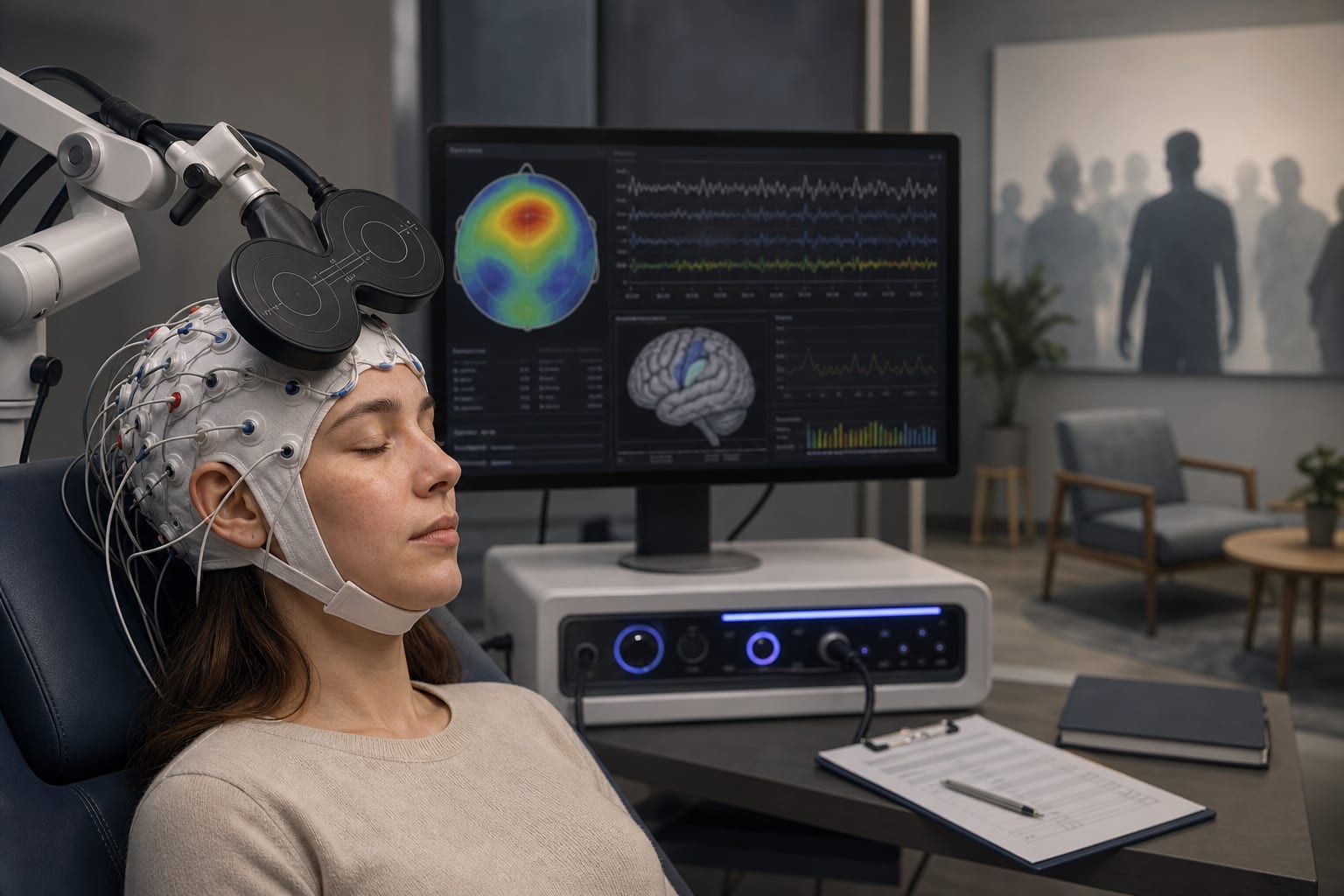
Key MechanismsPersonalized repetitive transcranial magnetic stimulation (PrTMS) guided by spectral EEG
Target PopulationAdults with performance-related anxiety
Care SettingClinical setting with certified neurotechnologists

Key Highlights

  • PrTMS showed reductions in social anxiety intensity and avoidance behaviors
  • Improvements in mood and daily function were observed
  • Symptom changes quantified using validated scales (LSAS, SPIN, PHQ-9, GAD-7, Q-LES-Q-SF)
  • Increased alpha band power and decreased delta band power noted in EEG
  • PrTMS may warrant further investigation as an adjunctive treatment for SAD

Guideline-Based Recommendations

Diagnosis

  • Diagnosis established according to DSM-5 criteria

Management

  • PrTMS recommended for alleviating symptoms and improving quality of life

Monitoring & Follow-up

  • Weekly psychometric assessments to evaluate treatment response

Risks

  • No contraindications to TMS reported in the patient

Patient & Prescribing Data

Adult male with performance-related anxiety

Completed 50 PrTMS sessions over a 12-week treatment course

Clinical Best Practices

  • Utilize spectral EEG to guide PrTMS treatment parameters
  • Incorporate validated anxiety questionnaires in treatment assessment
  • Adjust stimulation parameters based on longitudinal symptom and EEG variability

Related Resources & Content

Original Source(s)

Related Content