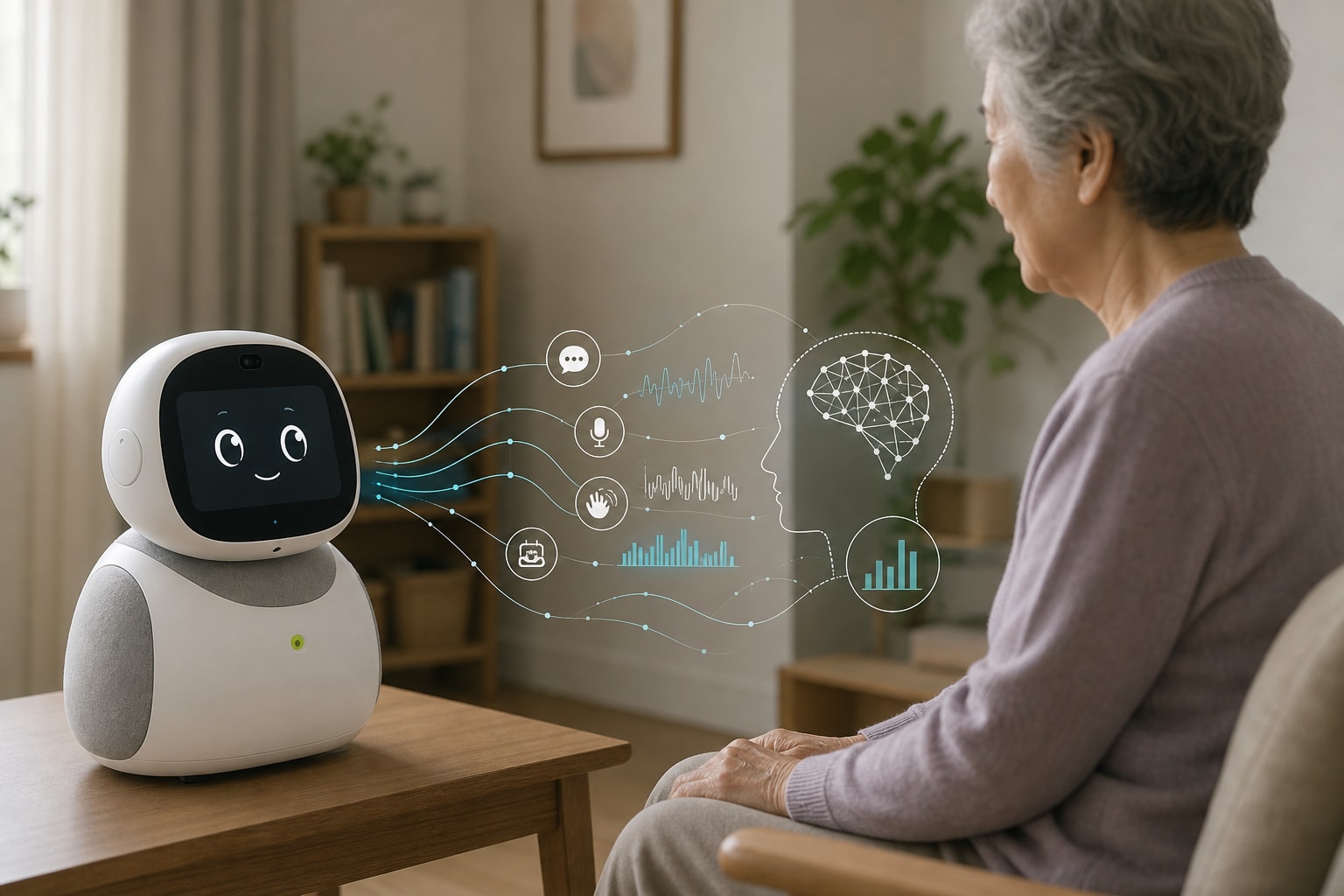
Identifying Depression Risk in Elderly Individuals Through Home-Utilized Socially Assistive Robots: An Empirical Investigation
By
Han Wool Jung
Jooho Lee
Jin Young Park
Woo Jung Kim
Jaesub Park
June 10, 2026
Clinical Scorecard: Identifying Depression Risk in Elderly Individuals Through Home-Utilized Socially Assistive Robots: An Empirical Investigation
At a Glance
Category Detail
Condition Key Mechanisms Target Population Community-dwelling older adults aged 65 or older Care Setting
Key Highlights
Study involved 215 older adults using the Hyodol robot for health monitoring, with cohorts from 2024 and 2025. Guideline-Based Recommendations
Diagnosis
Depression status determined via clinical surveys (specify types) and expert-led video consultations. Management
Monitoring & Follow-up
Risks
Patient & Prescribing Data
Involvement in remote video interviews and collection of personal data (specify types) for health monitoring.
Clinical Best Practices
Incorporate continuous monitoring functions into socially assistive robots. Utilize both active and passive data for comprehensive health assessments. Focus on patient-centered interventions to improve mental health outcomes. Emphasize the importance of user engagement in the monitoring process. Related Resources & Content