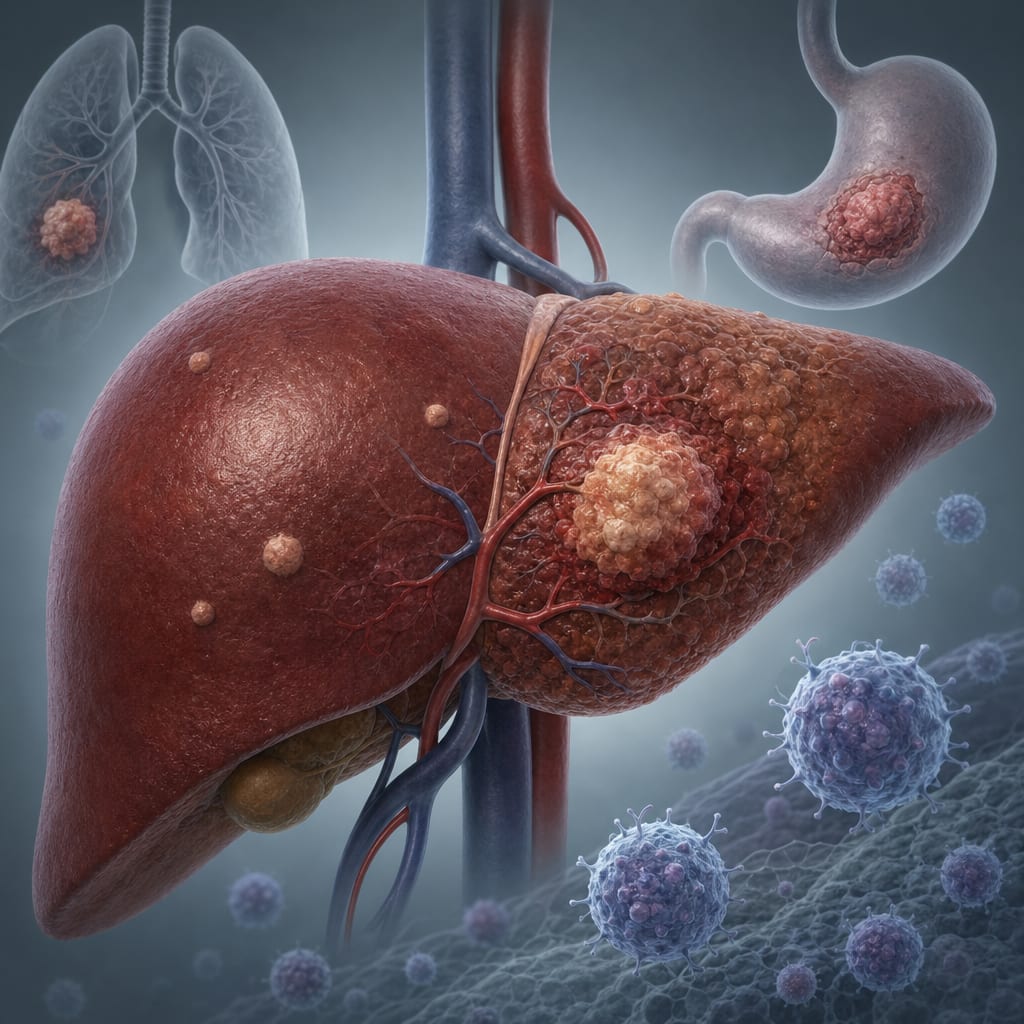
Case Report: Anti-PD-1 therapy as a catalyst for the rapid transformation of a hepatic nodule into HCC: a “soil and seed” paradox in metachronous triple primary malignancies? - Scorecard - MDSpire
Advertisement
Case Report: Anti-PD-1 therapy as a catalyst for the rapid transformation of a hepatic nodule into HCC: a “soil and seed” paradox in metachronous triple primary malignancies?
Clinical Scorecard: Case Study: The Role of Anti-PD-1 Treatment in the Rapid Development of Hepatic Nodules into HCC: Exploring the 'Soil and Seed' Concept in Metachronous Triple Primary Cancers
At a Glance
Category
Detail
Condition
Metachronous Triple Primary Malignancies
Key Mechanisms
Impact of immune checkpoint inhibitors (ICIs) on tumor evolution and immune tolerance.
Target Population
Patients with multiple primary malignancies, particularly those with chronic HBV infection and high-risk factors.
Care Setting
Oncology and immunotherapy treatment settings.
Key Highlights
Case of a 68-year-old male with metachronous triple primary malignancies.
Rapid transformation of a stable hepatic nodule into HCC during PD-1 inhibitor therapy.
Potential disruption of local immune tolerance by ICIs in high-risk patients.
Need for rigorous liver assessment and monitoring in patients receiving immunotherapy.
Emerging evidence of ICIs possibly catalyzing dormant neoplastic processes.
Guideline-Based Recommendations
Diagnosis
Conduct thorough imaging and biopsy for suspected malignancies.
Monitor liver lesions closely in patients undergoing immunotherapy.
Management
Consider radiofrequency ablation for localized HCC.
Utilize a combination of chemotherapy and immunotherapy for gastric adenocarcinoma.
Monitoring & Follow-up
Regular radiological surveillance for hepatic nodules in high-risk patients.
Assess for immune-related adverse events during ICI therapy.
Risks
Potential for rapid malignant transformation of pre-existing lesions.
Increased risk of developing new malignancies during immunotherapy.
Patient & Prescribing Data
Patients with chronic HBV infection and a history of tobacco and alcohol use.
ICIs may inadvertently promote tumorigenesis in predisposed individuals.
Clinical Best Practices
Implement baseline liver assessments before starting immunotherapy.
Educate patients on the risks of secondary malignancies during ICI treatment.
Ensure multidisciplinary management for patients with multiple primary malignancies.