Clinical Scorecard: Enhancing Inhibitory Synaptic Plasticity to Restore Basal Ganglia Function in Parkinson's Disease
At a Glance
Category
Detail
Condition
Parkinson's disease characterized by hypoactivity of inhibitory basal ganglia pathways
Key Mechanisms
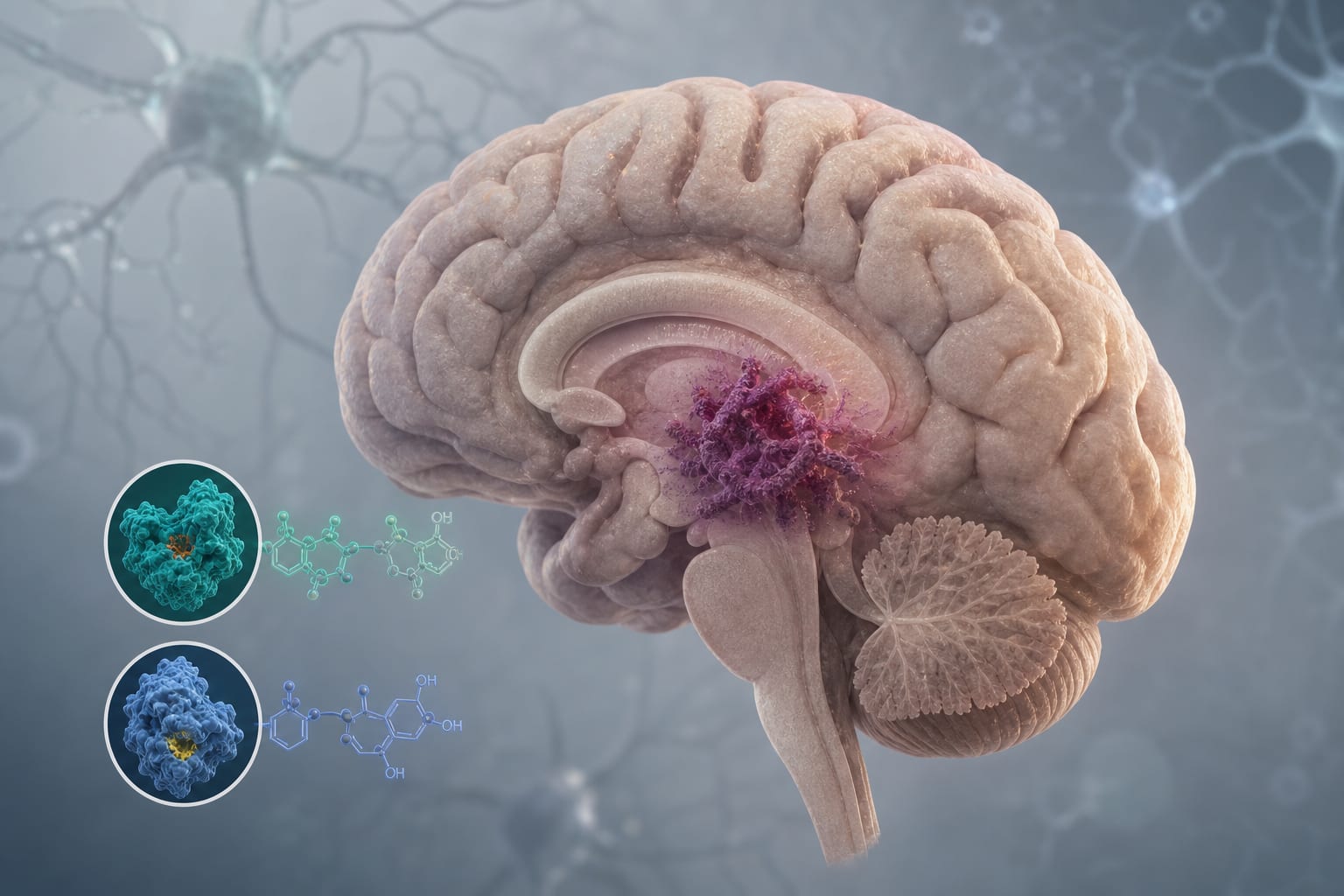
Long-term potentiation (LTP) of inhibitory striato-GPi and GPe-STN projections to restore basal ganglia circuit dynamics
Target Population
People with Parkinson's disease undergoing deep brain stimulation (DBS) surgery
Care Setting
Intraoperative and extraoperative settings during GPi and STN DBS procedures
Key Highlights
GPi-DBS high-frequency microstimulation induces LTP-like increases in inhibitory striato-GPi pathway activity with motor improvements persisting beyond stimulation cessation.
STN-DBS did not produce enduring behavioral effects or potentiation of GPe-STN inhibitory projections under current stimulation paradigms.
LTP-based strategies may optimize DBS therapy by reducing side effects and improving battery efficiency through sustained circuit modulation.
Guideline-Based Recommendations
Diagnosis
Confirm Parkinson's disease diagnosis with clinical and neurophysiological assessments prior to DBS surgery.
Management
Consider GPi-DBS with high-frequency microstimulation to induce LTP-like potentiation of inhibitory pathways for sustained motor symptom improvement.
Optimize stimulation paradigms for STN-DBS to effectively induce LTP in GPe-STN projections, as current protocols show limited efficacy.
Monitoring & Follow-up
Monitor motor function improvements intraoperatively and postoperatively using hand movement amplitude and beta frequency oscillations.
Assess evoked potentials and neuronal firing rates to evaluate synaptic plasticity effects during DBS.
Risks
Be aware of potential side effects from continuous high-frequency stimulation; LTP-based approaches may mitigate these by reducing stimulation duration.
Patient & Prescribing Data
People with Parkinson's disease undergoing GPi or STN DBS surgery
GPi-DBS microstimulation shows evidence of sustained motor improvement via LTP-like potentiation; STN-DBS requires further optimization for similar effects.
Clinical Best Practices
Use high-frequency microstimulation intraoperatively to induce LTP-like changes in inhibitory basal ganglia pathways.
Target the GPi for DBS when aiming to leverage inhibitory synaptic plasticity for motor symptom relief.
Incorporate electrophysiological monitoring of evoked potentials and beta oscillations to guide DBS programming.
Consider closed-loop DBS approaches to limit stimulation duration while maintaining therapeutic benefits.
Further research is needed to optimize STN stimulation parameters for effective LTP induction.
by Kiah A Spencer, Alexandra Boogers, Srdjan Sumarac, David B J Crompton, Leon A Steiner, Luka Zivkovic, Yijinmide Buren, Alexandre Boutet, Andres M Lozano, Suneil K Kalia, William D Hutchison, Alfonso Fasano, Luka Milosevic