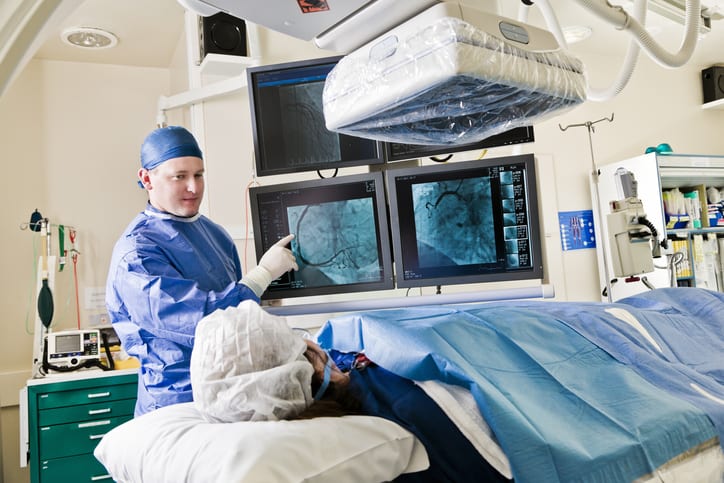
Suspended Lead Suits Linked to Lower Radiation in LAAO
Study shows suspended lead suits reduce head-level radiation exposure during left atrial appendage occlusion procedures
By
Henry Thomas
March 24, 2026
Clinical Scorecard: Suspended Lead Suits Linked to Lower Radiation in LAAO
At a Glance
Category Detail
Condition Left Atrial Appendage Occlusion (LAAO) Key Mechanisms Use of suspended lead suits to reduce occupational radiation exposure Target Population Interventional echocardiographers performing LAAO procedures Care Setting Quaternary care center
Key Highlights
Suspended lead suits resulted in a median head-level radiation dose of 0 μSv compared to 11 μSv with traditional lead aprons. 60% of procedures with suspended lead suits had undetectable radiation exposure. 30% of procedures with traditional lead aprons had exposure of at least 20 μSv. Radiation exposure normalized to dose area product remained lower with suspended lead suits. Long-term occupational radiation exposure has been linked to serious health risks. Guideline-Based Recommendations
Diagnosis
Evaluate occupational radiation exposure in interventional procedures. Management
Consider the use of suspended lead suits in LAAO procedures to minimize radiation exposure. Monitoring & Follow-up
Regularly assess radiation exposure levels for interventional echocardiographers. Risks
Long-term exposure may lead to cataracts, carotid atherosclerosis, and potential brain malignancies. Patient & Prescribing Data
Patients undergoing left atrial appendage occlusion procedures.
Suspended lead suits may enhance safety for healthcare providers during procedures.
Clinical Best Practices
Implement the use of suspended lead suits in interventional cardiology settings. Conduct multicenter studies to validate findings and assess cost-effectiveness. References