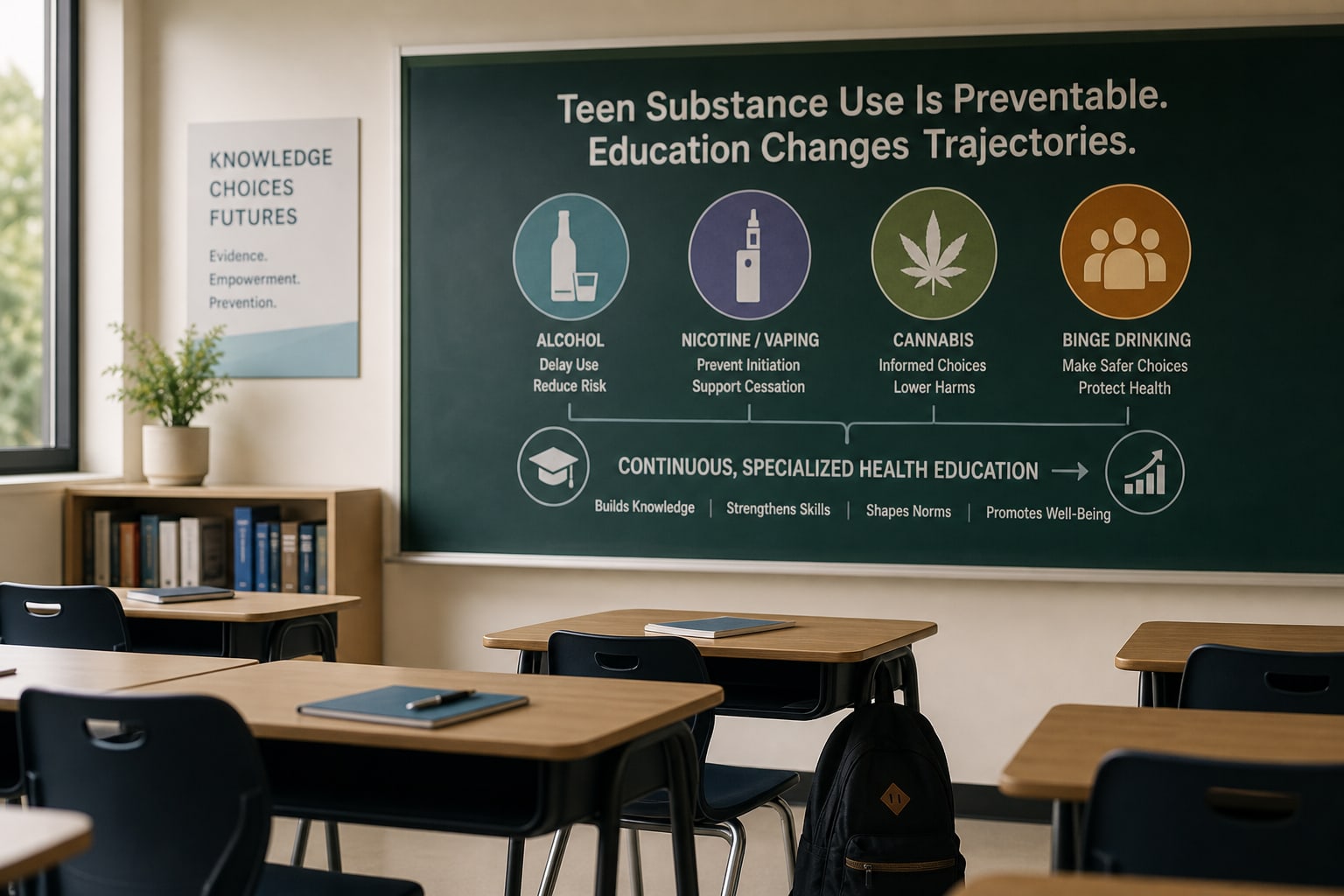
Continuous Access to Specialized Health Education in High Schools and Its Impact on Teen Substance Use
-
By
-
Brennan Davis
-
Levi Eoin Davis
-
July 9, 2026
Clinical Scorecard: Continuous Access to Specialized Health Education in High Schools and Its Impact on Teen Substance Use
At a Glance
| Category | Detail |
|---|
| Condition | Adolescent Substance Use |
| Key Mechanisms | Sustained availability of dedicated health education courses in schools. |
| Target Population | High school students in grades 9 and 11. |
| Care Setting | School-based health education. |
Key Highlights
- Adolescent substance use is a major contributor to morbidity and mortality in the US.
- California law mandates instruction on substance use but allows flexibility in course delivery.
- The study used a difference-in-differences design to assess the impact of health course availability.
- Sustained availability of a dedicated health course is hypothesized to lower substance use prevalence.
- Data were collected from the California Healthy Kids Survey spanning multiple school years.
Guideline-Based Recommendations
Diagnosis
Management
- Implement routine, policy-driven health education in schools.
Monitoring & Follow-up
Risks
Patient & Prescribing Data
High school students in California.
Dedicated health courses may contribute to lower prevalence of substance use behaviors.
Clinical Best Practices
- Utilize school-based screening and brief interventions for substance use.
- Incorporate personality-targeted prevention programs.
Related Resources & Content