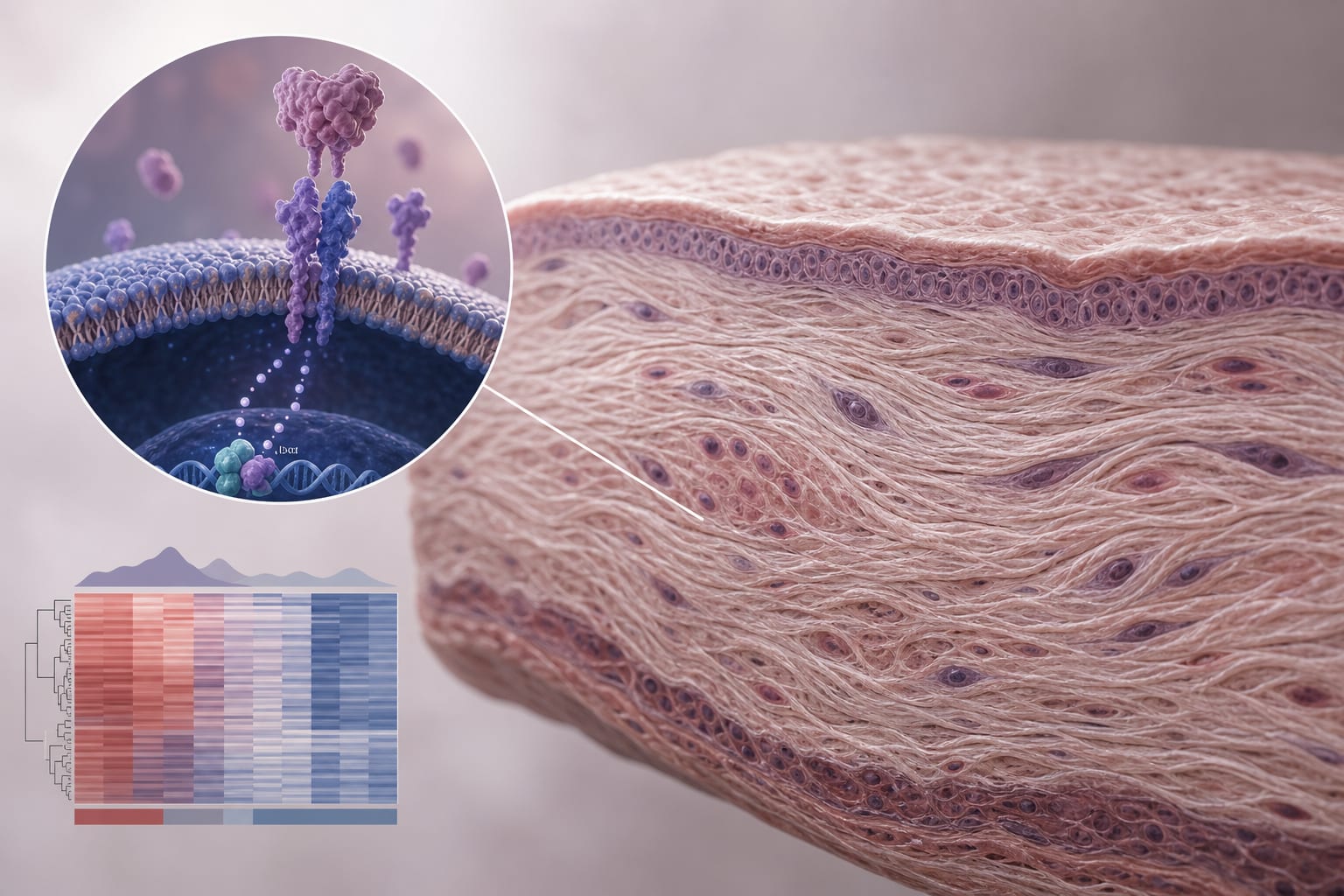
Transcriptomic identification of IL-17/FOS-associated signaling in dartos fascia remodeling of pediatric concealed penis
-
By
-
Haiyang Hu
-
Wenwen Liu
-
Zhongsong Tu
-
Jiao Lei
-
Qiao Wu
-
Zhangyu Yang
-
Xiaohou Wu
-
Peng Jing
-
July 10, 2026
-
Clinical Scorecard: Transcriptomic Analysis Reveals IL-17/FOS-Related Signaling Pathways in Dartos Fascia Remodeling of Pediatric Concealed Penis
At a Glance
| Category | Detail |
|---|
| Condition | Pediatric Concealed Penis (CP) |
| Key Mechanisms | IL-17/FOS-associated inflammatory remodeling signatures |
| Target Population | Pediatric patients under 12 years with concealed penis |
| Care Setting | Clinical tissue study |
Key Highlights
- IL-17-related signaling pathways are enriched in CP dartos fascia tissues.
- Increased expression of IL-17RA, ACT1, FOS, IL-6, and PTGS2 observed in CP.
- Histopathological studies indicate disorganized dartos muscle fibers in CP.
- Prevalence of CP among Chinese children is approximately 0.68%.
- Study aims to elucidate molecular mechanisms underlying CP.
Guideline-Based Recommendations
Diagnosis
- Differentiate CP from obesity-related acquired buried penis and micropenis.
Management
- Surgical correction is the standard treatment for CP.
Monitoring & Follow-up
- Further functional studies are required to determine causality of findings.
Risks
- Potential for reduced tissue compliance and fibrosis in CP.
Patient & Prescribing Data
Children under 12 years with congenital concealed penis.
Surgical intervention is the primary management approach.
Clinical Best Practices
- Consider the role of IL-17 signaling in the pathogenesis of CP.
- Utilize transcriptomic analysis for understanding CP-related fibrosis.
Related Resources & Content