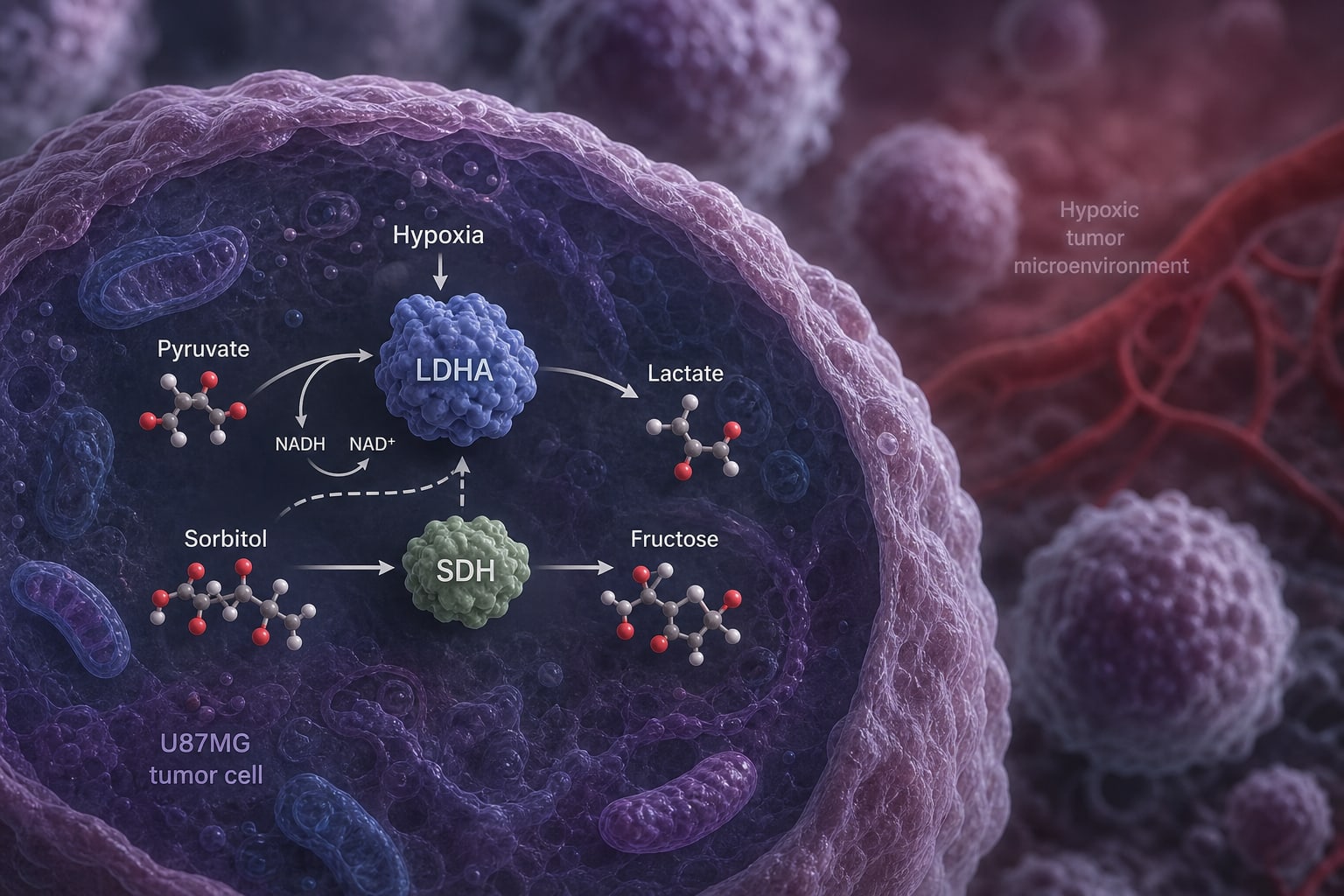
Lactate Dehydrogenase A Facilitates Sorbitol and Fructose Metabolism in Tumor Cells via the Polyol Pathway
By
Siting Feng
Zhiyuan Hu
Hanbing Tong
Hong Zhang
July 20, 2026
Clinical Scorecard: Lactate Dehydrogenase A Facilitates Sorbitol and Fructose Metabolism in Tumor Cells via the Polyol Pathway
At a Glance
Category Detail
Condition Tumor Metabolism Key Mechanisms Lactate dehydrogenase A (LDHA) facilitates sorbitol and fructose metabolism under hypoxic conditions. Target Population U87MG tumor cells Care Setting Research laboratory
Key Highlights
LDHA contributes to hypoxia-associated sorbitol/fructose metabolism. Marked fructose accumulation observed in hypoxic U87MG cells. LDHA knockdown reduces fructose levels and increases sorbitol accumulation. LDHA overexpression increases cell viability under hypoxia. Study provides evidence of LDHA's role in redox balance. Guideline-Based Recommendations
Diagnosis
Management
Monitoring & Follow-up
Risks
Patient & Prescribing Data
Not specified
LDHA's role in tumor metabolism may inform future therapeutic strategies.
Clinical Best Practices
Consider LDHA's metabolic role in tumor cells under hypoxic conditions. Monitor sorbitol and fructose levels in tumor metabolism studies. Related Resources & Content