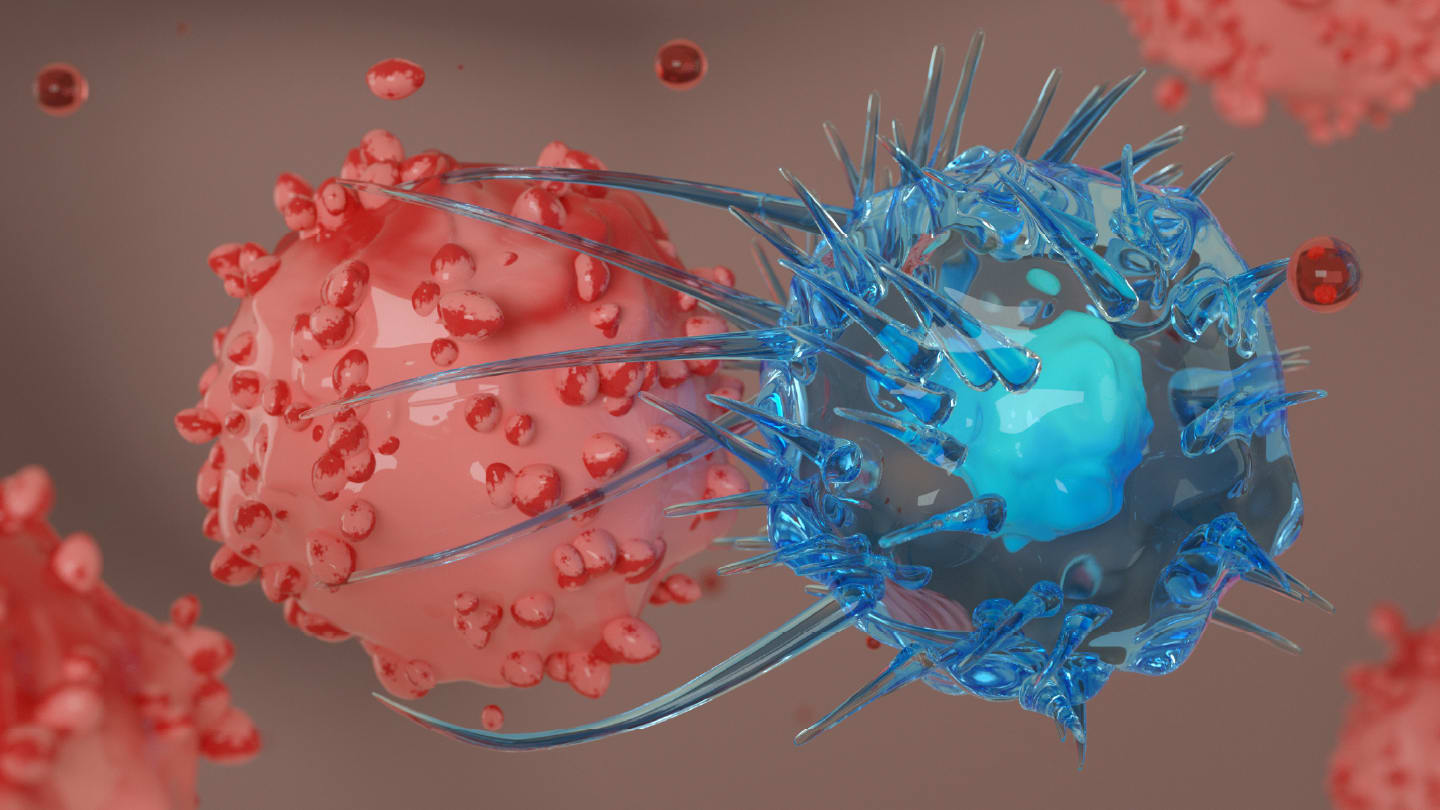
Clinical Scorecard: Naive-Like T Cells Linked to CAR T Durability
At a Glance
| Category | Detail |
|---|---|
| Condition | Clinical topic addressed by the source article: Naive-Like T Cells Linked to CAR T Durability |
| Key Mechanisms | Mechanisms or clinical associations described in the source article. |
| Target Population | Patients with non-Hodgkin lymphoma treated with axi-cel in the primary 580-patient analysis; the independent validation cohort included patients treated with axi-cel-based therapies or brexucabtagene autoleucel. |
| Care Setting | Care setting described in the source article. |
Key Highlights
- In a multicenter analysis of 580 axi-cel-treated patients, higher naive-like T cell proportions in the product were associated with longer progression-free survival.
- The highest-proportion group had a 54% lower relative hazard of progression or death than the lowest-proportion group; ongoing response rates were 59.3% versus 29.2%.
- The association remained significant after accounting for tumor burden, systemic inflammation, and CAR T cell expansion; tumor microenvironment characteristics were assessed in a 112-patient subset.
- Findings were validated in an independent cohort of 203 patients; a separate analysis of 116 patients linked a naive-like, low-exhaustion-marker CD8 T cell population with longer progression-free survival.
- More prior treatment lines were associated with fewer naive-like T cells in starting material and final products; the study establishes association, not causation.
Guideline-Based Recommendations
Diagnosis
Management
- The source states that manufacturing strategies designed to preserve or enrich less-differentiated T cells could help improve treatment durability, but further studies are needed to determine whether modifying product composition directly improves outcomes.
Monitoring & Follow-up
Risks
- No increase in cytokine release syndrome or neurotoxicity severity was observed in the group with the highest naive-like T cell proportions.
- The source notes that findings may not extend to all CAR T platforms; the analysis focused on CD28-based products in patients with lymphoma.
Patient & Prescribing Data
The primary analysis included 580 patients with non-Hodgkin lymphoma treated with axi-cel across multiple clinical trials, with median follow-up of 41.9 months. Validation included 203 patients treated with axi-cel-based therapies or brexucabtagene autoleucel.
Higher proportions of naive-like T cells in the final CAR T cell product were associated with longer progression-free survival and higher ongoing response rates. Product composition was more strongly associated with outcomes than naive-like cell proportions in starting material.
Clinical Best Practices
- The study reports associations between naive-like T cell proportions and outcomes, not causation.
- The analysis focused on CD28-based CAR T products in patients with lymphoma.
- The source states that further studies are needed to determine whether modifying product composition directly improves clinical outcomes.
Related Resources & Content
Based on findings from:
Naive-Like T Cells Linked to CAR T Durability
The Medicine Maker, 2026.
https://themedicinemaker.com/issues/2026/articles/november/naive-like-t-cells-linked-to-car-t-durability/
This content is an AI-generated, fully rewritten summary based on a published scholarly article. It does not reproduce the original text and is not a substitute for the original publication. Readers are encouraged to consult the source for full context, data, and methodology.