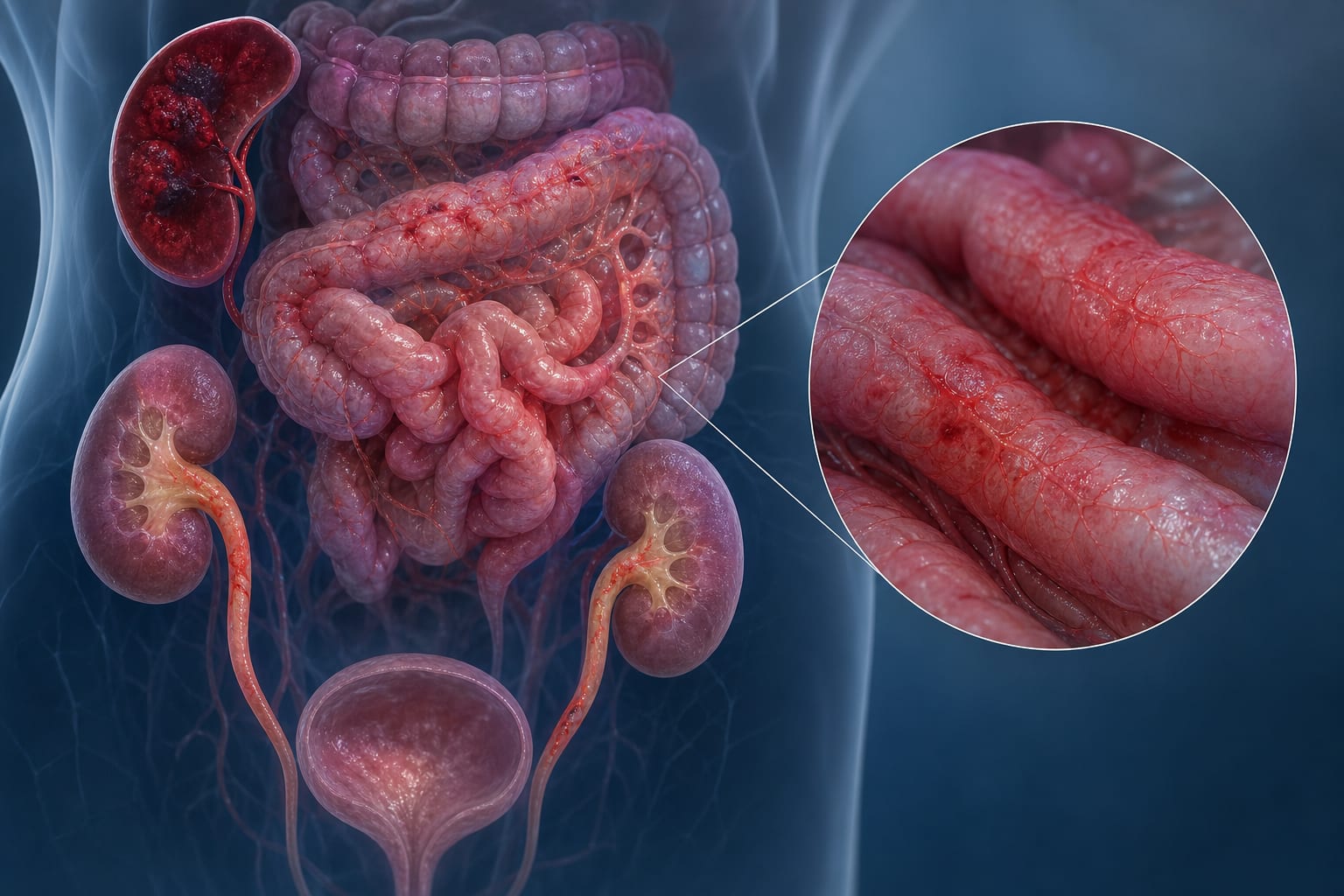
EULAR Updates Behçet’s Syndrome Recommendations
-
By
-
Kathryn Wighton
-
April 1, 2026
-
5 min
Clinical Scorecard: EULAR Updates Behçet’s Syndrome Recommendations
At a Glance
| Category | Detail |
|---|---|
| Condition | Behçet’s syndrome, a relapsing-remitting multisystem inflammatory disorder |
| Key Mechanisms | Inflammation affecting mucocutaneous, ocular, vascular, nervous system, gastrointestinal, and joint involvement |
| Target Population | Patients with Behçet’s syndrome including those with eye, vascular, nervous system, mucocutaneous, joint, gastrointestinal, and arterial involvement |
| Care Setting | Multidisciplinary rheumatology and specialized care settings with individualized treatment and shared decision-making |
Key Highlights
- Earlier use of biologic DMARDs (bDMARDs), especially monoclonal anti–tumor necrosis factor alpha antibodies, is recommended for eye, vascular, and nervous system involvement to prevent organ damage.
- Colchicine remains first-line for mucocutaneous and joint involvement, with escalation to apremilast or TNF inhibitors if refractory or intolerant.
- High-dose glucocorticoids plus infliximab recommended for arterial aneurysms; immunosuppressives and biologics prioritized over systemic glucocorticoid monotherapy.
Guideline-Based Recommendations
Diagnosis
- Assess organ involvement regularly including endoscopy for gastrointestinal disease.
- Use clinical and angiographic criteria to monitor uveitis remission.
Management
- Use colchicine as first-line for mucocutaneous lesions and acute arthritis.
- Consider apremilast or TNF inhibitors for colchicine-refractory mucocutaneous disease.
- Administer immunosuppressives and biologics (preferably infliximab) for Behçet’s uveitis and severe vascular or nervous system involvement.
- Avoid chronic systemic glucocorticoid monotherapy; use topical glucocorticoids for oral/genital ulcers.
- Treat arterial aneurysms with high-dose glucocorticoids plus infliximab; cyclophosphamide as alternative.
- Use glucocorticoids and immunosuppressives promptly for venous thrombosis; add anticoagulants cautiously.
- Manage gastrointestinal involvement based on endoscopy; use 5-aminosalicylic acid or azathioprine for mild/moderate disease, biologics for severe/refractory cases.
- For active parenchymal nervous system disease, initiate high-dose glucocorticoids and immunosuppressives, preferably infliximab, with slow tapering.
Monitoring & Follow-up
- Ongoing assessment of organ involvement to guide treatment adjustments.
- Monitor clinical and angiographic remission in uveitis.
- Evaluate treatment response and adverse events, especially when using biologics.
Risks
- Avoid chronic systemic glucocorticoid monotherapy due to adverse effects.
- Consider bleeding risk when adding anticoagulants in venous thrombosis.
- Be aware of limited randomized trial data and heterogeneity in evidence.
Patient & Prescribing Data
Patients with various organ involvement in Behçet’s syndrome, including refractory cases
Randomized trials support colchicine as first-line for mucocutaneous and joint disease; adalimumab shows superior mucocutaneous remission and uveitis control compared to cyclosporine-A; infliximab preferred over cyclophosphamide for vascular involvement with higher remission and fewer adverse events.
Clinical Best Practices
- Implement individualized, multidisciplinary care with patient education and shared decision-making.
- Prioritize early biologic therapy in eye, vascular, and nervous system involvement to prevent irreversible damage.
- Use a step-up approach for mucocutaneous and joint disease starting with colchicine.
- Avoid systemic glucocorticoid monotherapy; use in combination with immunosuppressives or biologics when indicated.
- Base gastrointestinal management on endoscopic findings and disease severity.
- Regularly monitor disease activity and treatment response to adjust therapy accordingly.
Related Resources & Content
This content is an AI-generated, fully rewritten summary based on a published scholarly article. It does not reproduce the original text and is not a substitute for the original publication. Readers are encouraged to consult the source for full context, data, and methodology.