Case Report: Tumor regression and neurological recovery in paraplegia from POLD1-mutated hepatocellular carcinoma treated with targeted immunotherapy and electroacupuncture - Scorecard - MDSpire
Advertisement
Case Report: Tumor regression and neurological recovery in paraplegia from POLD1-mutated hepatocellular carcinoma treated with targeted immunotherapy and electroacupuncture
Clinical Scorecard: Clinical Case Study: Tumor Shrinkage and Neurological Improvement in Paraplegic Patient with POLD1-Mutated Hepatocellular Carcinoma Following Targeted Immunotherapy and Electroacupuncture
At a Glance
Category
Detail
Condition
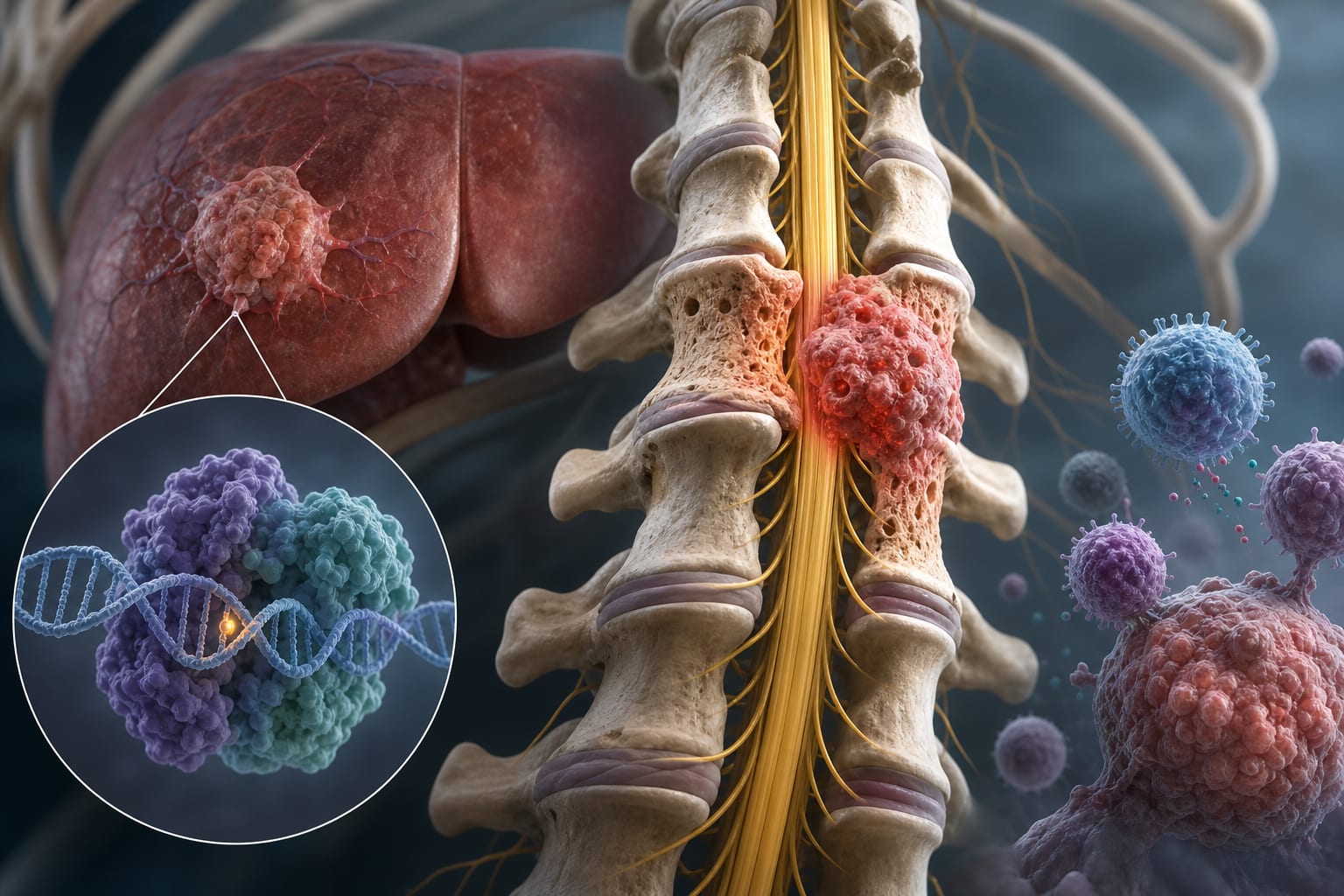
Hepatocellular carcinoma (HCC) with bone metastasis and paraplegia
Key Mechanisms
Immunotherapy and electroacupuncture rehabilitation
Target Population
Patients with advanced HCC and neurological deficits due to bone metastasis
Care Setting
Oncology and rehabilitation
Key Highlights
Complete response of tumor after immunotherapy with atezolizumab and bevacizumab
Significant neurological recovery with electroacupuncture rehabilitation
Patient progressed from ASIA grade C to D paraplegia
Cytokine levels increased significantly during treatment and rehabilitation
POLD1 mutation may enhance sensitivity to immunotherapy despite low TMB and MSI-L
Guideline-Based Recommendations
Diagnosis
Diagnosis of HCC confirmed through imaging and elevated alpha-fetoprotein levels
Management
Combination of immunotherapy (atezolizumab and bevacizumab) and electroacupuncture rehabilitation
Monitoring & Follow-up
Regular assessment of tumor markers and imaging for treatment response
Risks
Potential for severe neurological deficits and complications from bone metastasis
Patient & Prescribing Data
58-year-old male with chronic hepatitis B and advanced HCC
Immunotherapy initiated after disease progression despite prior treatments
Clinical Best Practices
Consider immunotherapy for HCC patients with specific genetic mutations
Incorporate rehabilitation strategies like electroacupuncture for neurological recovery
Monitor cytokine levels as potential indicators of treatment response