Vibroacoustic music therapy for postoperative delirium in the ICU: the VIMUD-ICU single-center exploratory randomized controlled trial - Scorecard - MDSpire
Clinical Scorecard: Vibroacoustic Music Therapy for Postoperative Delirium in Intensive Care: VIMUD-ICU Exploratory Randomized Controlled Trial
At a Glance
Category
Detail
Condition
Postoperative delirium (POD), defined as an Intensive Care Delirium Screening Checklist score of ≥4.
Key Mechanisms
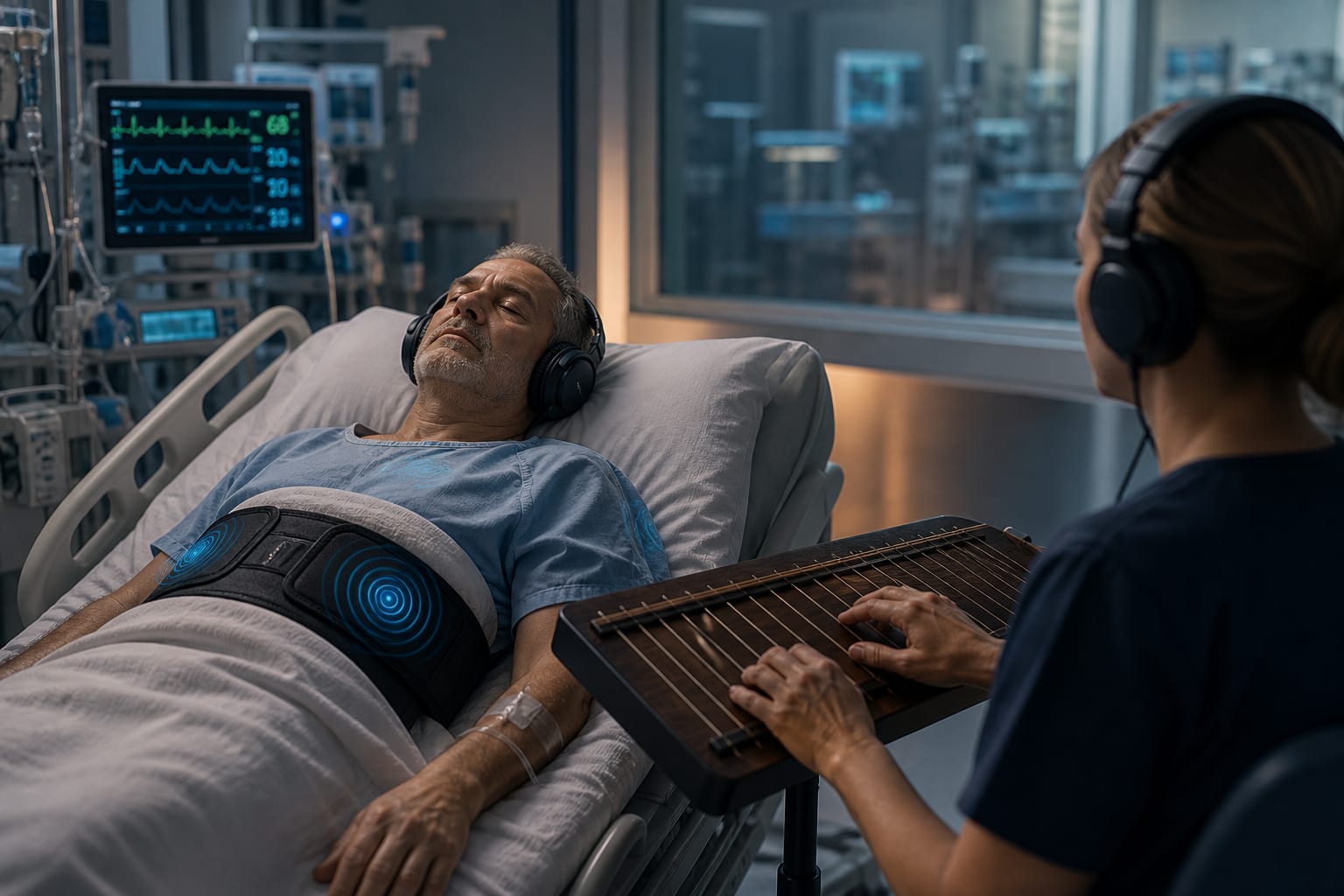
Therapist-guided music listening combined with vibroacoustic stimulation and personalized musical material.
Target Population
Non-ventilated adults in the ICU with postoperative delirium.
Care Setting
Single-center ICU trial comparing vibroacoustic music therapy plus standard care with standard care alone.
Key Highlights
The exploratory randomized trial enrolled 111 patients; enrollment ended before the planned 122 because music therapy support concluded.
The primary endpoint—time from enrollment to 48 consecutive hours without a positive delirium score—did not differ significantly between groups.
The intervention group had more delirium-free time during the delirium episode and more days free from alpha-2 agonist treatment in secondary analyses.
RASS measures differed between groups, while ICU length of stay, overall delirium duration, days without neuroleptics, and days without restraints did not differ significantly.
The authors describe the findings as hypothesis-generating and note that the trial cannot determine the effects of individual intervention components.
Guideline-Based Recommendations
Diagnosis
The trial defined POD as an ICDSC score of ≥4.
Management
Contemporary guidelines cited in the article emphasize multimodal non-pharmacological interventions for delirium prevention or treatment.
The tested intervention comprised three successive daily sessions of 20–30 minutes, combining therapist-guided interaction, music listening, and vibroacoustic stimulation.
Monitoring & Follow-up
The primary endpoint was the interval from enrollment to 48 consecutive hours without a positive delirium score during the ICU stay.
Secondary measures included delirium-free time during the delirium episode, medication-free days, and RASS.
Risks
The intervention was unmasked, and control-group therapist contact was not matched for time or attention.
Prescribing decisions could have affected medication-related outcomes, including alpha-2 agonist use.
The single-center trial ended enrollment early and did not show a significant difference in its primary endpoint.
Patient & Prescribing Data
111 non-ventilated adult ICU patients with POD were randomized: 56 to vibroacoustic music therapy and 55 to standard care alone.
Of 56 intervention-group patients, 49 received all three sessions, three received two, two received one, and two received none. Secondary analyses found more delirium-free time and more days free from alpha-2 agonist treatment in the intervention group; the primary endpoint was neutral.
Clinical Best Practices
Use the trial's ICDSC threshold of ≥4 when describing its POD eligibility criteria.
Interpret the secondary outcome differences in light of the neutral primary endpoint and the exploratory, single-center design.
Do not attribute observed effects to specific intervention components; the study could not distinguish their individual contributions.