Efficacy of Jishi Shuanghua Granules in preventing radiation-induced esophagitis in non-small cell lung cancer patients undergoing concurrent chemoradiotherapy: protocol for a multicenter, randomized, double-blind, placebo-controlled trial - Scorecard - MDSpire
Advertisement
Efficacy of Jishi Shuanghua Granules in preventing radiation-induced esophagitis in non-small cell lung cancer patients undergoing concurrent chemoradiotherapy: protocol for a multicenter, randomized, double-blind, placebo-controlled trial
Clinical Scorecard: Assessment of Jishi Shuanghua Granules for the Prevention of Radiation-Induced Esophagitis in Non-Small Cell Lung Cancer Patients Receiving Concurrent Chemoradiotherapy: A Protocol for a Multicenter, Randomized, Double-Blind, Placebo-Controlled Study
At a Glance
Category
Detail
Condition
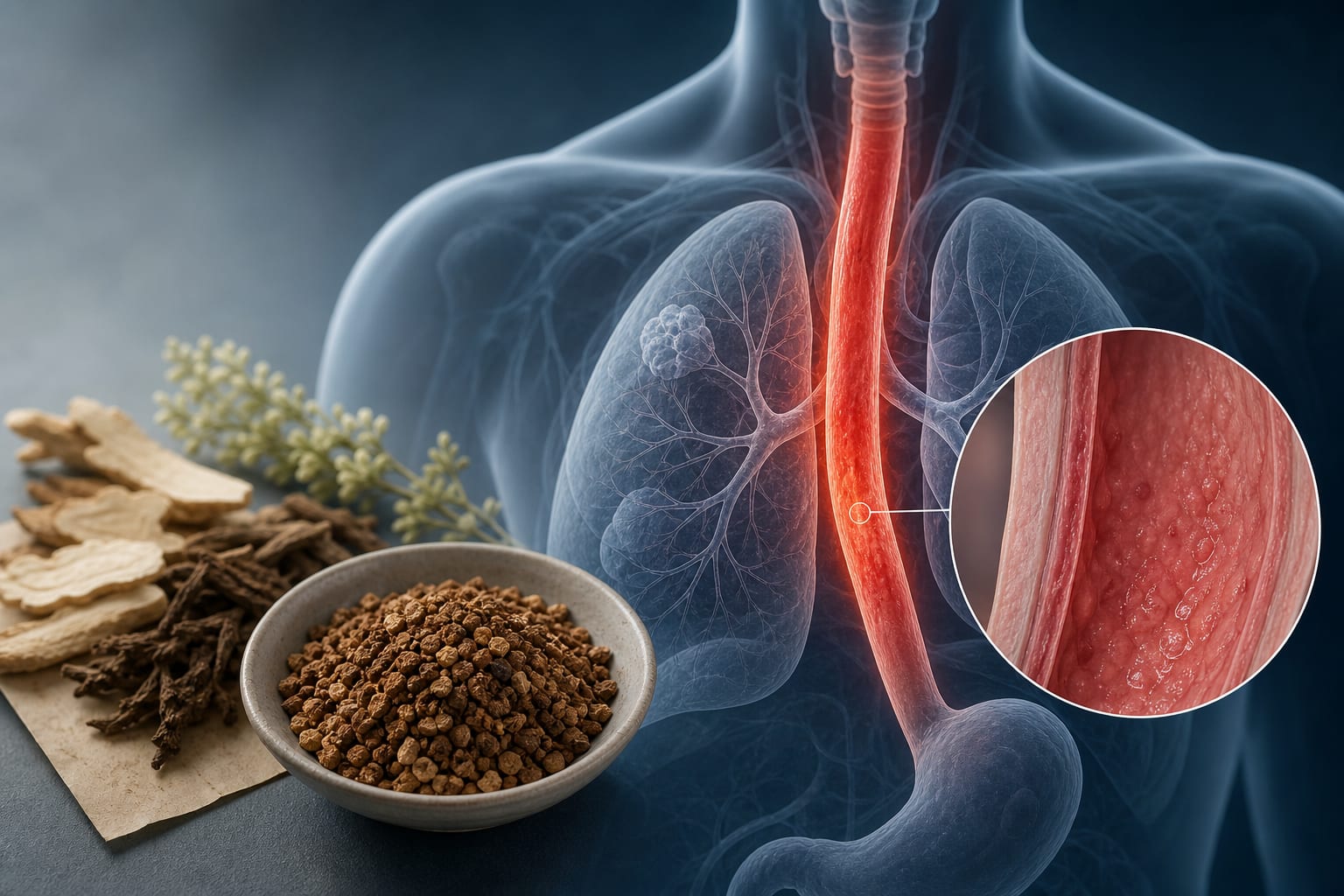
Acute radiation-induced esophagitis (ARIE)
Key Mechanisms
Immunosuppression, inflammation, oxidative stress, disruption of mucosal integrity
Target Population
Patients with stage III non-small cell lung cancer (NSCLC) receiving concurrent chemoradiotherapy (CCRT)
Care Setting
Multicenter clinical trial
Key Highlights
95% of NSCLC patients receiving CCRT experience ARIE to varying extents.
Severe ARIE (SARIE, grade ≥ 3) occurs in 18%–32% of cases.
Jishi Shuanghua Granules (JSG) is a TCM formulation used to treat ARIE.
The study aims to assess the efficacy of JSG in preventing ARIE.
Multi-omics analyses will be used to investigate the mechanisms of JSG.
Guideline-Based Recommendations
Diagnosis
Incidence rates of ARIE and SARIE defined by RTOG criteria.
Management
Utilization of JSG for the prevention and management of ARIE.
Monitoring & Follow-up
Assessment of ARIE-related pain and dysphagia using the Numerical Rating Scale.
Risks
Potential need for nutritional interventions in cases of severe ARIE.
Patient & Prescribing Data
240 patients with stage III NSCLC
JSG has been used clinically for over ten years but lacks robust evidence from well-structured studies.
Clinical Best Practices
Incorporate multi-omics analyses to clarify mechanisms of treatment.
Monitor quality of life using the Functional Assessment of Cancer Therapy-Lung questionnaire.