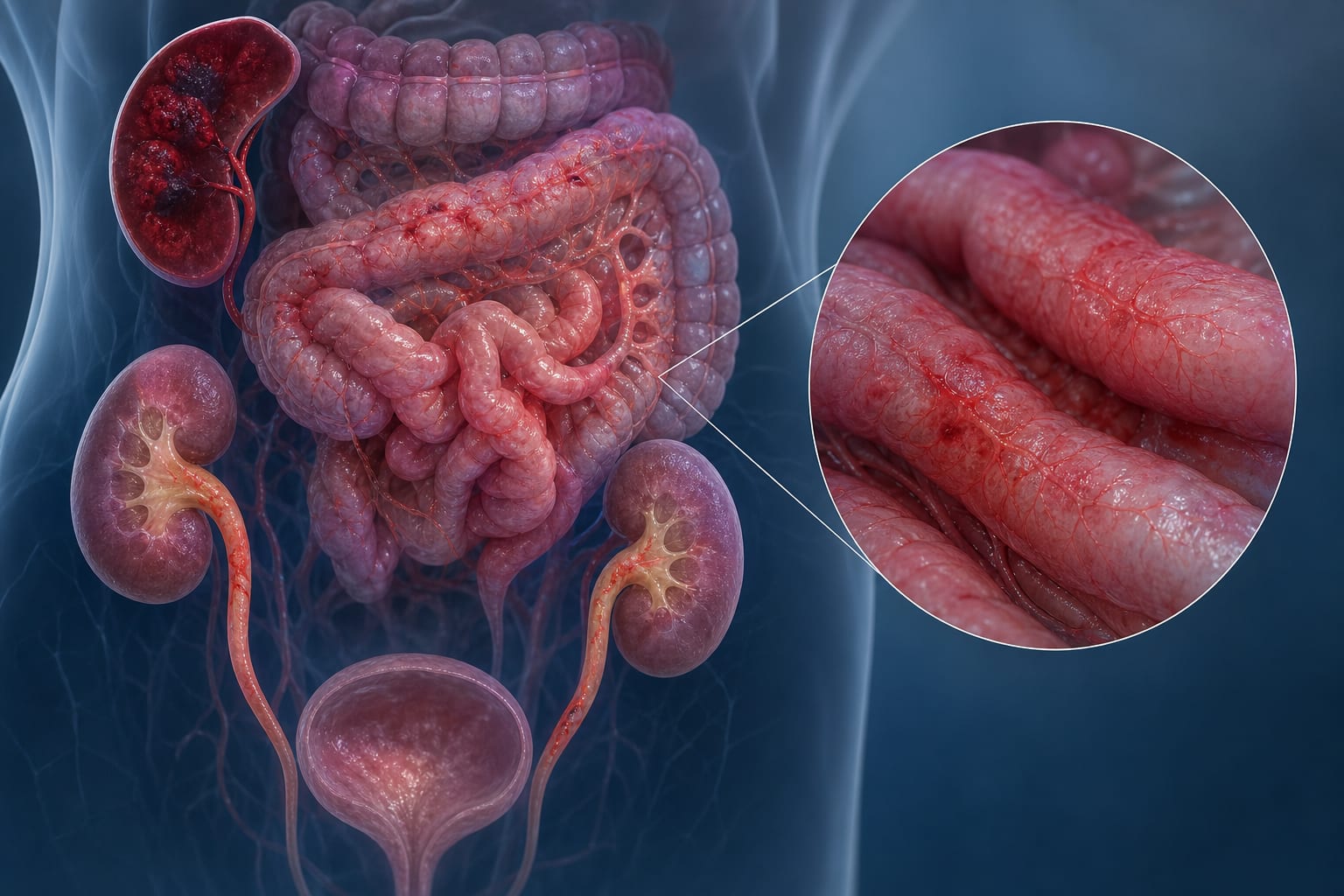
Case Report: A “visceral vasculitis storm” in Systemic Lupus Erythematosus: simultaneous enteritis, ureteritis, and splenic infarction in a pediatric patient - Scorecard - MDSpire
Conexiant’s news site is now MDSpire News. Learn more
Advertisement
Case Study: Concurrent Visceral Vasculitis Manifestations in Systemic Lupus Erythematosus: Enteritis, Ureteritis, and Splenic Infarction in a Pediatric Patient
Clinical Scorecard: Case Study: Concurrent Visceral Vasculitis Manifestations in Systemic Lupus Erythematosus: Enteritis, Ureteritis, and Splenic Infarction in a Pediatric Patient
At a Glance
Category
Detail
Condition
Systemic Lupus Erythematosus (SLE)
Key Mechanisms
Autoimmune disease with multi-system involvement, characterized by autoantibody production and immune complex deposition.
Target Population
Pediatric patients with SLE presenting with visceral vasculitis.
Care Setting
Hospitalized care in nephrology and immunology departments.
Key Highlights
Lupus enteritis occurs in 0.2%-5.8% of SLE cases, while lupus ureteritis is exceedingly rare.
The case illustrates a 'visceral vasculitis storm' involving bowel, ureters, and spleen.
Ureteral wall enhancement on CECT may indicate primary lupus ureteritis.
The patient responded to methylprednisolone pulse therapy and IVIG.
Aggressive immunosuppressive therapy is essential to prevent irreversible organ damage.
Guideline-Based Recommendations
Diagnosis
Consider differential diagnoses including primary ureteritis vs. secondary mechanical compression.
Use CECT to identify ureteral wall enhancement as a diagnostic clue.
Management
Initiate aggressive immunosuppressive therapy promptly in cases of visceral vasculitis.
Monitoring & Follow-up
Monitor for signs of organ damage and response to immunosuppressive therapy.
Risks
Risk of irreversible organ damage if diagnosis and treatment are delayed.
Patient & Prescribing Data
Pediatric patients with SLE and concurrent visceral vasculitis manifestations.
Methylprednisolone pulse therapy followed by IVIG and maintenance therapy with Cyclophosphamide and Telitacicept.
Clinical Best Practices
Recognize the clinical complexity of simultaneous lupus enteritis and ureteritis.
Avoid diagnostic monism to ensure timely and appropriate treatment.