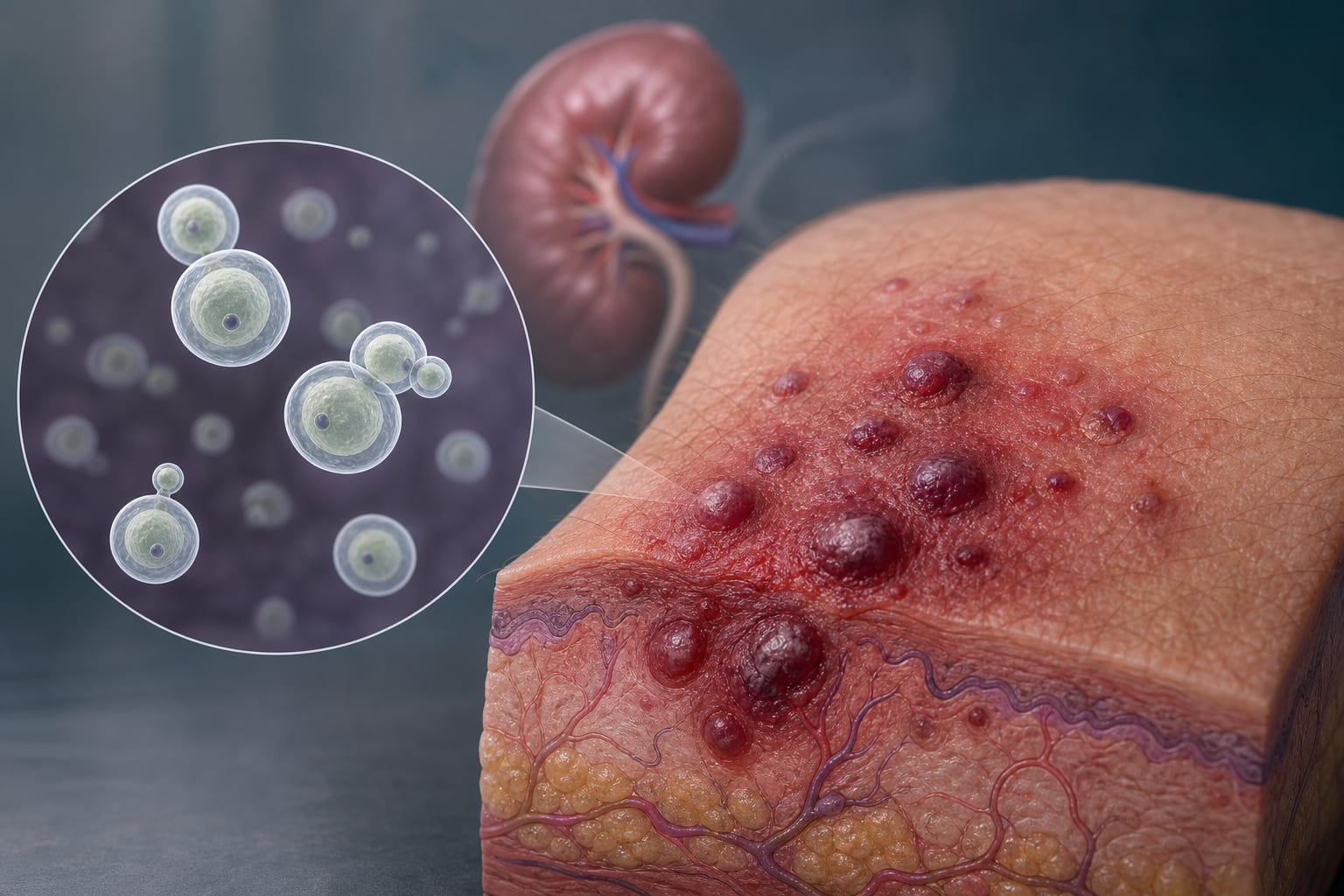
Clinical Scorecard: Systemic Glucocorticoid Treatment for Cutaneous Rosai-Dorfman Disease Affecting the Left Ear: A Case Study
At a Glance
Category
Detail
Condition
Cutaneous Rosai-Dorfman Disease (CRDD) with auricular involvement
Key Mechanisms
Proliferation of S100-positive histiocytes exhibiting emperipolesis; inflammatory infiltration causing lesion formation and conductive hearing loss
Target Population
Adults around 40s to 50s, with a female predominance in CRDD generally; this case involved a 49-year-old man
Care Setting
Dermatology and otolaryngology outpatient and inpatient settings with biopsy and systemic therapy capabilities
Key Highlights
CRDD is a rare benign histiocytic proliferative disorder with skin and rare ear canal involvement causing conductive hearing loss.
Diagnosis is confirmed by histopathology showing emperipolesis and immunohistochemistry positive for S100, CD68PGM1, CD163, Oct-2, Bcl-2 and negative for CD1a and CD207.
Systemic glucocorticoid monotherapy (prednisone acetate) led to gradual lesion resolution and hearing recovery after methotrexate discontinuation due to adverse effects.
Guideline-Based Recommendations
Diagnosis
Perform biopsy of lesions for histopathological examination showing emperipolesis.
Use immunohistochemical staining to confirm S100 and CD68 positivity and exclude Langerhans cell histiocytosis markers (CD1a, CD207).
Conduct imaging and lymph node evaluation to assess systemic involvement.
Management
Initial combination therapy with oral prednisone acetate and methotrexate may be considered but monitor for efficacy and adverse effects.
Discontinue methotrexate if adverse effects occur and consider prednisone acetate monotherapy.
Continue systemic glucocorticoid therapy until lesion flattening and hearing improvement are observed.
Monitoring & Follow-up
Regular clinical assessment of lesion size and characteristics.
Monitor hearing function during treatment.
Follow-up for at least several months to detect relapse or progression.
Risks
Methotrexate may cause severe adverse effects such as oral ulcers necessitating discontinuation.
Potential for lesion worsening during initial combination therapy.
Risk of relapse requires ongoing monitoring.
Patient & Prescribing Data
Adult patient with CRDD involving the external auditory canal causing conductive hearing loss.
Prednisone acetate monotherapy at 15 mg/day resulted in gradual lesion resolution and hearing recovery after methotrexate discontinuation due to adverse effects.
Clinical Best Practices
Confirm diagnosis with histopathology and immunohistochemistry before initiating systemic therapy.
Start with combination therapy but be prepared to adjust based on patient response and tolerance.
Use systemic glucocorticoids as a mainstay treatment for CRDD with ear involvement.
Monitor closely for adverse effects and therapeutic response, especially hearing improvement.
Maintain follow-up for several months to ensure sustained remission and detect relapse early.