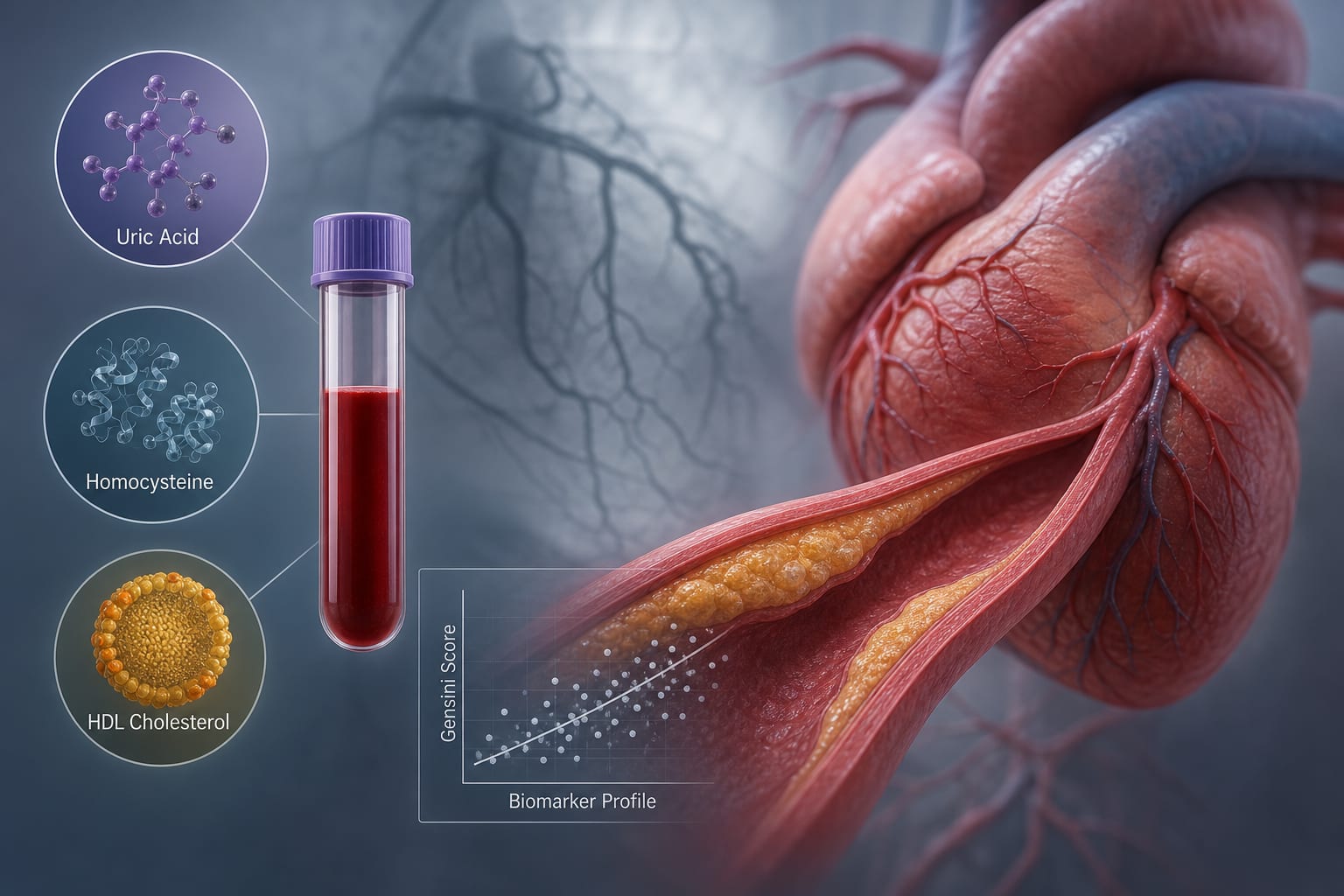
Links Between Uric Acid, HDL Cholesterol, Homocysteine Levels, and the Presence of Coronary Artery Disease and Stenosis
-
By
-
Lei Zha
-
Yu Ma
-
Lianghui Wan
-
Pingan Xie
-
Ximing Li
-
July 20, 2026
Clinical Scorecard: Links Between Uric Acid, HDL Cholesterol, Homocysteine Levels, and the Presence of Coronary Artery Disease and Stenosis
At a Glance
| Category | Detail |
|---|
| Condition | Coronary Heart Disease (CHD) |
| Key Mechanisms | Homocysteine (Hcy), High-Density Lipoprotein Cholesterol (HDL-C), Uric Acid (UA) |
| Target Population | Patients aged 40-80 with symptoms suggestive of CHD |
| Care Setting | Clinical assessment using biochemical markers |
Key Highlights
- Hcy, UA, and HDL-C levels significantly altered in CHD patients compared to controls.
- Combined biomarker model achieved highest discriminative performance (AUC = 0.803).
- Gensini scores positively correlated with Hcy and UA, negatively with HDL-C.
Guideline-Based Recommendations
Diagnosis
- Utilize serum Hcy, UA, and HDL-C levels for assessing CHD severity.
Management
- Consider combined detection of biomarkers for improved risk stratification.
Monitoring & Follow-up
- Regularly monitor levels of Hcy, UA, and HDL-C in patients with CHD.
Risks
- Invasive procedures like coronary angiography carry high risks and costs.
Patient & Prescribing Data
Patients with symptoms suggestive of CHD, aged 40-80.
Biochemical markers may aid in early assessment of coronary stenosis burden.
Clinical Best Practices
- Integrate Hcy, UA, and HDL-C measurements in routine CHD assessments.
- Utilize statistical methodologies for evaluating biomarker predictive value.
Related Resources & Content