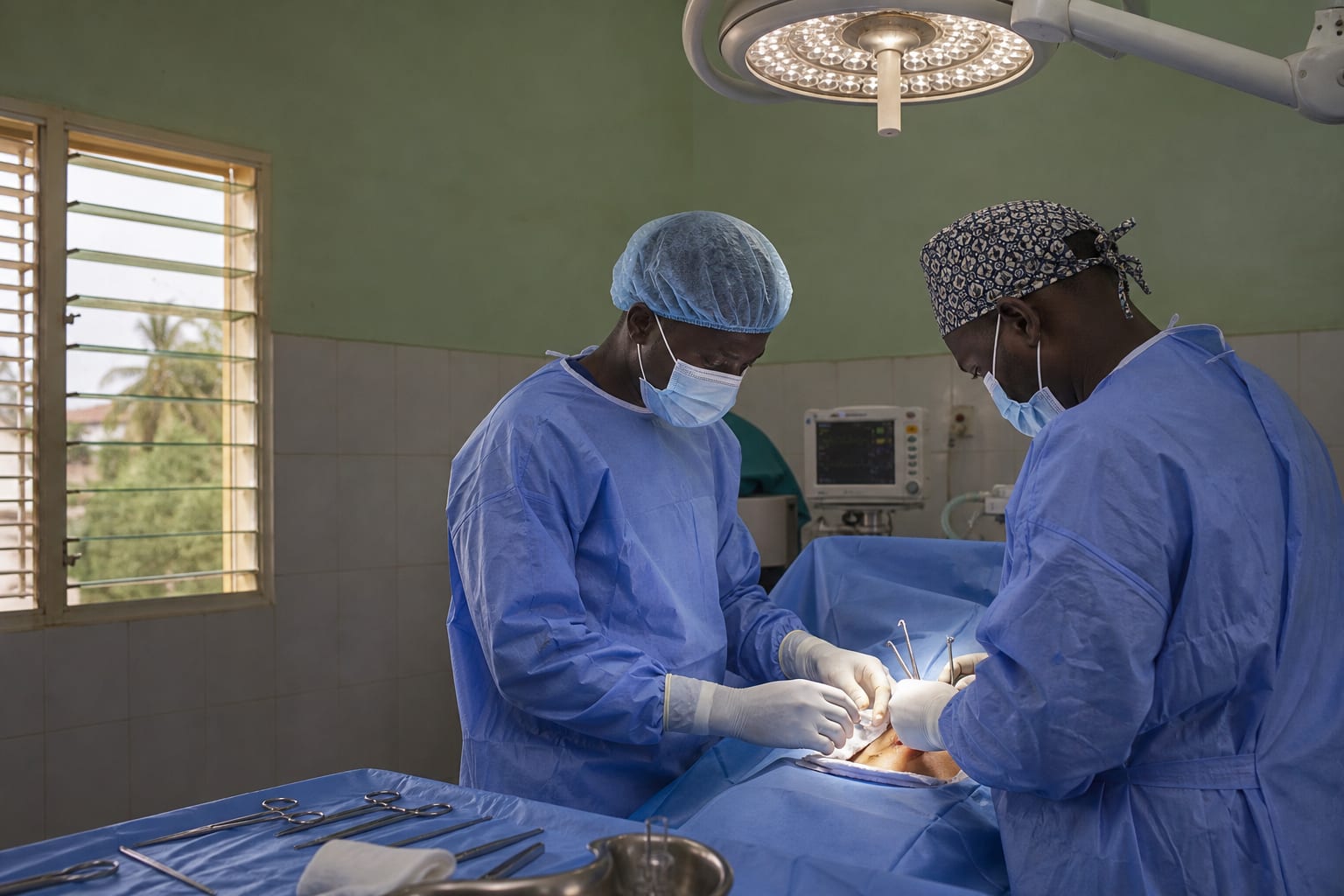
Abdominal wall hernia management in a second level hospital of Senegal: a cross-sectional study
-
By
-
Guillaume Tcheutchoua Soh
-
Seneba Aicha Gaye
-
Papa Mamadou Faye
-
Thierno Amadou Telly Diallo
-
Abdoul Kharim Diop
-
Jacques Noel Tendeng
-
Ousmane Thiam
-
Philippe Manyacka Ma Nyemb
-
Alpha Oumar Toure
-
Ibrahima Konate
-
Mamadou Cisse
-
June 26, 2026
-
Clinical Scorecard: Management of Abdominal Wall Hernias at a Secondary Hospital in Senegal: A Cross-Sectional Analysis
At a Glance
| Category | Detail |
|---|
| Condition | Abdominal Wall Hernias |
| Key Mechanisms | Surgical repair techniques including mesh reinforcement and tissue repair. |
| Target Population | Patients >15 years with abdominal wall hernias. |
| Care Setting | Surgical department of a secondary hospital in a semi-urban area of Senegal. |
Key Highlights
- Hernia repairs accounted for 34.2% of surgical activity at the center.
- Inguinal hernias constituted 75% of all hernias operated on.
- 51.5% of hernias were repaired using mesh, while 48.5% used tissue repair.
- Complications included pain at the surgical site (17.7%) and lower urinary tract obstructive disorders (11.8%).
- Emergency repairs accounted for 19.1% of hernia surgeries.
Guideline-Based Recommendations
Diagnosis
- Individualized treatment based on hernia risk factors and clinical characteristics.
Management
- Use of Lichtenstein technique in 64.8% of inguinal hernia repairs.
Monitoring & Follow-up
- Follow-up assessments at 1 week and 1 month post-surgery.
Risks
- Complications related to spinal anaesthesia and surgical site infections.
Patient & Prescribing Data
Patients admitted for treatment of abdominal wall hernias.
Emergency and elective surgeries performed by experienced general surgeons.
Clinical Best Practices
- Utilization of low-cost mesh for hernia repairs.
- Awareness programs to encourage early consultation for hernia symptoms.
Related Resources & Content