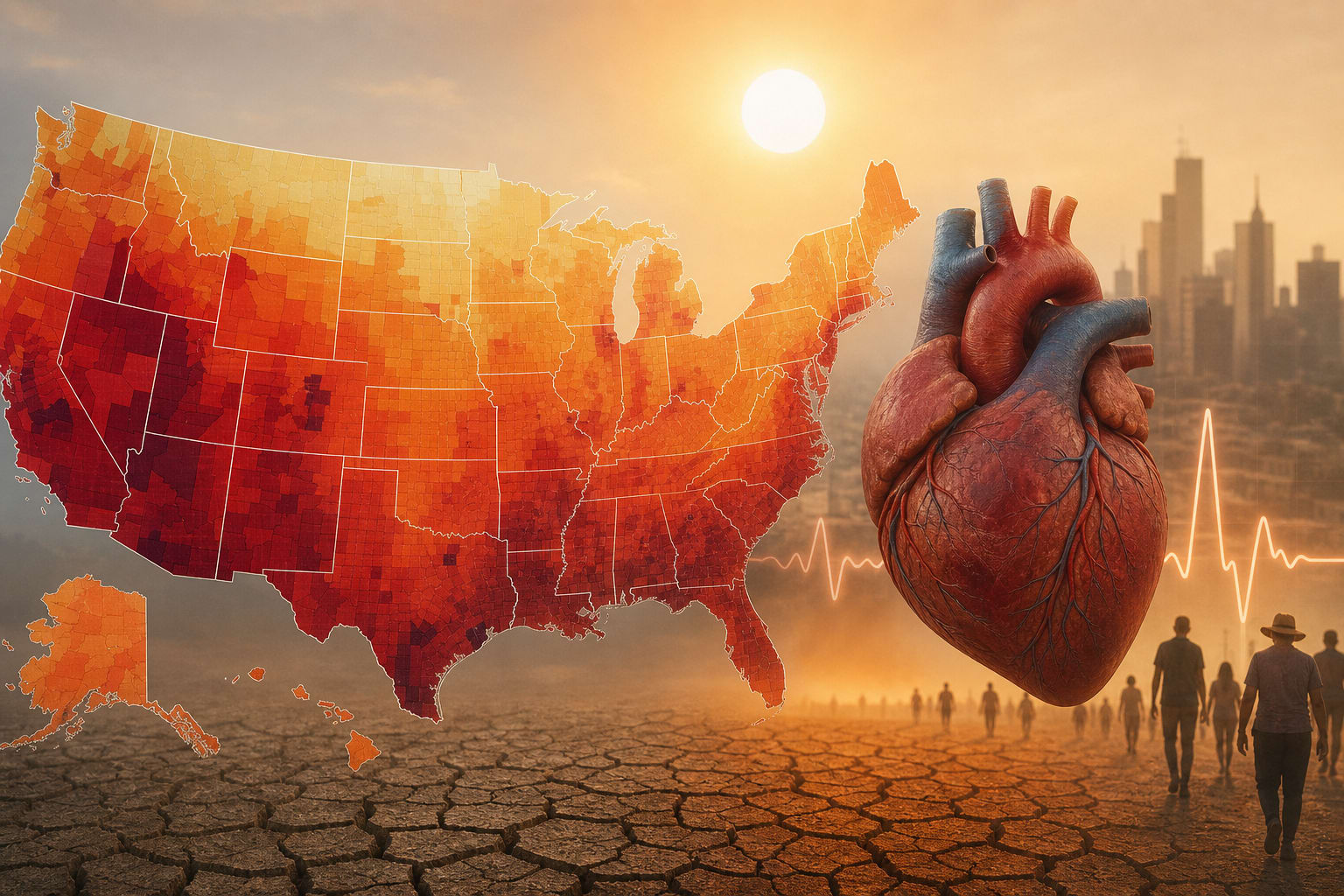
Temporal trends and disparities in heat-related cardiovascular mortality in the United States (1999–2024): a CDC WONDER analysis
-
By
-
Hassaan Abid
-
Gaaitri Lohano
-
Muhammad Vazaym
-
Muhammad Jawad
-
Rimsha Adnan
-
Muhammad Mohid Haroon
-
June 24, 2026
-
Clinical Scorecard: Trends and Inequities in Cardiovascular Deaths Linked to Heat Exposure in the U.S. (1999–2024): An Analysis Using CDC WONDER Data
At a Glance
| Category | Detail |
|---|
| Condition | Heat-related cardiovascular mortality |
| Key Mechanisms | Heat exposure exacerbates cardiovascular conditions through dehydration, peripheral vasodilation, reduced central blood volume, and increased cardiac workload. |
| Target Population | Adults aged ≥25 years |
| Care Setting | Public health analysis using CDC WONDER data |
Key Highlights
- 10,731 deaths identified from heat-related cardiovascular conditions from 1999 to 2024.
- Significant increase in mortality observed from 2015 to 2024 (APC: 17.58%; p < 0.001).
- Males and Hispanic populations showed the most pronounced increases in mortality.
- Regional disparities noted, with the highest burden in the Western and Southern U.S.
Guideline-Based Recommendations
Diagnosis
- Identify heat-related conditions using ICD-10 codes T67 for heat-related deaths and I00-I99 for circulatory diseases.
Management
- Implement public health responses including heat warning systems and targeted prevention strategies.
Monitoring & Follow-up
- Analyze trends in heat-related cardiovascular mortality across demographics and regions.
Risks
- Increased risk of mortality in individuals with pre-existing cardiovascular conditions during extreme heat events.
Patient & Prescribing Data
Adults aged ≥25 years with underlying cardiovascular conditions.
Consider environmental factors such as heat exposure in the management of cardiovascular health.
Clinical Best Practices
- Utilize multiple cause-of-death data to capture the full impact of heat exposure on cardiovascular mortality.
- Focus on demographic and geographic disparities to inform public health interventions.
Related Resources & Content