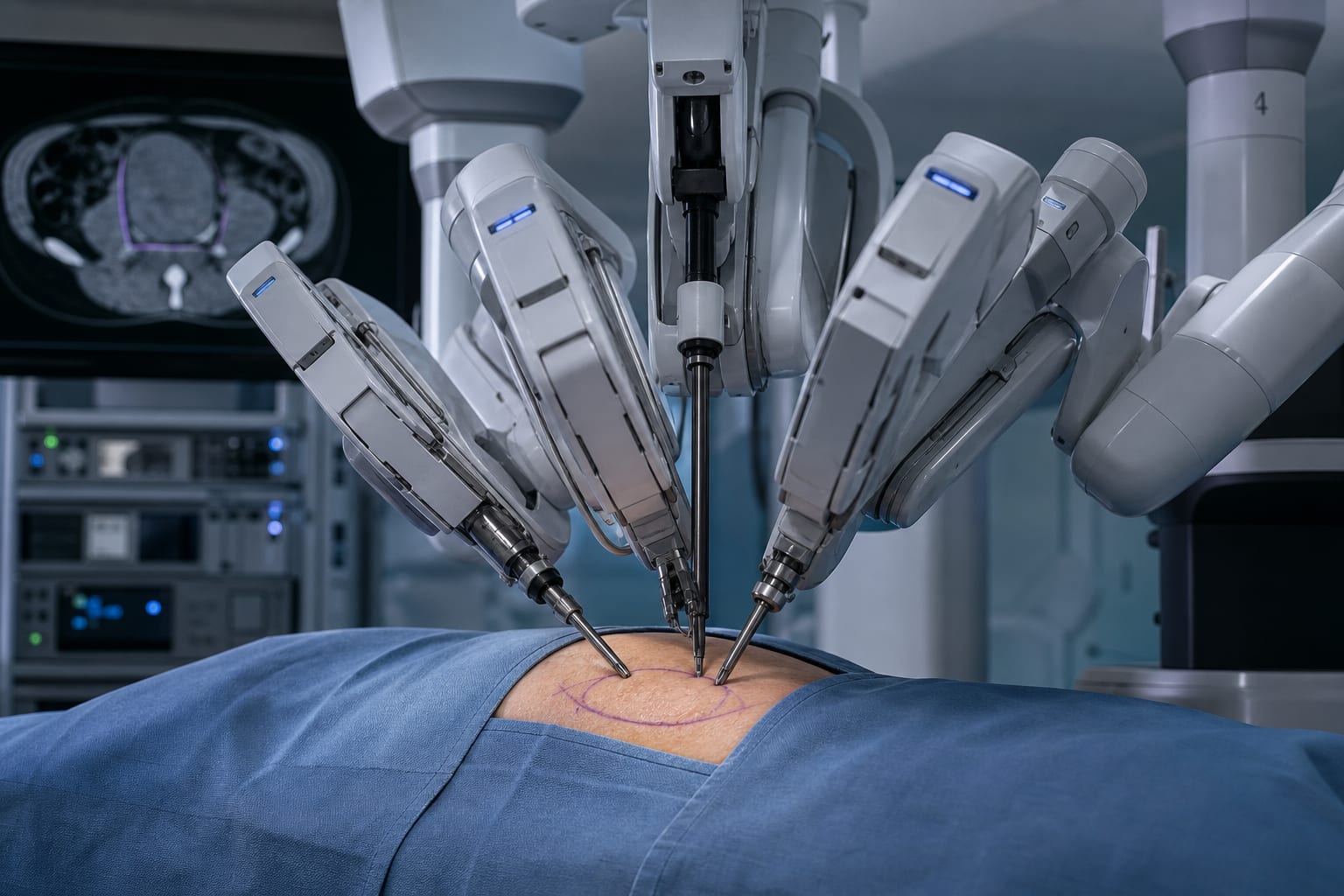
Minimally invasive, robotic-assisted resection of abdominal wall tumors: a case series
Clinical Scorecard: Robotic-Assisted Minimally Invasive Resection of Tumors in the Abdominal Wall: A Case Series Analysis
At a Glance
Category Detail
Condition Abdominal wall tumors confined to the musculofascial layer Key Mechanisms Robotic-assisted surgery for precise dissection and reconstruction Target Population Patients with abdominal wall tumors suitable for minimally invasive resection Care Setting Tertiary referral center specializing in robotic abdominal wall surgery
Key Highlights
Five patients underwent robotic-assisted resection with R0 margins achieved in all cases Mean operative time was 144 minutes with a hospital stay of 3.4 days No intraoperative or postoperative complications reported Four patients received mesh-based reconstruction No hernia or tumor recurrence observed during short-term follow-up Guideline-Based Recommendations
Diagnosis
Robotic-assisted resection is indicated for tumors confined to the musculofascial layer Management
Perform robotic-assisted resection with or without mesh-based reconstruction Monitoring & Follow-up
Follow-up for new or ongoing symptoms up to 6 weeks postoperatively Risks
Potential for complications in open surgery; however, none reported in this robotic series Patient & Prescribing Data
Five patients, predominantly female (80%), mean age 56.8 years
Robotic-assisted surgery offers advantages in recovery and complication rates compared to traditional open surgery
Clinical Best Practices
Utilize robotic-assisted techniques for complex abdominal wall reconstructions Ensure adequate patient selection based on tumor characteristics and location Monitor postoperative outcomes closely for complications and recurrence Related Resources & Content