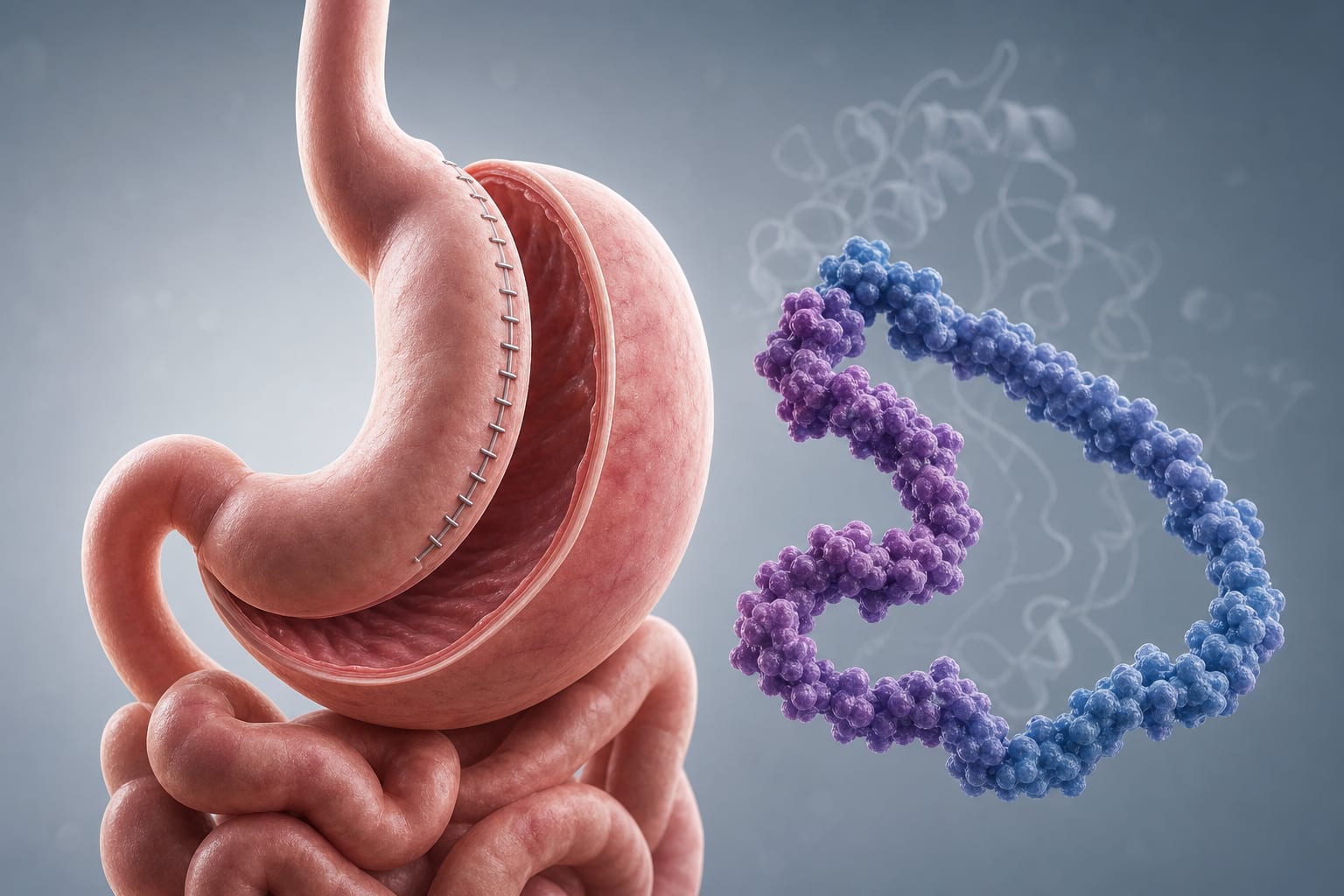
Clinical Scorecard: Effects of Bariatric Surgery on Serological Responses Following COVID-19 Vaccination
At a Glance
Category
Detail
Condition
Impact of obesity and bariatric surgery on serological response to COVID-19 vaccination
Key Mechanisms
Obesity negatively affects vaccine-induced antibody levels; bariatric surgery alters body composition potentially improving serological response
Target Population
Patients with obesity, bariatric surgery candidates, and post-bariatric surgery patients
Care Setting
Bariatric surgery centers and vaccination programs
Key Highlights
Obesity is associated with lower serological response to COVID-19 vaccines compared to normal-weight individuals.
Bariatric surgery patients show altered serological responses post-vaccination, potentially reversing obesity-related negative effects.
Serological response measured quantitatively by anti-SARS-CoV-2 spike protein receptor-binding domain (RBD) antibody levels.
Guideline-Based Recommendations
Diagnosis
Assess serological response to COVID-19 vaccination by measuring anti-SARS-CoV-2 S protein RBD antibody levels using validated quantitative assays (e.g., Elecsys Anti-SARS-CoV-2 S assay).
Classify antibody response into negative (<1 U/mL), low positive (1–5 U/mL), medium positive (>5–10 U/mL), and strong positive (>10 U/mL).
Management
Prioritize COVID-19 vaccination in patients with obesity due to higher risk of severe COVID-19 outcomes.
Consider bariatric surgery as a potential intervention to improve vaccine serological response in patients with obesity.
Monitoring & Follow-up
Monitor antibody levels at least 2 weeks post-vaccination to assess seroconversion and immune response.
Track adverse events post-vaccination using standardized grading systems such as FDA guidance.
Risks
Patients with obesity have increased risk of hospitalization, ICU admission, and mortality from COVID-19.
Potential variability in vaccine efficacy related to body composition changes post-bariatric surgery.
Patient & Prescribing Data
Healthcare workers without obesity, patients with obesity awaiting bariatric surgery, and post-bariatric surgery patients.
Bariatric surgery may enhance serological response to COVID-19 vaccination compared to obese patients not yet operated; vaccination remains critical in all groups.
Clinical Best Practices
Use quantitative serological assays targeting SARS-CoV-2 spike protein RBD antibodies to evaluate vaccine response.
Include bariatric surgery patients in vaccination programs and monitor their antibody responses longitudinally.
Collect comprehensive patient data including BMI, infection history, vaccine type, and timing to contextualize serological results.
Ensure informed consent and ethical oversight in studies assessing vaccine responses in special populations.