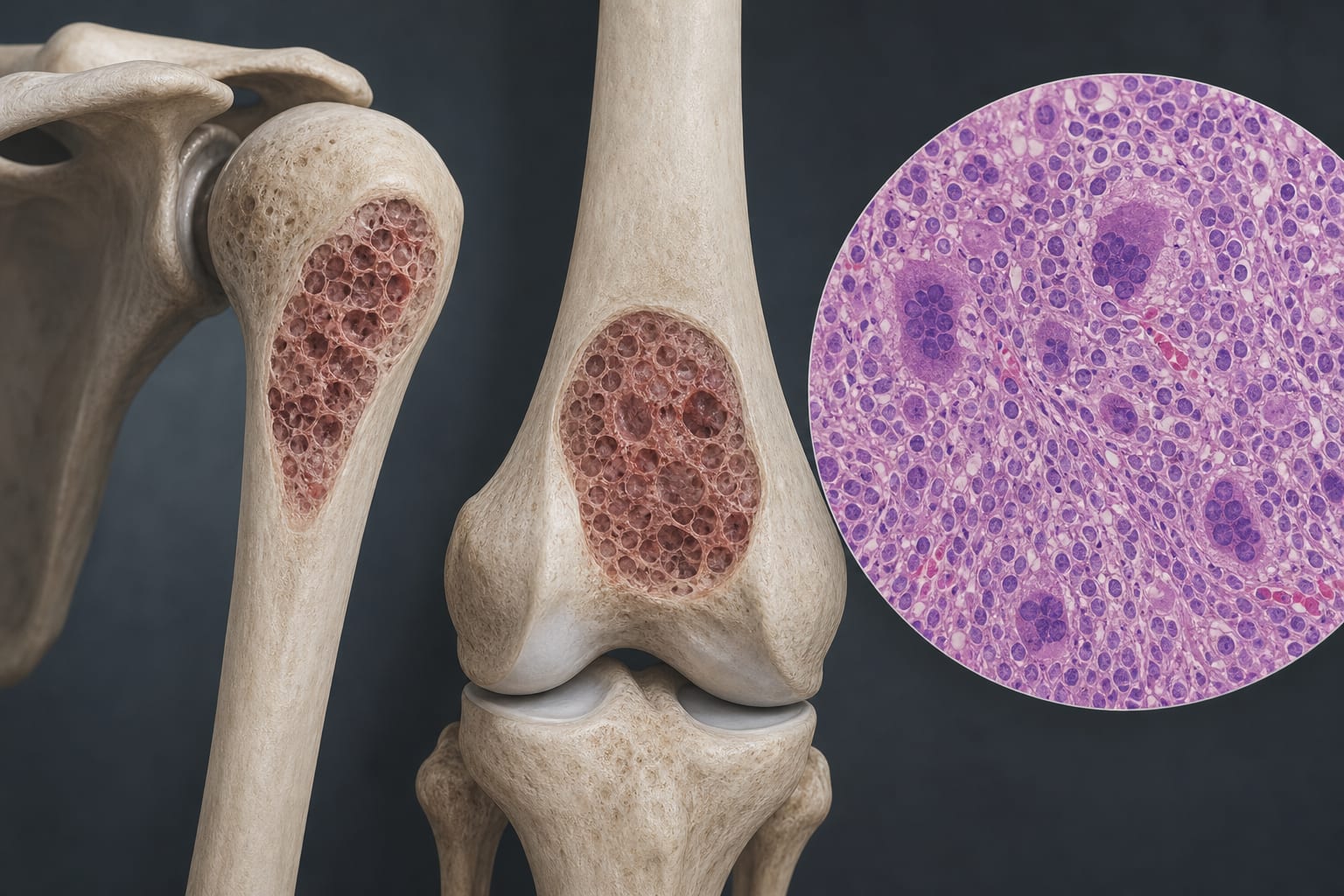
Clinical Scorecard: Uncommon Instances of Giant Cell Reparative Granuloma in the Humerus and Femur: A Report on Two Cases with Unusual Skeletal Manifestations
At a Glance
Category
Detail
Condition
Giant Cell Reparative Granuloma (GCRG)
Key Mechanisms
Reactive, non-neoplastic process associated with prior trauma or surgical intervention.
Target Population
Patients with a history of trauma or surgical intervention.
Care Setting
Clinical diagnosis and management of osteolytic lesions.
Key Highlights
GCRG is a rare benign lesion typically found in the mandible and maxilla.
Extragnathic involvement, particularly in long bones, is extremely uncommon.
Imaging can mimic giant cell tumors of bone, complicating diagnosis.
Histopathological examination is essential for accurate diagnosis.
Surgical intervention is often required for management.
Guideline-Based Recommendations
Diagnosis
Include GCRG in the differential diagnosis of osteolytic lesions at atypical skeletal sites.
Management
Surgical intervention such as intralesional curettage may be necessary.
Monitoring & Follow-up
Annual follow-up imaging to assess for recurrence.
Risks
Misdiagnosis as giant cell tumor of bone may lead to inappropriate management.
Patient & Prescribing Data
Individuals with prior mechanical strain or localized trauma.
Histopathological confirmation is crucial for guiding treatment.
Clinical Best Practices
Integrate radiologic and histopathological findings for accurate diagnosis.
Monitor for recurrence post-surgery with regular imaging.