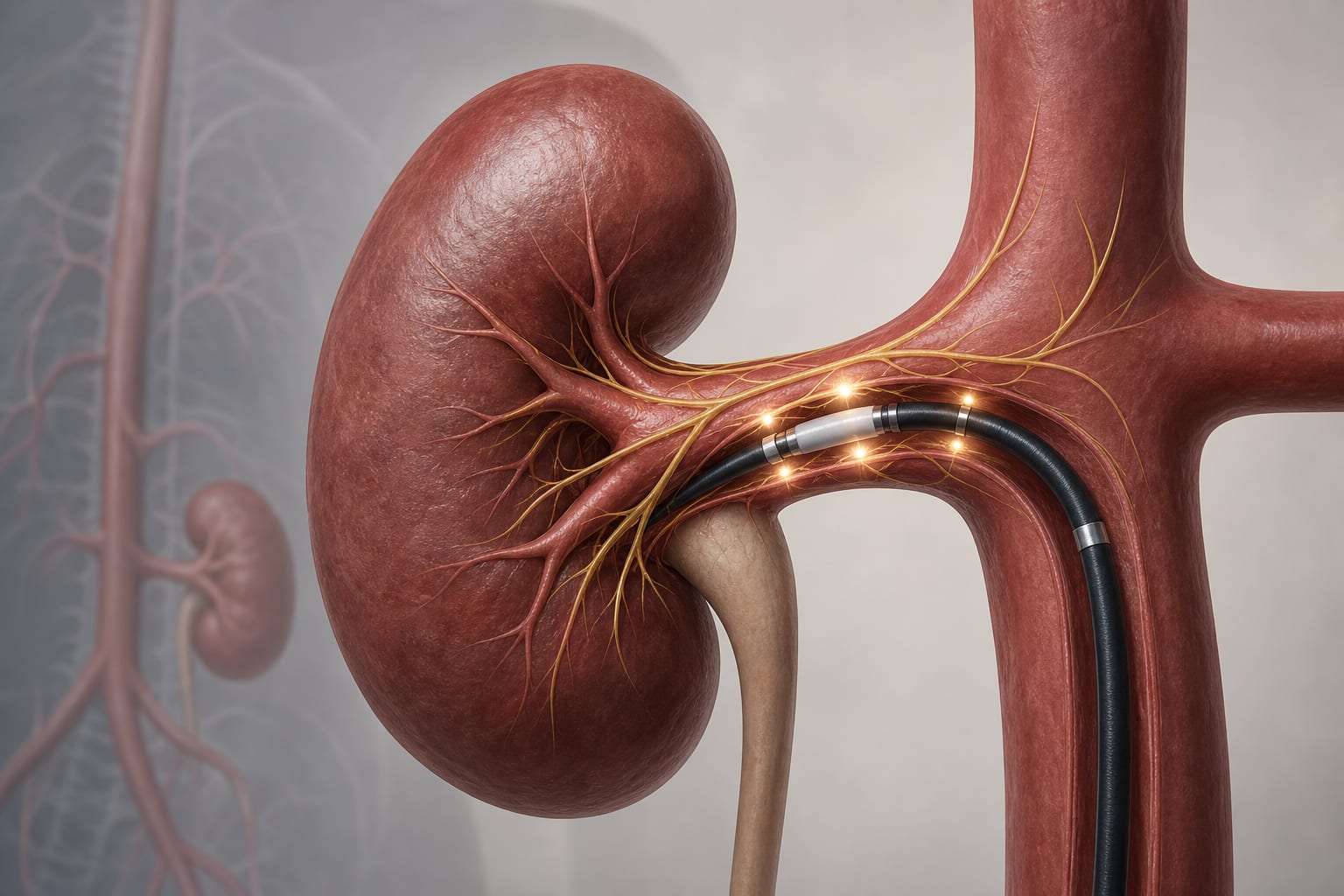
Patient Resource on Renal Denervation for Vascular Disease Management
By
Amee Sangani
R Kevin Rogers
Elizabeth V Ratchford
Shea E Hogan
June 23, 2026
Clinical Scorecard: Patient Resource on Renal Denervation for Vascular Disease Management
At a Glance
Category Detail
Condition Resistant Hypertension Key Mechanisms Disruption of sympathetic nerves in renal arteries to lower blood pressure. Target Population Patients with uncontrolled hypertension despite multiple medications. Care Setting Outpatient procedure center or hospital.
Key Highlights
RDN is effective in reducing blood pressure by 5–10 mmHg. Two FDA-approved systems: Spyral (radiofrequency) and Paradise (ultrasound). Only interventional cardiologists are trained to perform RDN. Patients must be monitored for true resistant hypertension before RDN. Certain patient groups are not candidates for RDN due to lack of study. Guideline-Based Recommendations
Diagnosis
Confirm resistant hypertension with repeated blood pressure readings. Management
Consider RDN for patients with uncontrolled hypertension despite multiple medications. Monitoring & Follow-up
Regular blood pressure monitoring in outpatient and home settings. Risks
Potential risks include arterial injury, blood clot formation, infection, and bleeding. Patient & Prescribing Data
Patients with resistant hypertension and additional cardiovascular risk factors.
RDN has not been well studied in patients with moderate-to-severe kidney disease, renal artery stenosis, or prior kidney transplant.
Clinical Best Practices
Review medication list and provide pre-procedure instructions. Use imaging to guide needle and catheter placement. Monitor for signs of bleeding or infection post-procedure. Related Resources & Content