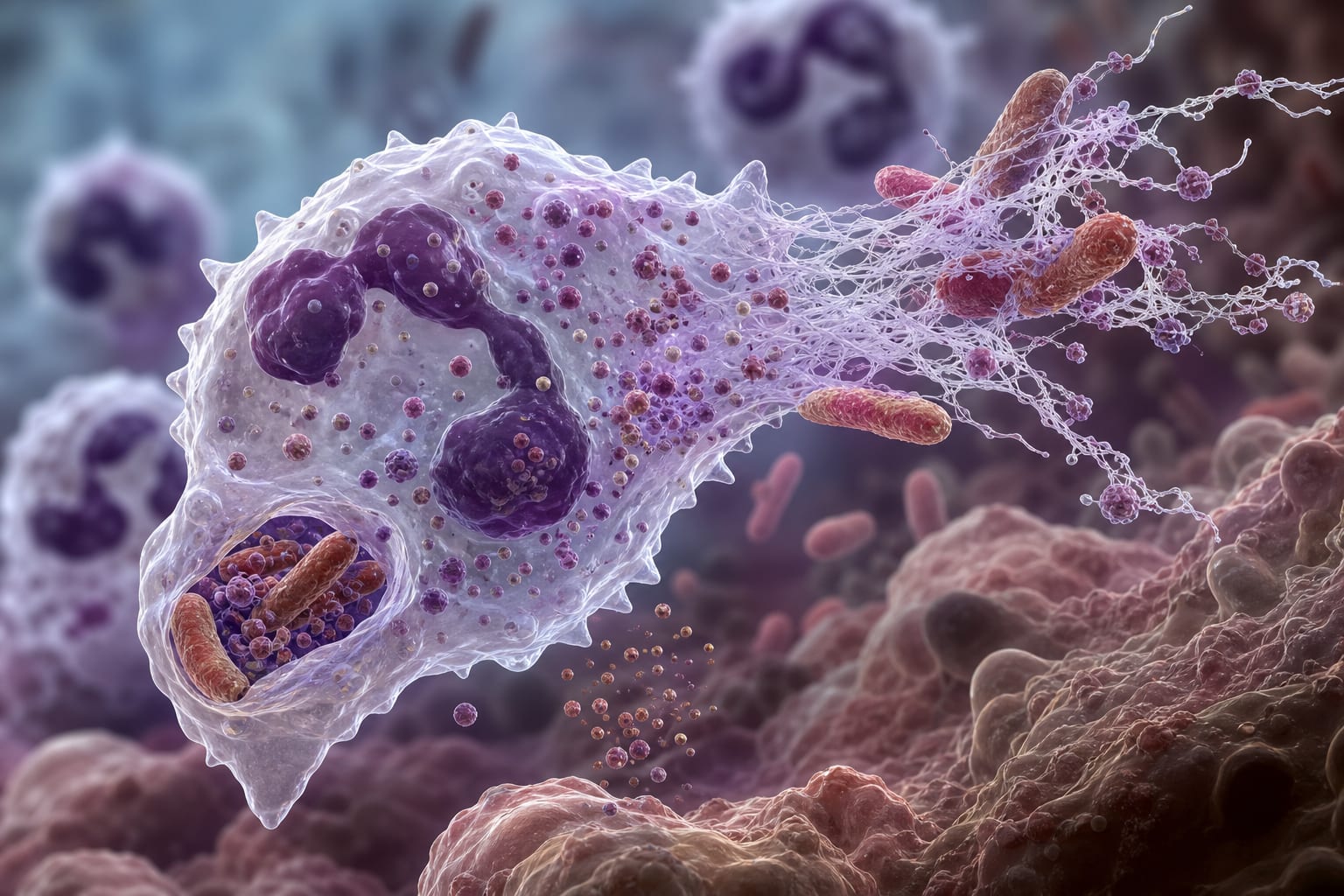
Editorial: Neutrophil function and dysfunction: pathways, impact, and therapeutic insights
By
Baochen Fang
Mengjie Li
Yiwei Zhu
Alan Y. Hsu
Lihui Guo
Zhifeng Chen
Minhao Liu
Hui Yu
Hongli Xu
Zhicheng Peng
Hui Chen
June 15, 2026
Clinical Scorecard: Exploring Neutrophil Activity and Impairment: Mechanisms, Consequences, and Treatment Perspectives
At a Glance
Category Detail
Condition Neutrophil dysfunction and dysregulation Key Mechanisms Phagocytosis, degranulation, NET formation, granule dynamics, and programmed cell death Target Population Individuals with chronic inflammatory disorders, cancer, autoimmune diseases, and systemic inflammatory syndromes Care Setting Clinical and research settings focusing on immune response and inflammation
Key Highlights
Neutrophils are critical for host defense but can cause tissue injury when dysregulated. Dysregulated neutrophil responses are implicated in various diseases, including cancer and fibrosis. Neutrophil heterogeneity may have diagnostic and prognostic value across multiple disease contexts. Emerging therapies target neutrophil functions to modulate inflammation and tissue damage. AI technologies are expanding the application of neutrophil profiling in diagnostics. Guideline-Based Recommendations
Diagnosis
Neutrophil profiling may assist in diagnosing various diseases. Management
Modulation of neutrophil activation and fate is critical for managing inflammation. Monitoring & Follow-up
Monitor neutrophil function and granule dynamics in patients with chronic inflammatory conditions. Risks
Excessive neutrophil activation can lead to tissue damage and systemic inflammation. Patient & Prescribing Data
Patients with conditions involving neutrophil dysfunction.
Targeting neutrophil functions may enhance therapeutic outcomes in cancer and inflammatory diseases.
Clinical Best Practices
Maintain a balance between neutrophil activation for host defense and prevention of tissue damage. Utilize AI-enabled diagnostics to assess neutrophil heterogeneity. Related Resources & Content