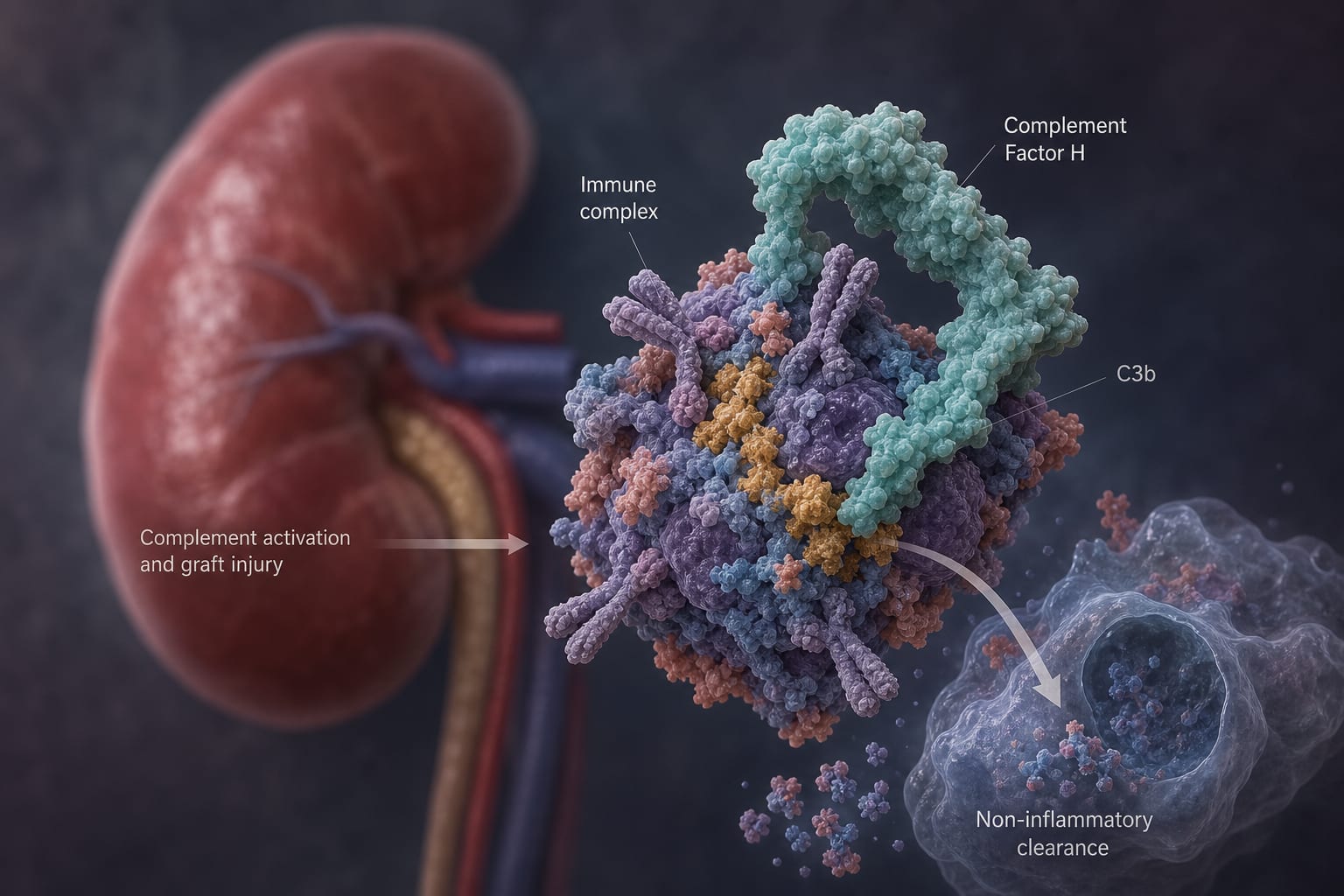
Immune complex handling in transplantation: central roles for complement factor H, animal models, and translational implications
-
By
-
Richard J. Quigg
-
Jessy J. Alexander
-
June 15, 2026
-
Clinical Scorecard: Management of Immune Complexes in Transplantation: Key Functions of Complement Factor H, Animal Studies, and Clinical Relevance
At a Glance
| Category | Detail |
|---|
| Condition | Antibody-mediated rejection (AMR) in solid organ transplantation |
| Key Mechanisms | Role of immune complexes (ICs) and complement system in graft injury and resolution |
| Target Population | Patients undergoing kidney, heart, and lung transplantation |
| Care Setting | Transplantation centers |
Key Highlights
- Immune complexes are dynamic regulators of graft injury.
- Complement factor H (CFH) modulates complement amplification and IC clearance.
- IC handling is a central determinant of transplant outcomes.
- Dysregulation of complement pathways predisposes to IC-mediated pathology.
- Emerging complement-targeted therapies may reshape transplant immunology.
Guideline-Based Recommendations
Diagnosis
- Monitor for donor-specific antibodies (DSA) as a marker of AMR.
- Assess complement activation markers in the context of ICs.
Management
- Implement immunosuppressive strategies targeting T cell activation.
- Consider complement-targeted therapies for managing AMR.
Monitoring & Follow-up
- Evaluate complement regulatory proteins and their role in IC handling.
- Regularly assess graft function and signs of microvascular inflammation.
Risks
- Risk of progressive graft loss due to antibody-driven rejection.
- Potential for dysregulated complement activation leading to tissue injury.
Patient & Prescribing Data
Patients with solid organ transplants at risk for AMR.
Focus on balancing immune surveillance with tissue preservation through effective IC handling.
Clinical Best Practices
- Integrate mechanistic insights into clinical observations for improved transplant outcomes.
- Utilize a systems-level understanding of IC formation and complement regulation.
Related Resources & Content