Endoscopic release of congenital muscular torticollis in children via a sub-platysmal approach: a retrospective study of 44 cases - Scorecard - MDSpire
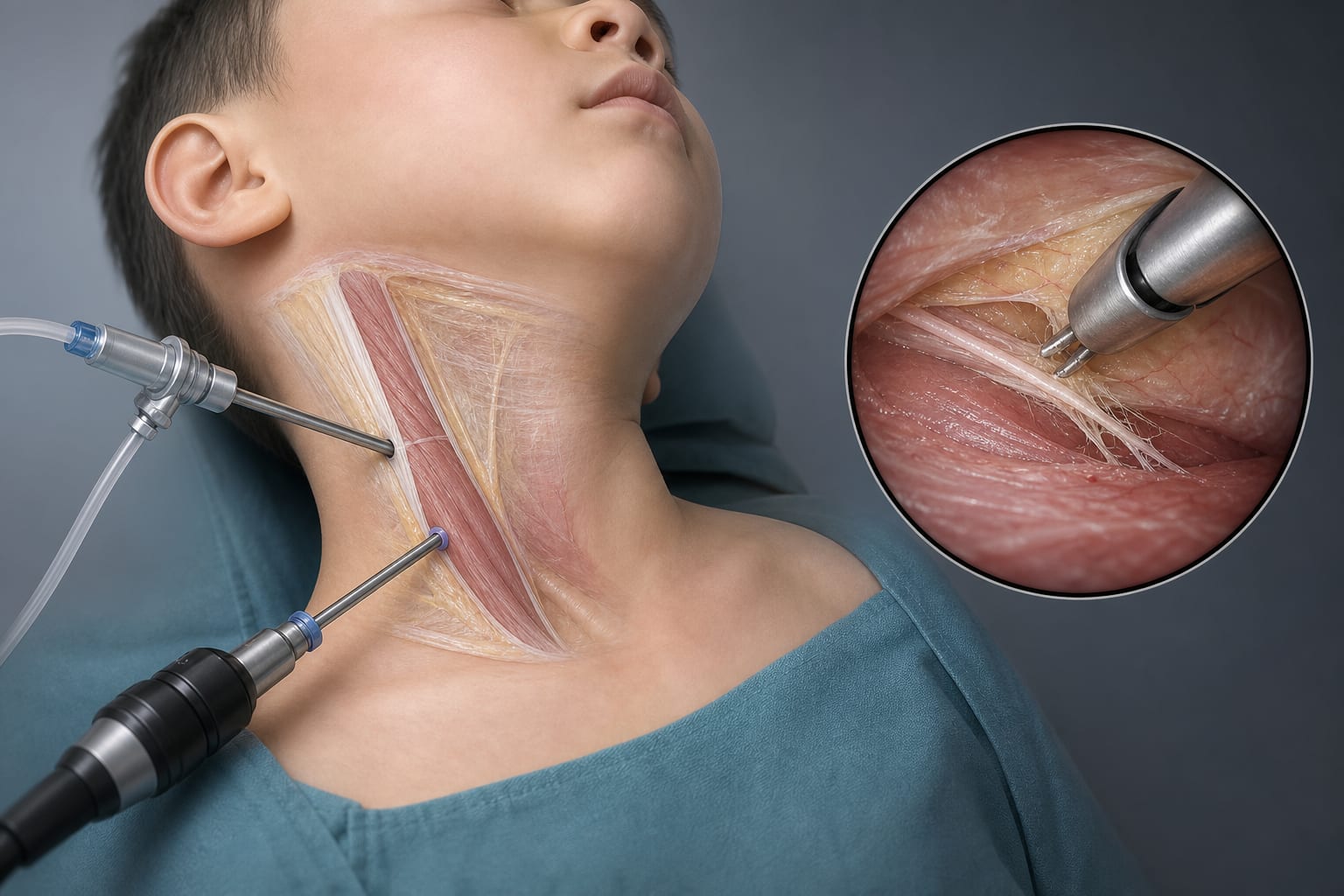
Clinical Scorecard: Endoscopic Sub-Platysmal Release Technique for Congenital Muscular Torticollis in Pediatric Patients: A Retrospective Analysis of 44 Cases
At a Glance
Category
Detail
Condition
Congenital Muscular Torticollis (CMT)
Key Mechanisms
Unilateral contracture of the sternocleidomastoid muscle
Target Population
Pediatric patients under 10 years old
Care Setting
Department of Orthopedics at Hebei Provincial Children's Hospital
Key Highlights
44 pediatric patients analyzed with a mean follow-up of 49.3 months
Significant improvement in neck rotation and lateral bending deficiencies post-surgery
95.4% of patients achieved excellent or good outcomes according to Cheng and Tang scoring
Mean operative time was 35.2 minutes with minimal blood loss (4.5 mL)
No intraoperative or postoperative complications reported
Guideline-Based Recommendations
Diagnosis
Clinical and ultrasonographic screenings for concomitant conditions like developmental dysplasia of the hip (DDH)
Management
Endoscopic sub-platysmal release technique after at least 6 months of failed conservative treatment
Monitoring & Follow-up
Follow-up assessments using the Cheng and Tang scoring system
Risks
Exclusion of patients with severe secondary skeletal deformities or concomitant cervical deformities
Patient & Prescribing Data
Pediatric patients with CMT under 10 years old
Endoscopic technique offers a minimally invasive alternative to traditional open surgery
Clinical Best Practices
Initiate physical therapy early for effective conservative management
Consider surgical intervention for patients with significant clinical symptoms after conservative treatment failure