Early-onset preeclampsia exposure and hospital outcomes of very preterm infants: a retrospective analysis of feeding intolerance and hospital morbidities - Scorecard - MDSpire
Advertisement
Early-onset preeclampsia exposure and hospital outcomes of very preterm infants: a retrospective analysis of feeding intolerance and hospital morbidities
Clinical Scorecard: Impact of Early-Onset Preeclampsia on Hospital Outcomes in Very Preterm Infants: A Retrospective Study of Feeding Intolerance and Associated Morbidities
At a Glance
Category
Detail
Condition
Early-Onset Preeclampsia (EOPE)
Key Mechanisms
Placental insufficiency leading to fetal chronic hypoxia and inflammatory cytokine release.
Target Population
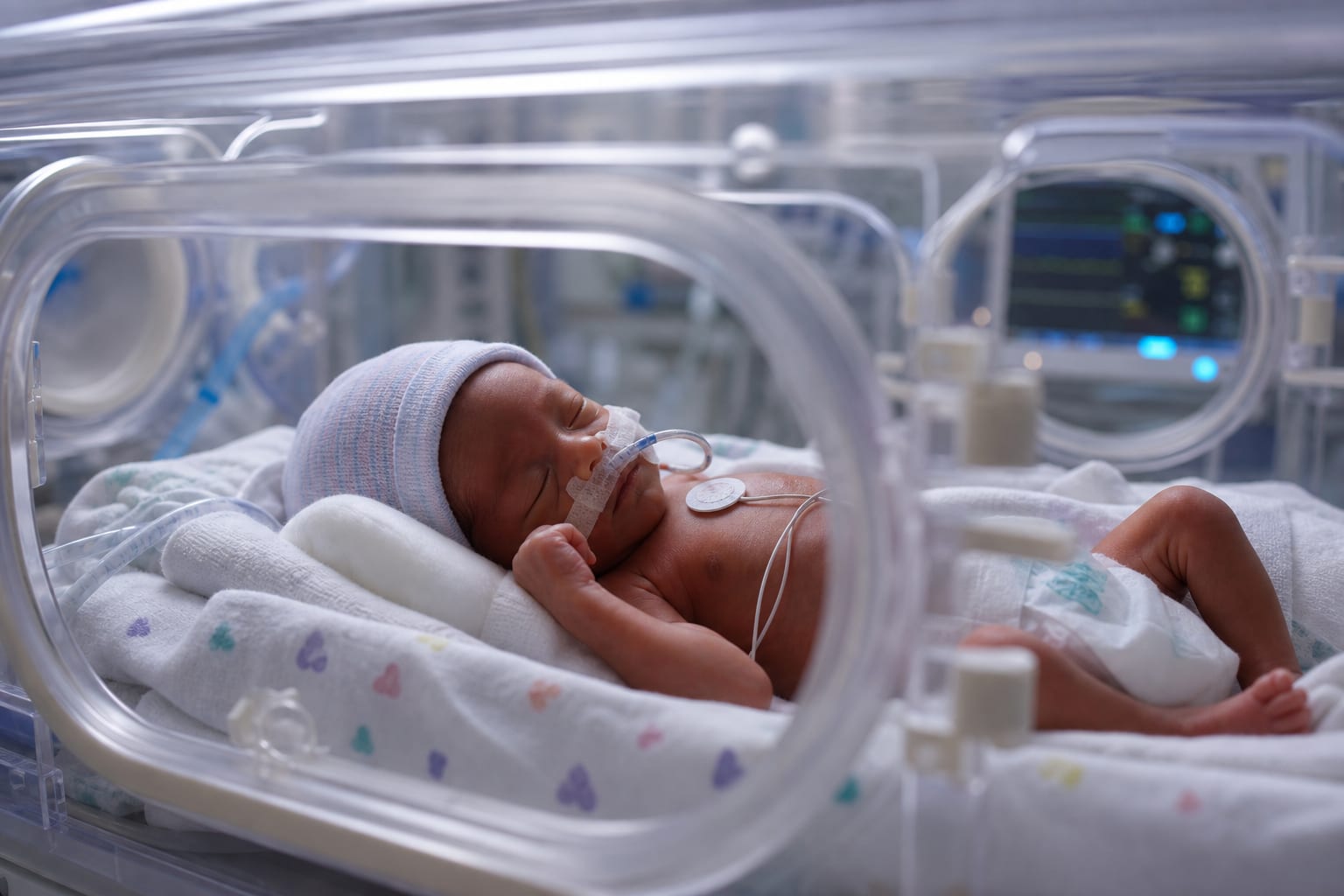
Very preterm infants (<32 weeks gestation) exposed to EOPE.
Care Setting
Neonatal Intensive Care Unit (NICU)
Key Highlights
EOPE-exposed infants had a higher incidence of feeding intolerance (FI) at 77.0% compared to 41.4% in controls.
Time to full enteral feeding was significantly longer in EOPE-exposed infants (13.0 days vs. 9.5 days).
EOPE was identified as an independent risk factor for FI with an odds ratio of 2.290.
Lower birth weight was also associated with increased risk of FI.
The study emphasizes the need for targeted feeding monitoring and nutritional support.
Guideline-Based Recommendations
Diagnosis
Assess maternal history for EOPE in very preterm infants.
Management
Implement individualized nutritional support strategies for EOPE-exposed infants.
Monitoring & Follow-up
Monitor feeding tolerance and growth trajectories in very preterm infants.
Risks
Increased risk of feeding intolerance, bronchopulmonary dysplasia, and other morbidities.
Patient & Prescribing Data
Very preterm infants (<32 weeks) born to mothers with EOPE.
Early initiation of parenteral nutrition and gradual transition to enteral feeding is crucial.
Clinical Best Practices
Start parenteral nutrition within 24 hours after birth.
Begin enteral feeding as soon as possible, ideally within 3 hours after birth.
Use breast milk as the primary feeding source, with appropriate fortification.