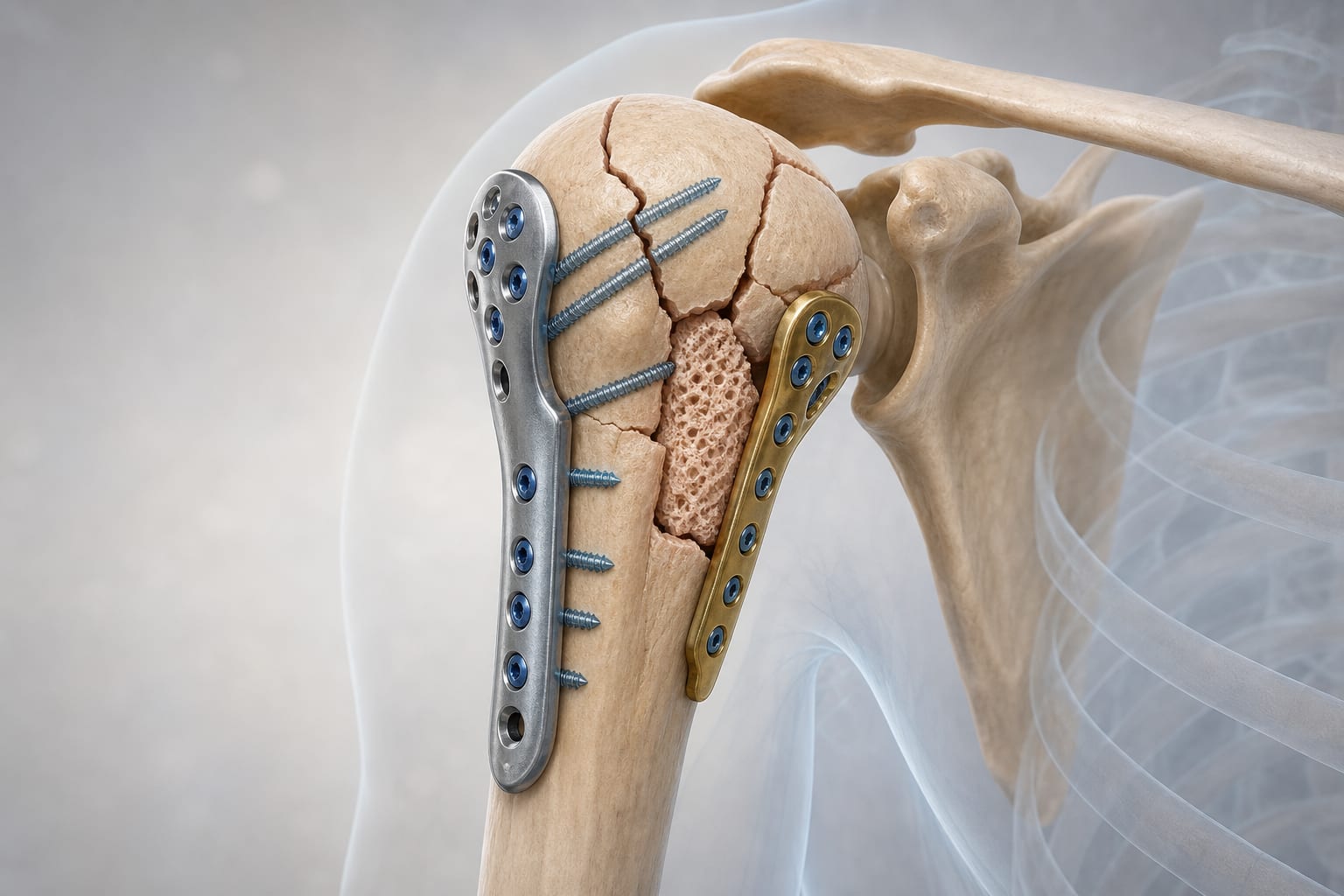
Clinical Scorecard: Evaluation of Three Surgical Approaches for Addressing Medial Column Support Deficiency in Aged Patients with Proximal Humeral Fractures
At a Glance
Category
Detail
Condition
Medial column support deficiency in proximal humeral fractures
Key Mechanisms
Surgical reconstruction using lateral locking plates and support techniques
Target Population
Elderly patients with proximal humeral fractures
Care Setting
Orthopedics Department, Zhongshan Hospital
Key Highlights
Study involved 51 elderly patients with medial column support insufficiency
Three surgical approaches compared: dual plating, bone grafting, and solitary plate
No significant differences in pain and function scores among groups at follow-up
Complication rates were similar across all treatment groups
Dual plating showed superior results in restoring stability
Guideline-Based Recommendations
Diagnosis
Assess medial column support deficiency in proximal humeral fractures
Management
Consider lateral locking plate with anterior medial support for complex fractures
Monitoring & Follow-up
Evaluate pain and shoulder function using VAS, ASES, DASH, and Constant Murley scores
Risks
Monitor for complications post-surgery, as rates were similar across techniques
Patient & Prescribing Data
Elderly individuals (average age 62.4 years)
All three surgical methods effectively restore medial column stability
Clinical Best Practices
Utilize dual plating for complex proximal humeral fractures when medial support is deficient
Regularly assess shoulder function and pain post-operatively
Ensure comparability in patient characteristics when evaluating treatment outcomes