Clinical Scorecard: Robotic-Assisted Extended Sistrunk Technique for Salvage Surgery Following Head and Neck Radiation Therapy
At a Glance
Category
Detail
Condition
Head and Neck Cancer
Key Mechanisms
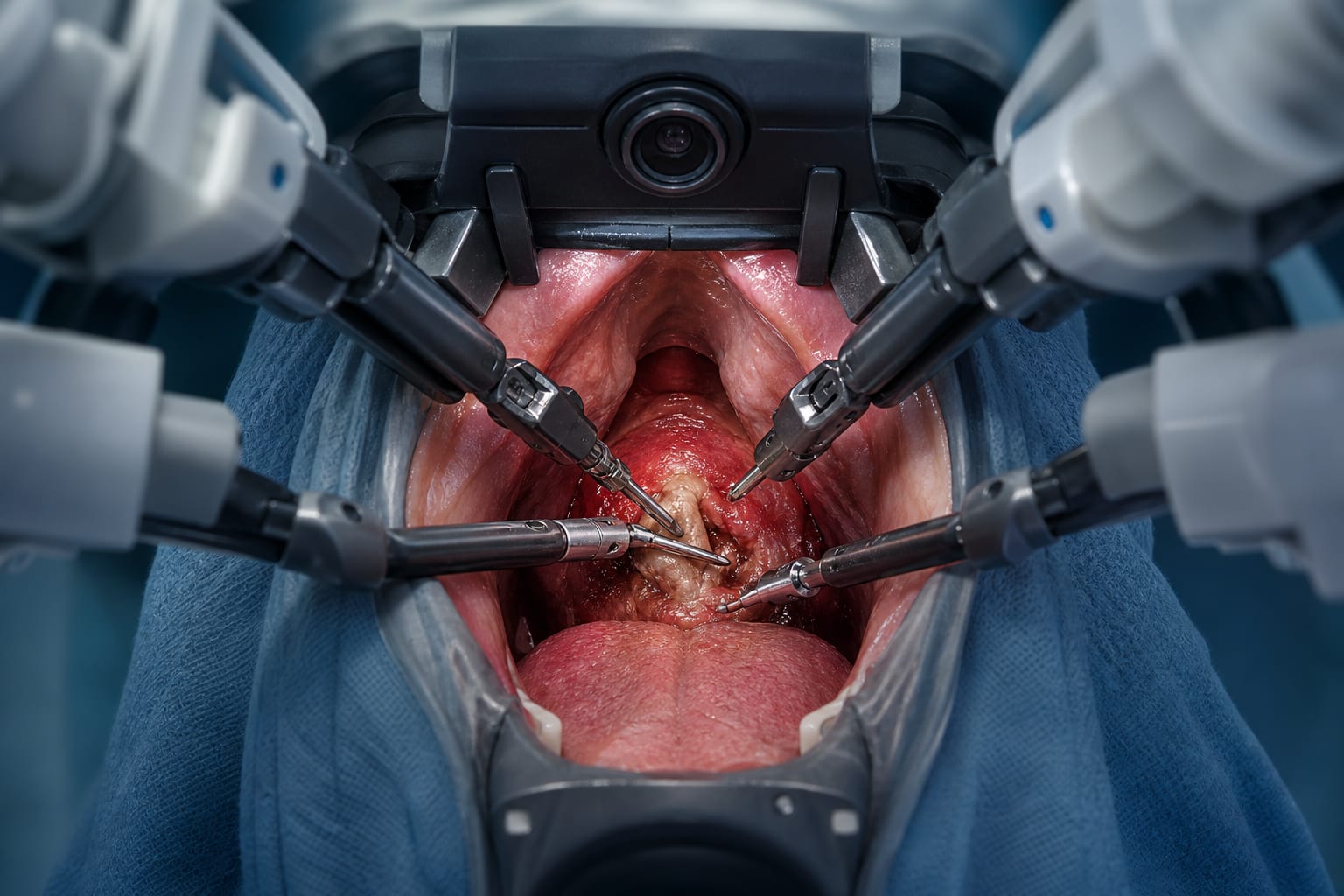
Robotic-assisted extended Sistrunk approach (RESA) provides direct access to hypopharyngeal and laryngeal structures through a submental incision, allowing controlled en bloc resection.
Target Population
Patients with head and neck cancer who have previously undergone radiotherapy and require salvage surgery.
Care Setting
Minimally invasive surgical procedures in a clinical setting.
Key Highlights
RESA overcomes limitations of transoral approaches in previously irradiated patients.
Demonstrates favorable functional recovery and reduced access-related morbidity.
Enables organ-preserving salvage procedures or minimally invasive total laryngectomy.
Guideline-Based Recommendations
Diagnosis
Multidisciplinary team assessment of patient- and tumor-related characteristics.
Management
Consider RESA for patients unable to achieve adequate exposure via transoral approaches.
Monitoring & Follow-up
Evaluate outcomes of RESA procedures in previously irradiated patients.
Risks
Potential for impaired exposure and altered anatomy due to prior radiotherapy.
Patient & Prescribing Data
Patients with head and neck cancer who have undergone prior radiotherapy.
RESA offers a minimally invasive option for salvage surgery, enhancing visualization and dissection.
Clinical Best Practices
Utilize RESA for access to hypopharyngeal and laryngeal structures in previously irradiated patients.