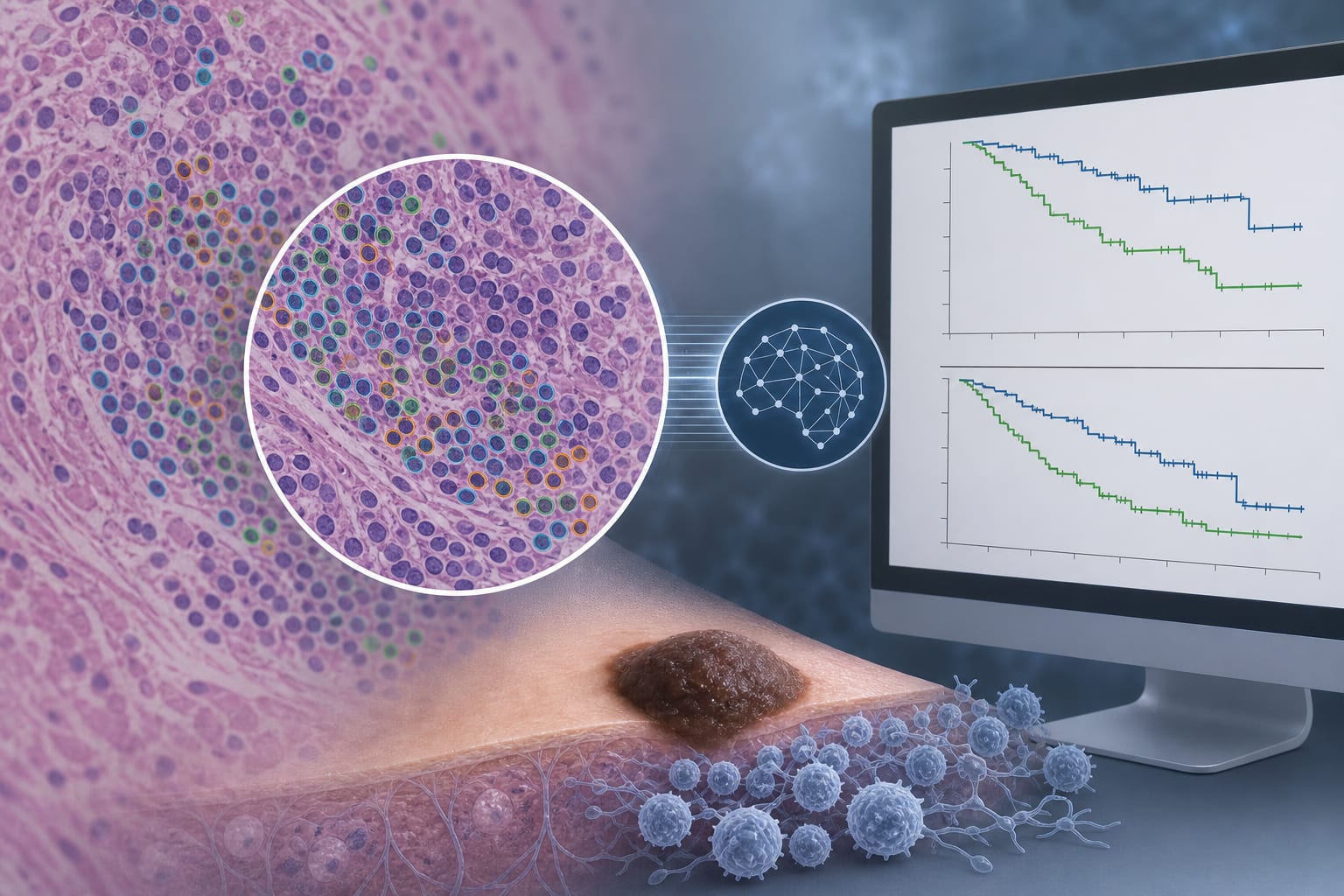
Clinical Scorecard: Melan-Dx: An Enhanced Vision-Language Framework for Improved Differential Diagnosis of Melanocytic Neoplasms
At a Glance
Category
Detail
Condition
Melanoma and melanocytic neoplasms
Key Mechanisms
Knowledge-enhanced AI framework combining pathology images and curated expert knowledge to improve differential diagnosis accuracy
Target Population
Patients with melanocytic neoplasms requiring histologic subtype classification
Care Setting
Dermatopathology and pathology diagnostic laboratories
Key Highlights
Melan-Dx integrates a curated multi-modal dataset of 2893 images and 1102 expert-annotated knowledge entries to augment pathology vision-language models.
Demonstrates significant diagnostic accuracy improvements: up to 13.8% over linear and fully finetuned methods, and 23–70.6% over zero-shot approaches.
Achieves high performance metrics including 0.869 accuracy for binary classification and 0.699 Top-1 accuracy for forty-class classification of melanocytic neoplasms.
Guideline-Based Recommendations
Diagnosis
Utilize multi-modal AI frameworks like Melan-Dx to support differential diagnosis of melanocytic neoplasms across numerous histologic subtypes.
Incorporate curated expert knowledge databases to enhance interpretation of pathology images without requiring fine-tuning of vision backbones.
Management
Leverage AI-assisted diagnostic tools to reduce misdiagnosis and improve early and accurate identification of melanoma and related neoplasms.
Monitoring & Follow-up
Continuously validate AI model performance across patch-level and whole-slide image analyses to ensure diagnostic reliability.
Risks
Be aware of potential diagnostic errors and overdiagnosis in melanoma; AI tools should complement, not replace, expert clinical judgment.
Patient & Prescribing Data
Patients undergoing histopathologic evaluation for suspected melanocytic neoplasms
Improved diagnostic accuracy with Melan-Dx may facilitate timely and appropriate management decisions, potentially impacting prognosis.
Clinical Best Practices
Integrate AI frameworks like Melan-Dx as adjunct diagnostic support in dermatopathology workflows.
Maintain expert oversight and validation of AI-generated differential diagnoses to mitigate errors.
Request access to proprietary image and knowledge databases under appropriate agreements to enhance institutional diagnostic capabilities.
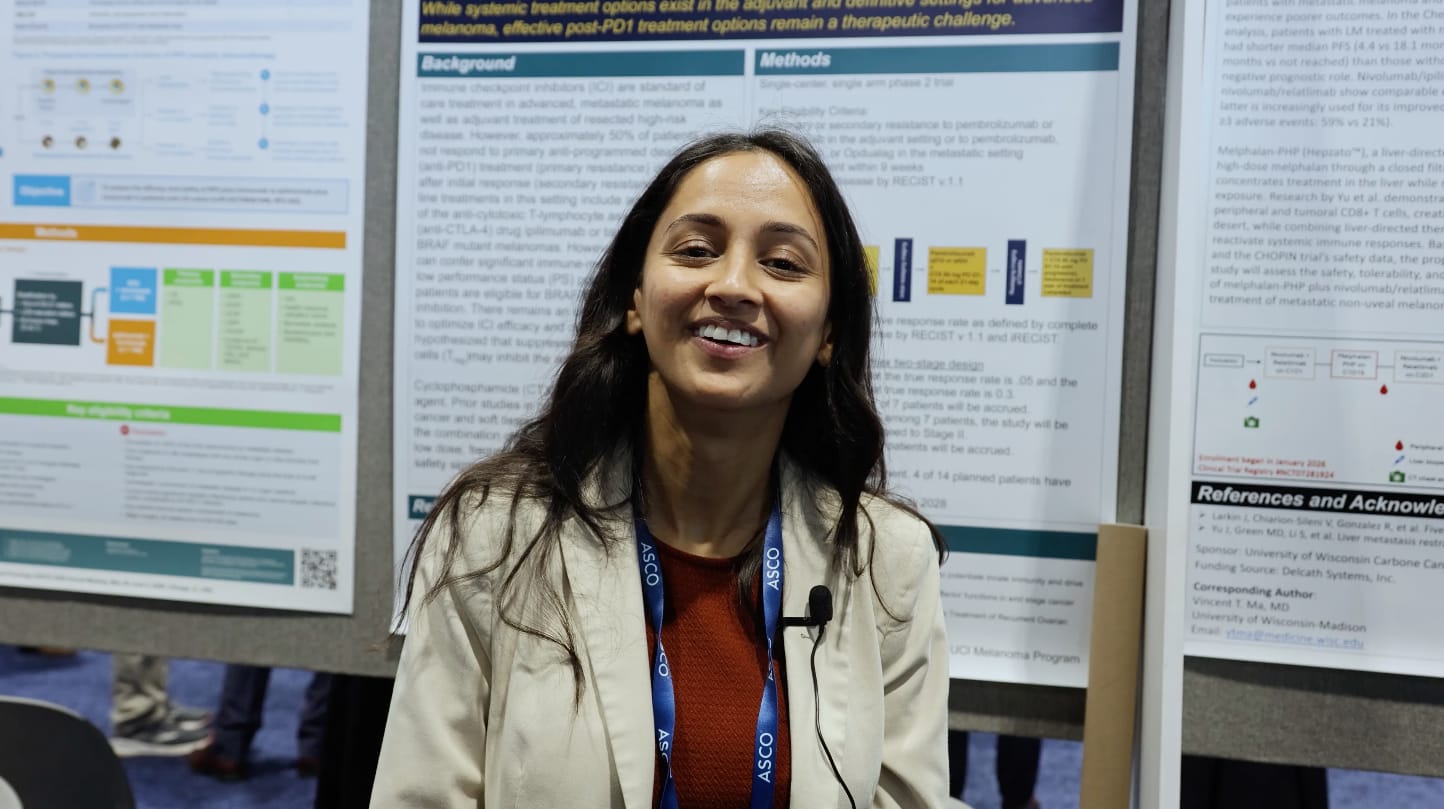
UCI Health medical oncologist Poorva Vaidya, MD is currently offering a new clinical trial sponsored by the UC Irvine Anti-Cancer Challenge, and lead by Warren Chow, MD, aimed at tackling a persistent challenge in melanoma care if patients fail first-line immunotherapy.