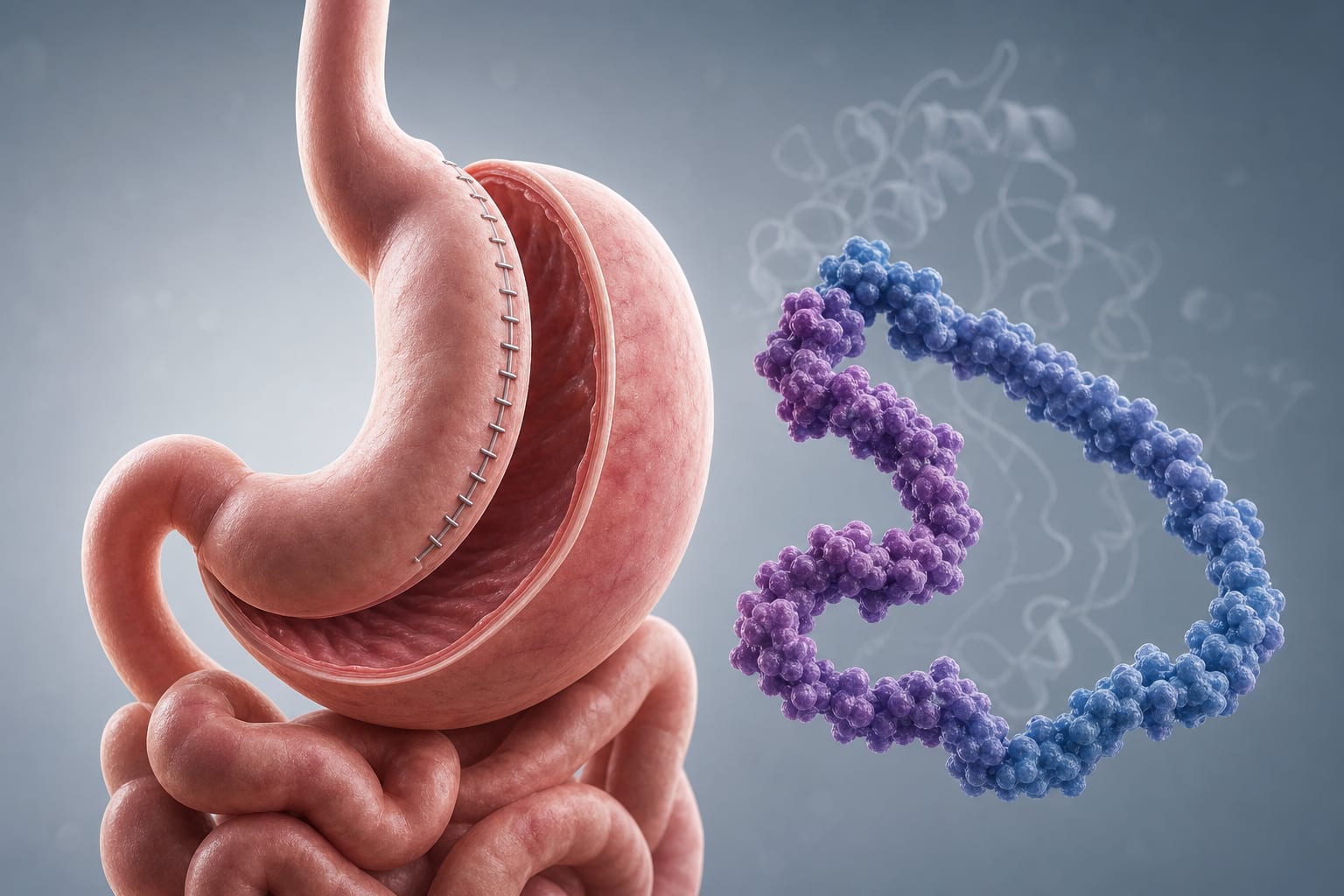
Clinical Scorecard: Long-term Assessment of Body Composition Changes After Roux-en-Y Gastric Bypass Surgery
At a Glance
Category
Detail
Condition
Obesity and related metabolic comorbidities
Key Mechanisms
Roux-en-Y gastric bypass induces significant weight loss primarily through fat mass reduction, impacting visceral and subcutaneous adipose tissue and skeletal muscle composition
Target Population
Adults with BMI ≥ 30 kg/m² eligible for laparoscopic Roux-en-Y gastric bypass
Care Setting
Metabolic and bariatric surgery centers with imaging capabilities for body composition assessment
Key Highlights
More than 80% of weight loss after metabolic and bariatric surgery is fat mass reduction, emphasizing the importance of body composition monitoring.
Data Analysis Facilitation Suite (DAFS) enables precise, automated 3D segmentation and quantification of adipose tissue and skeletal muscle from CT imaging.
Accurate body composition tracking post-RYGB can identify causes of suboptimal outcomes and guide personalized patient care.
Guideline-Based Recommendations
Diagnosis
Use CT imaging with advanced analytics (e.g., DAFS) for accurate pre- and postoperative body composition assessment.
Avoid sole reliance on bioelectrical impedance analysis or DXA due to limitations in estimating visceral adipose tissue and lean soft tissue changes.
Management
Implement standard proximal Roux-en-Y gastric bypass with established surgical technique and closure of mesenteric defects.
Provide comprehensive preoperative education on diet, exercise, and behavioral strategies.
Deliver individualized dietary counseling and exercise plans postoperatively with ongoing behavioral support.
Monitoring & Follow-up
Perform serial imaging assessments at baseline, 3 months, and 6 months postoperatively to monitor changes in fat depots and skeletal muscle volumes.
Manually review and correct automated segmentation outputs to ensure anatomical accuracy in longitudinal assessments.
Risks
Exclude patients with conditions impairing PET/CT tolerability or significant comorbidities such as uncontrolled thyroid disorders or chronic kidney disease.
Monitor for potential suboptimal outcomes related to inadequate body composition changes.
Patient & Prescribing Data
Adults with obesity undergoing Roux-en-Y gastric bypass surgery
Postoperative weight loss averages 25–35% of initial body weight, predominantly from fat mass; skeletal muscle preservation is critical for long-term functional health.
Clinical Best Practices
Utilize advanced imaging analytics platforms like DAFS for comprehensive body composition evaluation including visceral, subcutaneous fat, and skeletal muscle quantification.
Incorporate multidisciplinary support including dietitians, obesity medicine specialists, and behavioral counselors for optimized perioperative care.
Standardize imaging protocols and manual verification to ensure reproducibility and accuracy of body composition measurements.
by Zubaidah Nor Hanipah, Gabriela de O. Lemos, Sophia Ramirez, Venkata Satya Naga Arun Kousik Dhulipala, Karteek Popuri, Mirza Faisal Beg, Shengping Yang, Philip R. Schauer, Vance L. Albaugh, Steven B. Heymsfield