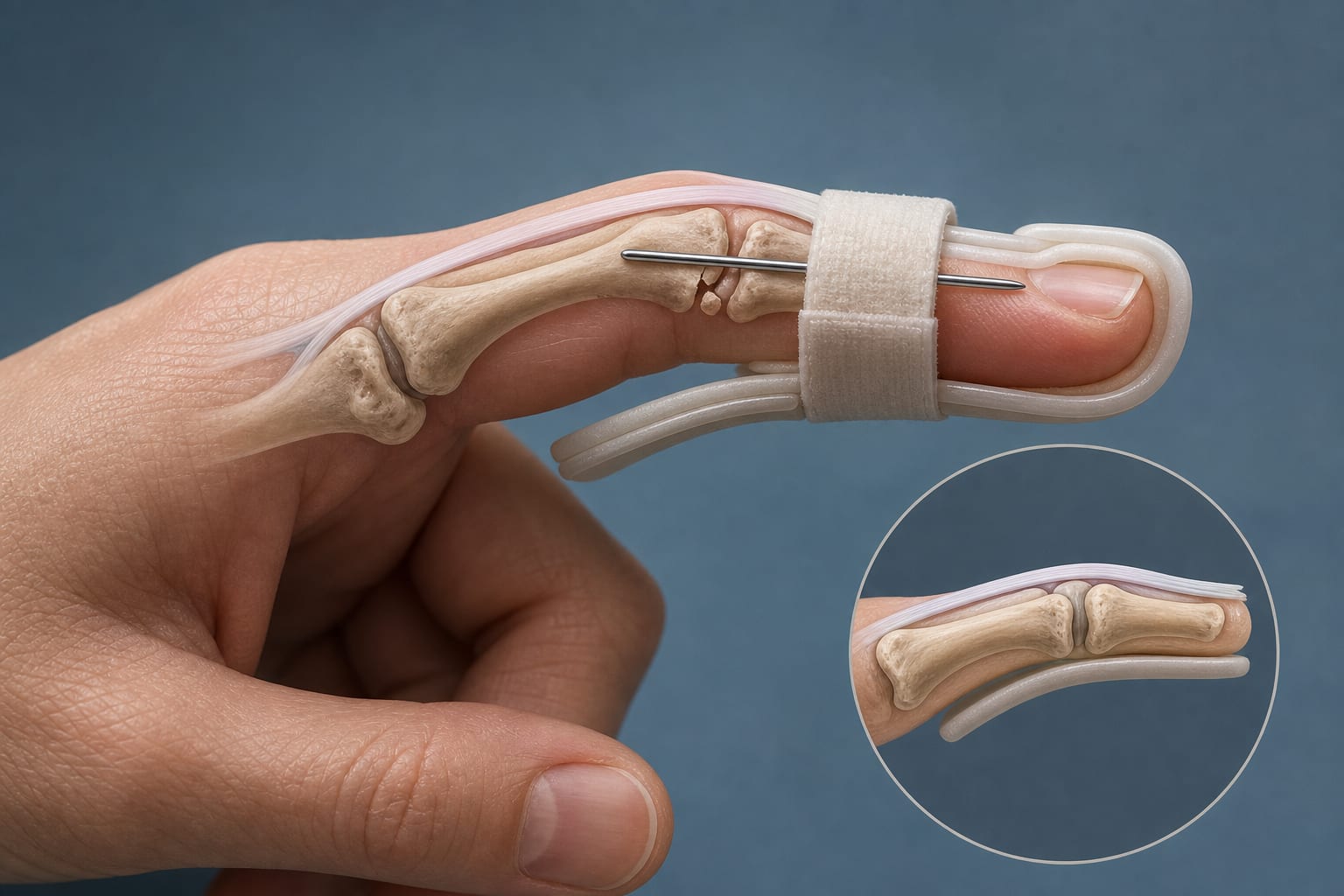
Comparison of Pin Orthosis Extension Block Pinning and Conservative Management for Doyle Type 4B Mallet Finger Fractures
-
By
-
Kemal Arda Col
-
Onur Demirsu
-
Mahmud Aydın
-
Serkan Surucu
-
Murat Yilmaz
-
Dogan Atlihan
-
June 23, 2026
Clinical Scorecard: Comparison of Pin Orthosis Extension Block Pinning and Conservative Management for Doyle Type 4B Mallet Finger Fractures
At a Glance
| Category | Detail |
|---|
| Condition | Mallet Finger Fractures |
| Key Mechanisms | Injury characterized by inability to actively extend the fingertip due to extensor tendon rupture or avulsion fracture. |
| Target Population | Adults aged 18-65 with acute Doyle type 4B mallet fractures. |
| Care Setting | Orthopedics and Traumatology outpatient clinic and emergency department. |
Key Highlights
- Mallet finger results from hyperflexion or axial loading of the DIP joint.
- Conservative treatment is recommended for closed injuries without DIP joint subluxation.
- Surgical techniques include Ishiguro’s extension block pinning and pin-orthosis extension-block pinning.
- The study compares PO-EBPT with conservative treatment for clinical and radiographic outcomes.
- Inclusion criteria: acute mallet fracture with 20-50% articular surface involvement.
Guideline-Based Recommendations
Diagnosis
- Diagnosis based on clinical examination and radiographic assessment.
Management
- Conservative management with splint immobilization for closed injuries.
- Surgical intervention for cases with significant fracture involvement.
Monitoring & Follow-up
- Regular follow-up visits to assess fracture alignment and healing.
Risks
- Potential complications include infection, nail deformity, and joint stiffness.
Patient & Prescribing Data
Patients aged 18-65 with acute mallet fractures.
Conservative treatment involves a Stack orthosis for DIP joint stabilization.
Clinical Best Practices
- Ensure strict compliance with splint use in conservative management.
- Perform regular radiographic evaluations to monitor healing.
- Consider surgical options for fractures involving a larger portion of the articular surface.
Related Resources & Content