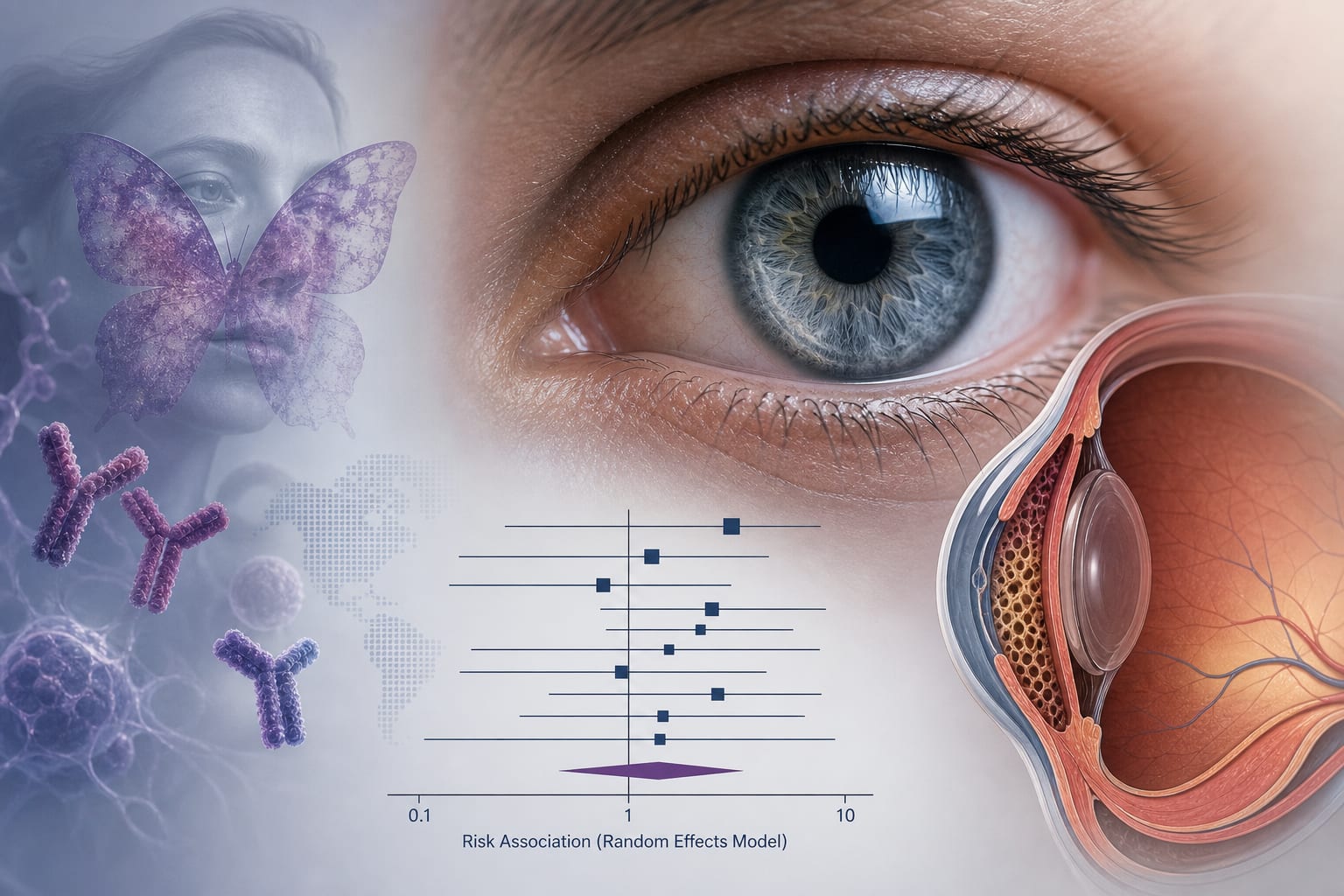
Evaluating the Relationship Between Systemic Lupus Erythematosus and Glaucoma: A Comprehensive Meta-Analysis
By
Xue Li
Fang Wang
Liming Zhu
Xi Tian
Xi Yang
June 22, 2026
Clinical Scorecard: Evaluating the Relationship Between Systemic Lupus Erythematosus and Glaucoma: A Comprehensive Meta-Analysis
At a Glance
Category Detail
Condition Systemic Lupus Erythematosus (SLE) Key Mechanisms Autoimmune mechanisms causing ocular damage and potential effects of glucocorticoid treatment. Target Population Patients diagnosed with Systemic Lupus Erythematosus. Care Setting Ophthalmology and rheumatology clinics.
Key Highlights
SLE is associated with an increased risk of glaucoma (OR = 2.85, 95% CI: 1.26–6.47). Approximately one-third of SLE patients exhibit ocular manifestations. Subgroup analyses indicate stronger associations in studies with fewer covariate adjustments. Long-term glucocorticoid use in SLE patients may elevate glaucoma risk. Further prospective studies are needed to confirm these findings. Guideline-Based Recommendations
Diagnosis
Assess for glaucoma in SLE patients, especially those on glucocorticoids. Management
Consider regular ophthalmologic evaluations for SLE patients. Monitoring & Follow-up
Monitor ocular health in SLE patients, particularly for signs of glaucoma. Risks
Increased risk of glaucoma associated with SLE and glucocorticoid treatment. Patient & Prescribing Data
Patients with Systemic Lupus Erythematosus.
Caution advised in prescribing glucocorticoids due to potential glaucoma risk.
Clinical Best Practices
Implement routine eye examinations for SLE patients. Educate patients about the signs and symptoms of glaucoma. Related Resources & Content