The protective role of resilience-related strength in the association between sleep reactivity and insomnia symptoms among young Chinese male university students: a moderated network approach - Scorecard - MDSpire
Conexiant’s news site is now MDSpire News. Learn more
Advertisement
The Moderating Effect of Resilience-Related Strength on the Relationship Between Sleep Reactivity and Insomnia Symptoms in Young Male University Students in China: A Network Analysis
Clinical Scorecard: The Moderating Effect of Resilience-Related Strength on the Relationship Between Sleep Reactivity and Insomnia Symptoms in Young Male University Students in China: A Network Analysis
At a Glance
Category
Detail
Condition
Insomnia
Key Mechanisms
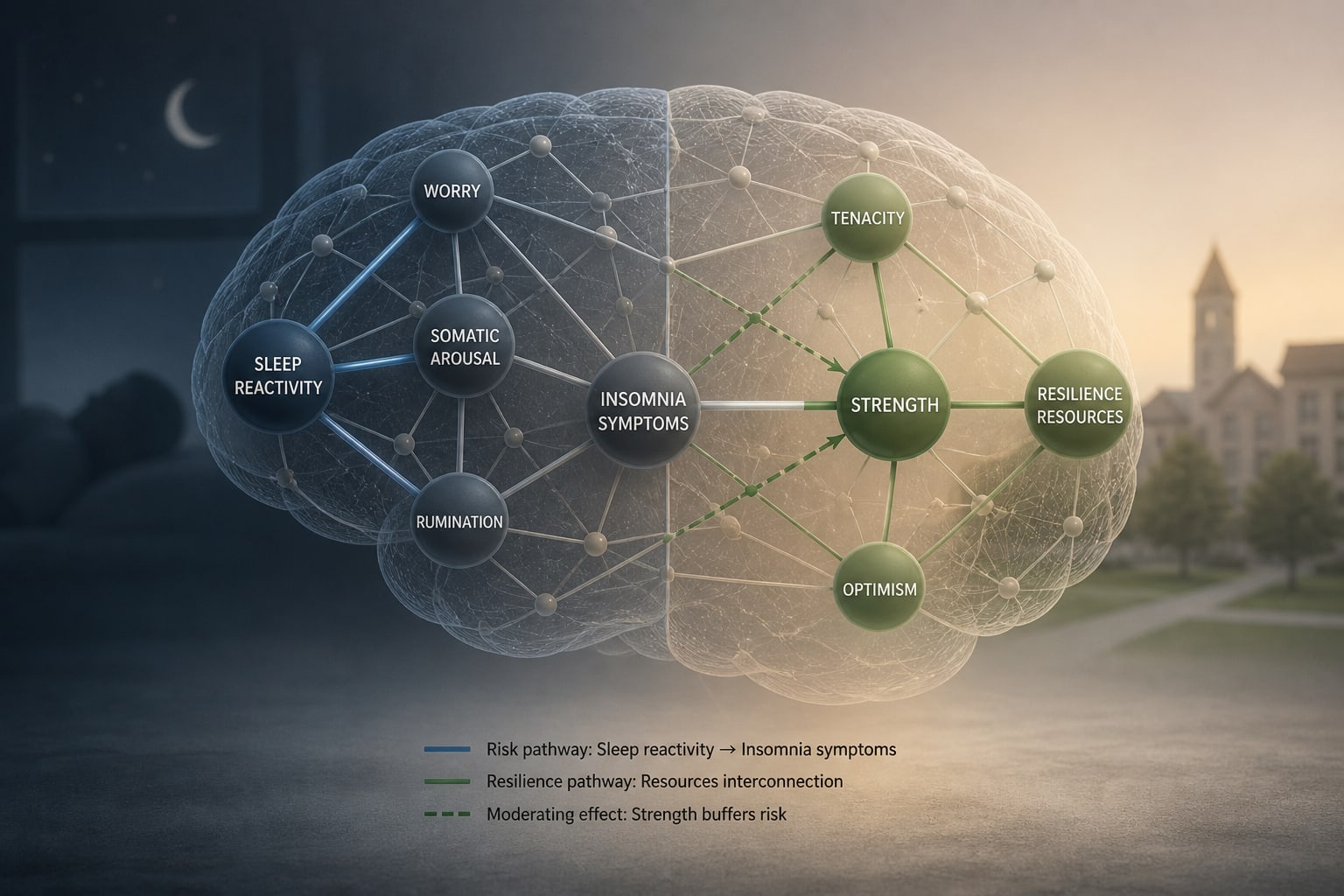
Sleep reactivity and psychological resilience dimensions (Tenacity, Strength, Optimism)
Target Population
Young male university students in China
Care Setting
Psychological and sleep health assessment
Key Highlights
Greater sleep reactivity is associated with more severe insomnia symptoms.
Strength dimension of resilience significantly moderates the relationship between sleep reactivity and insomnia symptoms.
Moderated network analysis indicates specific connections between sleep reactivity and insomnia symptoms.
Strength may serve as a protective psychological resource against insomnia.
The study involved 1,122 male participants with an average age of 21.13.
Guideline-Based Recommendations
Diagnosis
Utilize the Ford Insomnia Response to Stress Test and Insomnia Severity Index for assessment.
Management
Consider psychological resilience factors in managing insomnia symptoms.
Monitoring & Follow-up
Assess changes in sleep reactivity and resilience dimensions over time.
Risks
High sleep reactivity may lead to increased insomnia symptoms.
Patient & Prescribing Data
Young male university students experiencing insomnia symptoms.
Strength as a resilience factor may help mitigate insomnia severity.
Clinical Best Practices
Incorporate resilience training in interventions for insomnia.
Evaluate individual differences in sleep reactivity when treating insomnia.