NIH Launches Significant Initiatives to Enhance Human-Centric Research Infrastructure and Technologies
-
September 21, 2026
Clinical Scorecard: NIH Launches Significant Initiatives to Enhance Human-Centric Research Infrastructure and Technologies
At a Glance
| Category | Detail |
|---|---|
| Condition | Human-Centric Research Infrastructure |
| Key Mechanisms | Advancement of human-based technologies and methodologies to reduce reliance on animal models. |
| Target Population | Researchers and institutions involved in biomedical research. |
| Care Setting | Biomedical research facilities and laboratories. |
Key Highlights
- NIH invests over $88 million in human-based research infrastructure projects.
- Introduction of the Qu-SAFE Challenge to enhance drug safety and toxicity assessment using quantum technology.
- Creation of a Bio Genesis Autonomous Human Biology Laboratory at the NIH Clinical Center.
- Focus on reducing animal model use in favor of human-relevant data generation.
- Initiatives to recruit grant reviewers with expertise in human-based science.
Guideline-Based Recommendations
Diagnosis
Management
Monitoring & Follow-up
Risks
Patient & Prescribing Data
Not applicable as the initiatives focus on research infrastructure rather than direct patient treatment.
The initiatives aim to improve the development and assessment of new drugs and treatments.
Clinical Best Practices
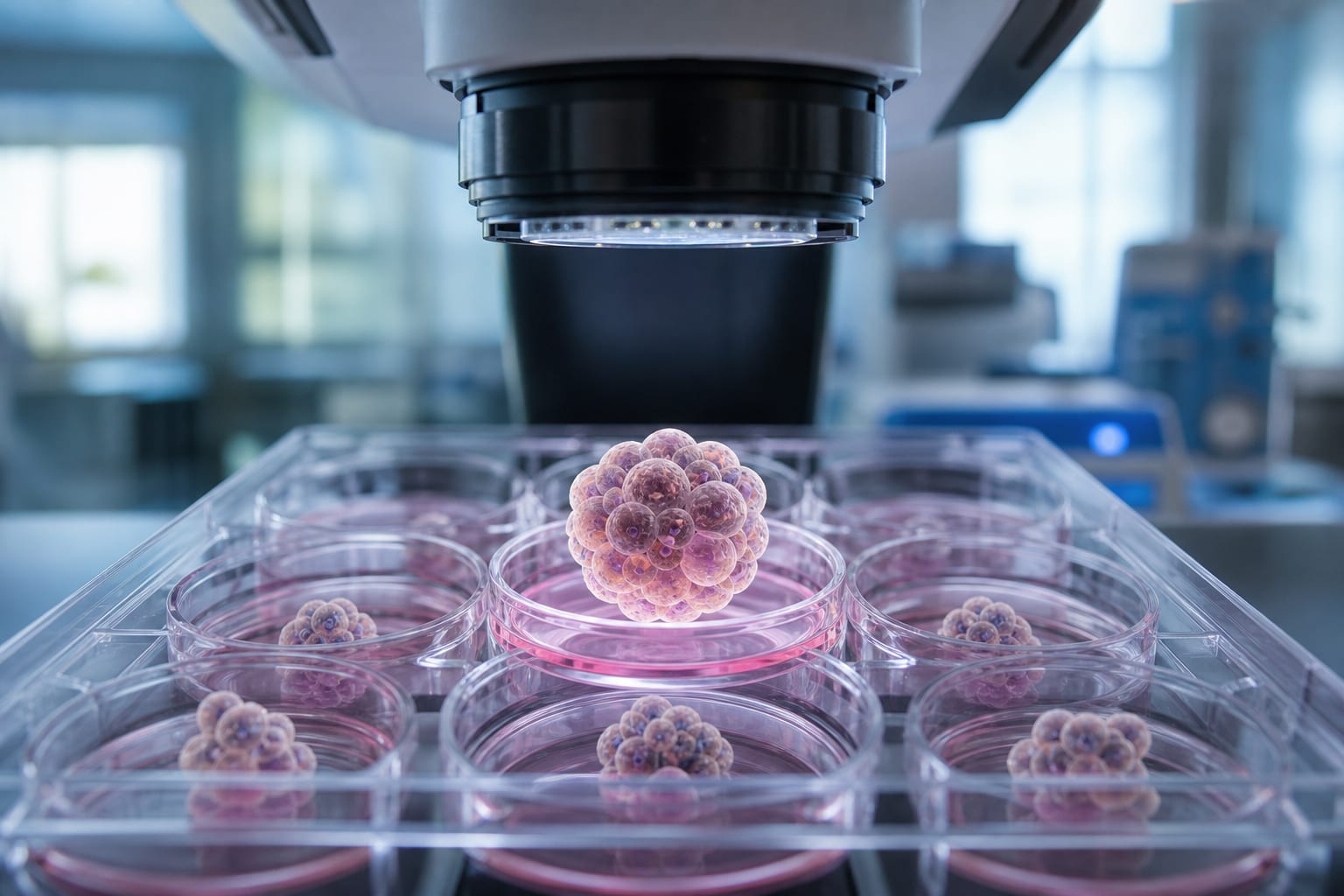
- Utilize human organoid models and advanced data capabilities in research.
- Incorporate quantum-enabled approaches for enhanced biological signal detection.
- Engage with the scientific community to improve transparency in animal use reporting.
Related Resources & Content
Based on findings from:
NIH makes major investments to advance human-based research infrastructure and technologies
National Institutes Of Health, 2026.
https://www.nih.gov/news-events/news-releases/nih-makes-major-investments-advance-human-based-research-infrastructure-technologies
This content is an AI-generated, fully rewritten summary based on a published scholarly article. It does not reproduce the original text and is not a substitute for the original publication. Readers are encouraged to consult the source for full context, data, and methodology.