Conexiant’s news site is now MDSpire News. Learn more
Advertisement
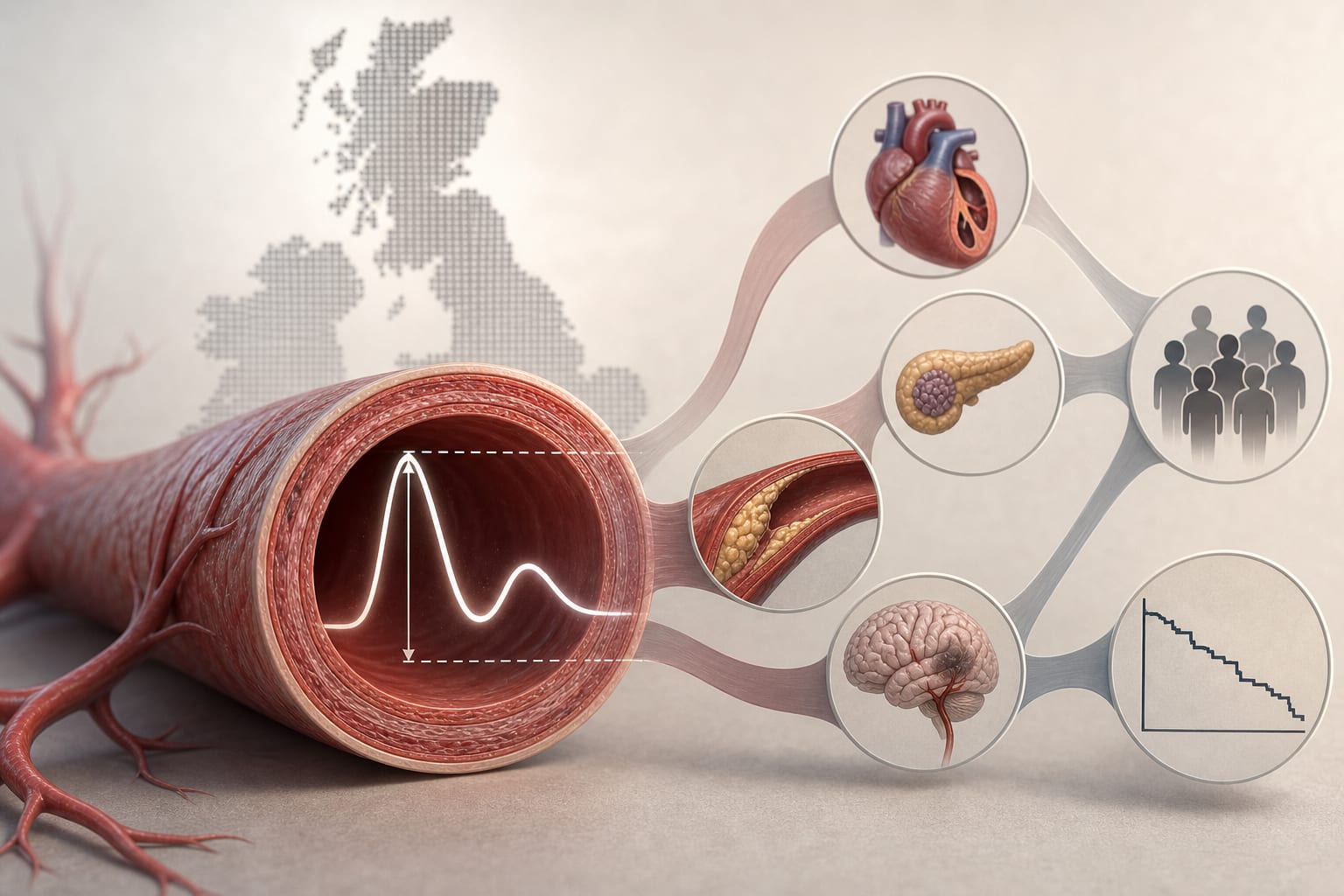
The Relationship Between Pulse Pressure and the Advancement of Cardiometabolic Diseases: Links to New Multimorbidity and Mortality in the UK Biobank Study
Clinical Scorecard: The Relationship Between Pulse Pressure and the Advancement of Cardiometabolic Diseases: Links to New Multimorbidity and Mortality in the UK Biobank Study
At a Glance
Category
Detail
Condition
Cardiometabolic Diseases (CMDs)
Key Mechanisms
Pulse pressure (PP) as a predictor of CMD progression and mortality.
Target Population
UK Biobank participants aged 40-69 years, free of CMD at baseline.
Care Setting
Community-based cohort study.
Key Highlights
Per 1-SD increase in PP, HR for incident CMD is 1.13 and for CMM is 1.18.
Q4 vs Q1 comparisons indicate 36% higher risks for CMD and CMM.
Strongest PP-CMM association observed in patients with stroke (HR = 1.23).
Threshold effects identified: 40 mmHg for CMD, 42 mmHg for mortality, 52 mmHg for CMM.
Most pronounced associations in participants aged < 60 years, women, and those with BMI 18.5 ≤ 25 kg/m2.
Guideline-Based Recommendations
Diagnosis
Assess pulse pressure as part of cardiovascular risk evaluation.
Management
Consider monitoring pulse pressure in patients at risk for CMD and CMM.
Monitoring & Follow-up
Regular follow-up of pulse pressure in high-risk populations.
Risks
Elevated pulse pressure is associated with increased risk of CMD progression and all-cause mortality.
Patient & Prescribing Data
Individuals free of CMD at baseline, with a focus on those with elevated pulse pressure.
Targeted interventions may be necessary for patients with elevated PP to mitigate CMD risk.
Clinical Best Practices
Incorporate pulse pressure measurement in routine cardiovascular assessments.
Identify and stratify high-risk populations based on pulse pressure levels.