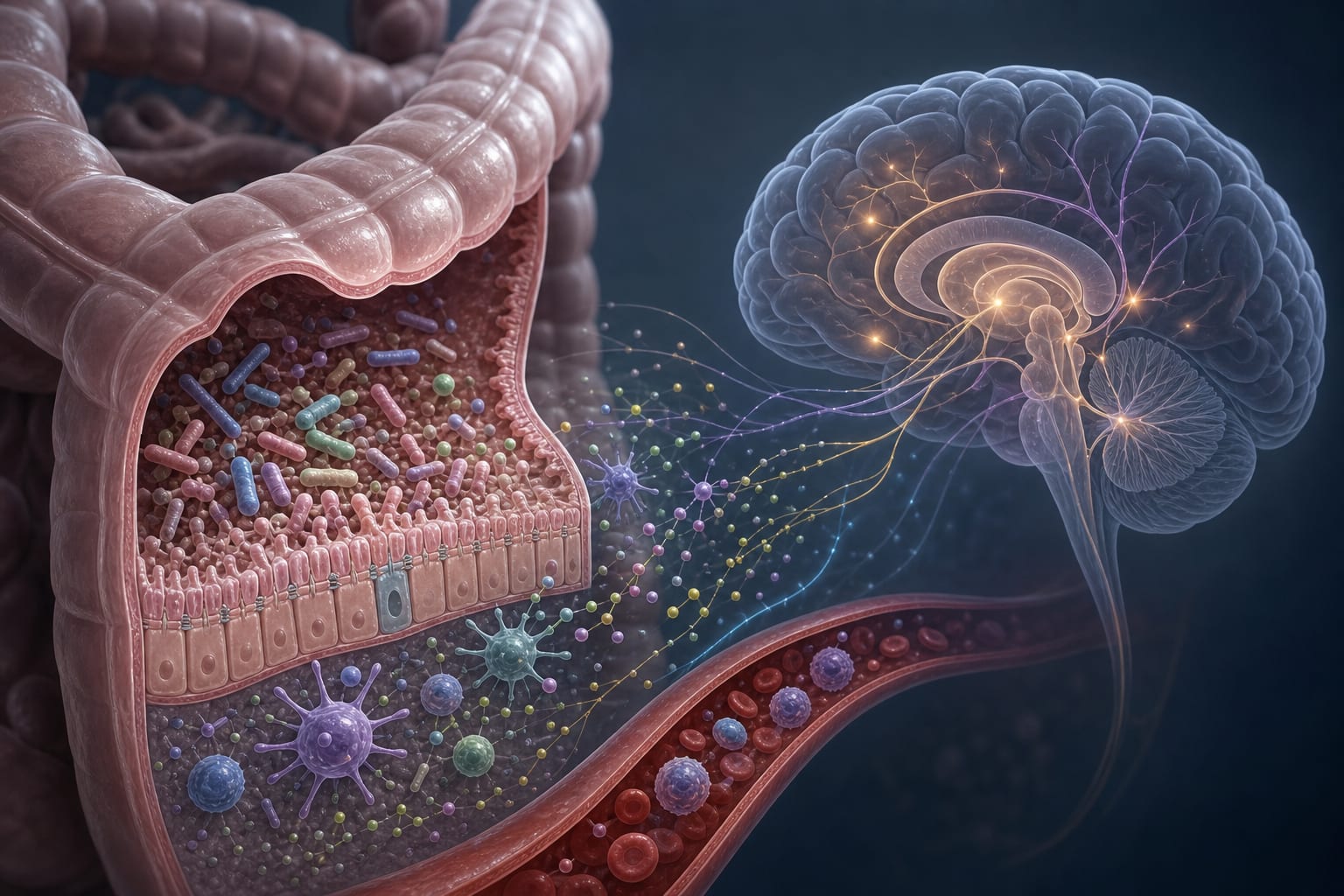
Integrative mechanisms and intervention targets of the microbiota–gut–brain axis in depressive disorders: advances across immune, endocrine, and central nervous system pathways
By
Hongyu Zhao
Limei Ao
Lingfang Hao
Yuxia Wei
Hong Zhen Yin
Xiao Qing Lee
Chenyu Guo
Zhenyi Wang
JinRui Yang
Ren Yang
Gai Lan Zhou
June 8, 2026
Clinical Scorecard: Mechanisms of Integration and Potential Intervention Points in the Microbiota-Gut-Brain Axis Related to Depressive Disorders: Progress in Immune, Endocrine, and Central Nervous System Pathways
At a Glance
Category Detail
Condition Depressive Disorders Key Mechanisms Microbiota-gut-brain axis (MGBA) involving mood regulation, immune responses, endocrine function, metabolism, and neuroplasticity. Target Population Patients with depressive disorders, particularly those with gastrointestinal symptoms, metabolic abnormalities, or low-grade inflammatory states. Care Setting Clinical settings focusing on mental health and gastrointestinal health.
Key Highlights
Depressive disorders are heterogeneous, involving mood, cognitive, and gastrointestinal symptoms. The MGBA framework links gut microbial dysbiosis to depressive symptoms. Interventions like dietary changes, psychobiotics, and fecal microbiota transplantation show potential but have limited effect sizes. Current research emphasizes the need for mechanistic integration and clinical translation. Stratification biomarkers and phenotype-based approaches are essential for targeted therapies. Guideline-Based Recommendations
Diagnosis
Consider the heterogeneity of depressive disorders and associated comorbidities. Management
Explore dietary and lifestyle modifications, psychobiotics, and fecal microbiota transplantation for selected patients. Monitoring & Follow-up
Assess gastrointestinal symptoms and metabolic status in patients with depressive disorders. Risks
Be aware of the limitations in current interventional evidence and the need for further validation. Patient & Prescribing Data
Individuals with depressive disorders exhibiting gastrointestinal and metabolic comorbidities.
Interventions targeting the MGBA may be beneficial but require careful patient selection and monitoring.
Clinical Best Practices
Integrate assessments of gut microbiota and metabolic pathways in the evaluation of depressive disorders. Utilize a multidisciplinary approach involving mental health and gastrointestinal specialists. Encourage lifestyle modifications alongside pharmacological treatments. Related Resources & Content